Gluconic Acid in Honey: The Gentle Acid Behind Honey's Tang
Gluconic acid in honey is the quiet ingredient that gives honey its soft tang and helps it last for years. Bees make it while they turn nectar into honey, and it ends up as the most plentiful acid in nearly every jar. This article explains where gluconic acid in honey comes from, how much there is, what it does for flavor and storage, and why it matters when you bake. It builds on our article about the honey pH level.
For general education only, not medical advice. Our honey is a food and is not intended to diagnose, treat, cure or prevent any disease.
How gluconic acid in honey is made
Bees add an enzyme called glucose oxidase to nectar while they ripen it. The enzyme takes glucose, one of the two main sugars in honey, and reacts it with oxygen. Two products come out: gluconic acid and a small amount of hydrogen peroxide.
A review of honey biochemistry in the journal Molecules describes this as one of the key reactions that turn nectar into honey. Most of the gluconic acid forms early, while nectar is still watery and the enzyme is most active.
Our deeper article on glucose oxidase in honey explains how the enzyme slows down once honey is ripe and thick.
How much is there
Gluconic acid in honey makes up only a small fraction of the jar by weight, well under one percent in most honeys. Yet it accounts for most of honey's total acidity.
Other organic acids are present too, including citric, malic, succinic, formic and acetic acid. They add small notes of their own, but gluconic acid is the main player.
| Acid | Role in honey |
|---|---|
| Gluconic acid | The main acid, formed by a bee enzyme |
| Citric acid | Small amounts, more in some floral sources |
| Malic acid | Small amounts, adds a fruity edge |
| Formic and acetic acid | Traces, can rise if honey ferments |
Gluconic acid in honey and flavor
Honey is about 80 percent sugar, so you rarely notice its acidity directly. Gluconic acid in honey works in the background, keeping the sweetness from tasting flat and adding a light, clean finish.
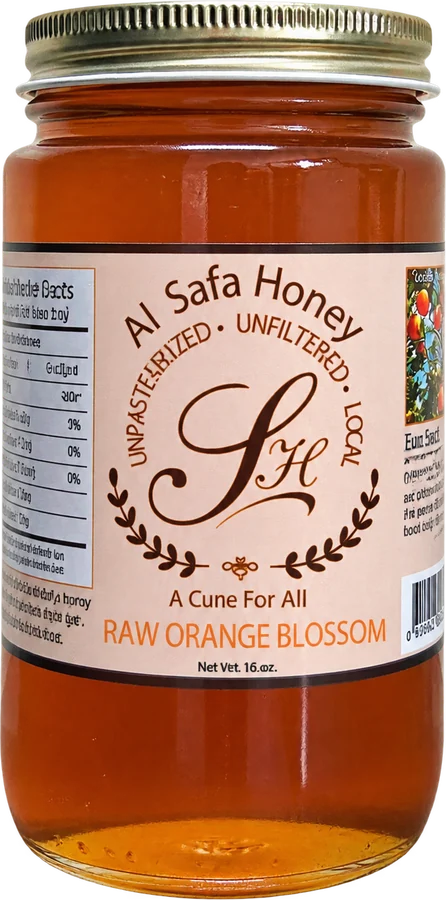
Bright, floral honeys often show this tang more clearly. Many people notice it in Raw Orange Blossom Honey, where the acidity lifts the citrus aroma. In dark honeys like buckwheat, malty and earthy flavors tend to cover it.
If you taste several honeys side by side, try paying attention to the finish. The slight brightness at the end of each spoonful is mostly gluconic acid at work.
Why it helps honey keep
Low pH makes life hard for microbes. Combined with honey's low water activity, gluconic acid in honey helps explain why a sealed jar stays safe to eat for so long. Smithsonian Magazine's article on honey's long shelf life points to acidity as one of the main reasons.
Our article on honey water activity explains the other half of that story.
Gluconic acid in honey and baking
Because honey is acidic, it reacts with baking soda the way buttermilk or yogurt does. That reaction releases carbon dioxide and helps cakes and quick breads rise.
It is also why many bakers add about a quarter teaspoon of baking soda for each cup of honey when they swap honey for sugar. The soda balances the acidity and keeps the crumb tender. Our baking with honey guide and honey conversion chart cover the details.
- Add a pinch of baking soda when honey replaces sugar.
- Lower the oven by about 25°F, since honey browns faster.
- Reduce other liquids slightly to account for honey's moisture.
Gluconic acid outside the hive
Gluconic acid is not unique to honey. It is found naturally in fruit, wine and kombucha, and food makers use it and its salts as acidity regulators. That gives a useful sense of scale: it is an ordinary food acid, not an exotic compound.
In honey, though, it is made by the bees themselves, which is a nice reminder that honey is shaped by both flowers and the colony.
Gluconic acid in honey and mead
Home mead makers pay close attention to honey's acids. The Beer Judge Certification Program's notes on the organic acids present in honey explain that gluconic acid is the dominant acid and that honey's low buffering capacity means a mead's pH can fall quickly during fermentation.
That is useful kitchen knowledge too. When honey is diluted in water, its acidity is spread thin, which is why a honey drink tastes gentle rather than sour. Mead makers often add small amounts of other acids or nutrients to balance a batch.
Our guide to what mead is covers the drink itself and its long history.
Tasting the tang at home
Try a simple tasting. Put a small spoonful of a light honey and a dark honey on two plates. Taste the light one first, then a sip of water, then the dark one. Notice which feels brighter at the end.
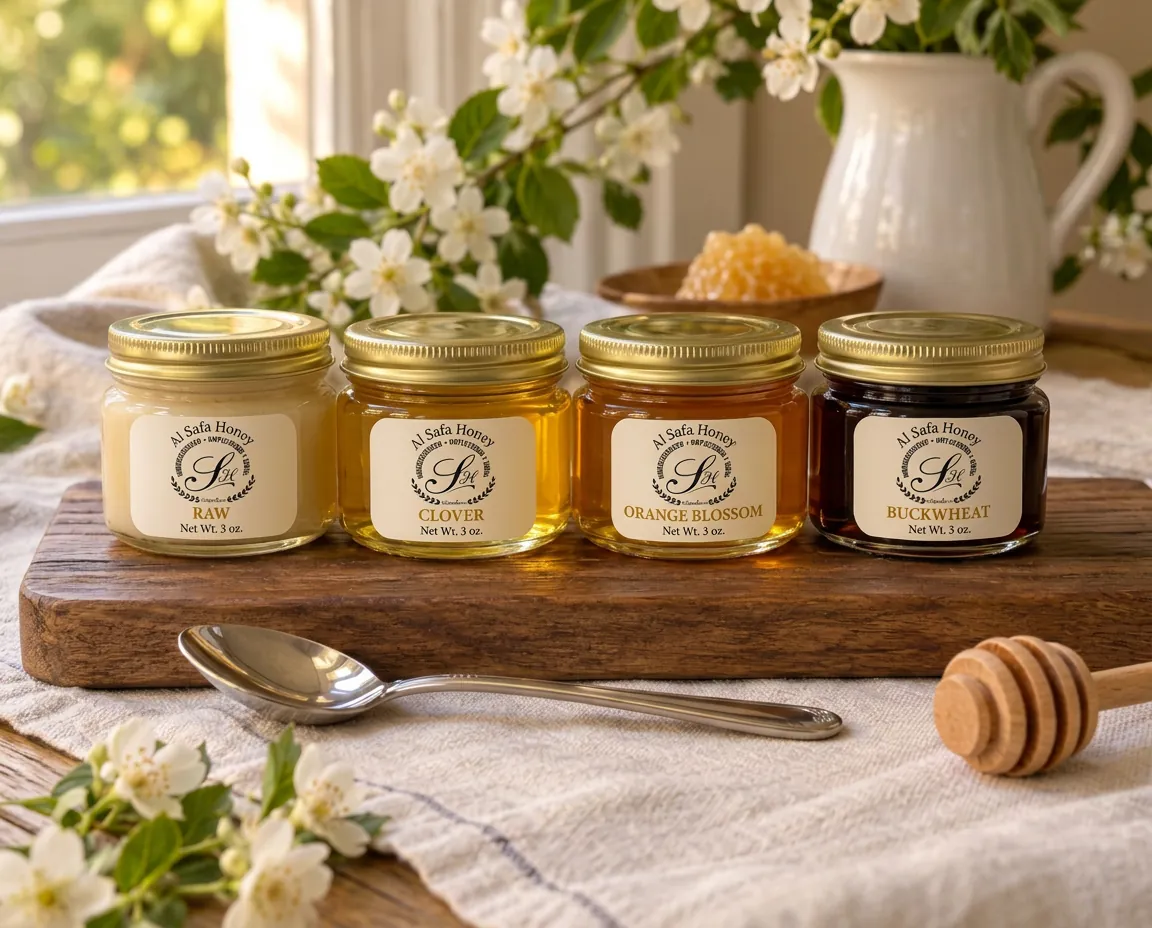
Our Pure Raw Honey Sampler lets you choose four honeys for exactly this kind of tasting. Every jar is raw, never heated above hive temperature and strained only of wax. Orders over $50 ship free.
Sources
Outside health sources we used for this article. They open in a new tab.
- Biochemical Reactions and Their Biological Contributions in Honey · Molecules (via National Library of Medicine)
- Honey as Nutrient and Functional Food · Bee Product Science (Stefan Bogdanov)
- The Science Behind Honey's Eternal Shelf Life · Smithsonian Magazine
Frequently asked questions
- What is gluconic acid in honey?
- It is the main organic acid in honey. Bees produce it through the enzyme glucose oxidase, which converts glucose into gluconic acid and a little hydrogen peroxide.
- Is gluconic acid safe to eat?
- Yes. It is a common food acid found in fruit, wine and many packaged foods, and it is a natural part of honey.
- Why does my honey taste slightly sour?
- A gentle tang is normal and comes mostly from gluconic acid. A strong sour, beery smell is different and can mean the honey has fermented.
- Does gluconic acid in honey change over time?
- Acidity can rise slowly during long storage, and faster if honey ferments. Ripe, well-sealed honey stays stable for a long time.
- Why do recipes add baking soda with honey?
- Honey's acidity, mostly from gluconic acid, reacts with baking soda to help baked goods rise and keeps the flavor balanced.
- Which Al Safa honey has the brightest finish?
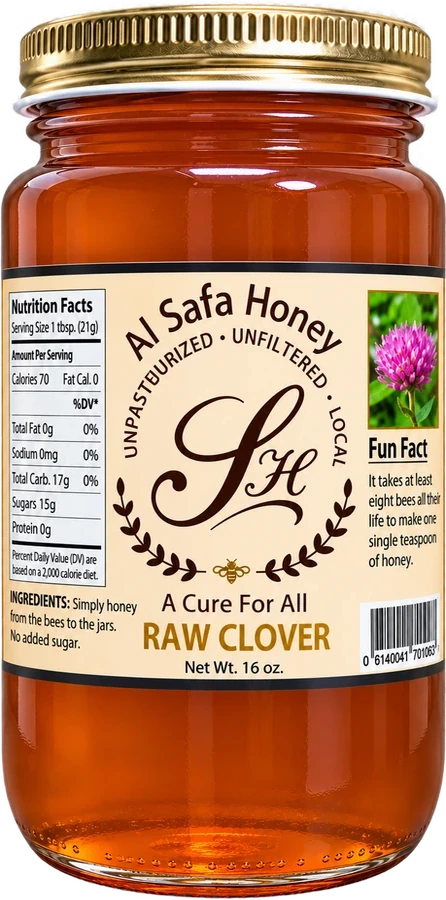
- Many customers find Raw Orange Blossom Honey and Raw Clover Honey the brightest. Buckwheat and knotweed taste deeper and maltier.
- How much gluconic acid in honey is typical?
- It varies by floral source, but it usually makes up well under one percent of honey by weight while accounting for most of honey's acidity.
Al Safa Honey is a food producer, not a medical provider. Nothing here is medical advice, and these statements have not been evaluated by the Food and Drug Administration. Talk to your doctor about any health concern. Never give honey of any kind to a baby under 12 months old.