Fermented Honey: How to Spot It, Why It Happens and What to Do
Fermented honey is honey that natural yeasts have started to turn into alcohol and acid. It is not common in well-ripened honey that is stored properly, but it can happen when honey takes on extra water. The signs are easy to spot once you know them. This article explains why honey ferments, how fermented honey differs from crystallized or foamy honey, what you can do with a fermented jar, and how to store honey so it stays sweet. It builds on our article about honey moisture content.
For general education only, not medical advice. Our honey is a food and is not intended to diagnose, treat, cure or prevent any disease.
Why honey ferments
All honey contains a small number of wild yeasts that can tolerate high sugar. In ripe honey with low water, they stay dormant because there is not enough free water for them to grow. Our article on honey water activity explains why.
When honey has extra water, either because it was harvested before bees finished drying it or because it absorbed moisture later, the yeasts can wake up. They consume sugars and produce alcohol and carbon dioxide. Over time, bacteria can turn some alcohol into acetic acid, which smells like vinegar.
Apiculture New Zealand's guide to managing the risks of fermented honey highlights moisture and storage temperature as the key factors.
Signs of fermented honey
Look, smell and listen:
- A sour, yeasty, beery or vinegar smell
- A hiss or fizz when you open the lid
- Bubbles spread through the honey, not just on top
- A thin, watery layer separating on the surface
- A sharp or alcoholic aftertaste
- A swollen lid in severe cases
Fermented honey versus normal changes
Not every change in a jar means fermentation. Crystallization, foam and frosting are all normal and harmless. The difference is usually the smell.
| Change | Smell | Normal? |
|---|---|---|
| Crystallization (grainy, cloudy) | Sweet | Yes |
| Foam on top | Sweet | Yes |
| White streaks on glass (frosting) | Sweet | Yes |
| Bubbles throughout, watery layer | Sour or boozy | Fermented honey |
Why crystallized honey sometimes ferments
When honey crystallizes, glucose turns solid and the remaining liquid holds a slightly higher share of water. In honey that was already near the upper moisture limit, that liquid layer can become wet enough for yeasts to grow.
This is why beekeepers watch moisture carefully in honeys that crystallize quickly. It is also why fermented honey sometimes shows a liquid layer above a set jar.
Is fermented honey safe to eat?
Mildly fermented honey is not usually considered dangerous, but its flavor has changed and it is no longer at its best. Many people use it for cooking or marinades, where heat and other ingredients cover the taste.
If the honey smells strongly unpleasant, has visible mold or you are unsure, discard it. When in doubt, throw it out.
Fermented honey on purpose
There is a big difference between accidental fermentation and intentional ferments. Mead, for example, is honey diluted with water and fermented with chosen yeast. Our guide what is mead explains how it is made.
Honey-fermented garlic is another popular kitchen project, though it carries its own food safety considerations. Our honey fermented garlic guide covers them carefully.
How to prevent fermented honey
Prevention is simple and mostly about keeping water out:
- Close the lid tightly after each use.
- Use a clean, dry spoon every time.
- Store honey in a cupboard at room temperature.
- Keep jars away from steam, kettles and dishwashers.
- Do not add water or lemon juice to the jar itself.
How producers prevent it
Good beekeepers harvest capped, ripe honey and may check it with a refractometer. US grading standards from the USDA include moisture limits for top grades. Some large packers heat honey to kill yeasts, but that also changes flavor and enzymes.
Raw honey producers rely on ripe honey and clean, dry handling instead.
Fermented honey and honey moisture testing
Beekeepers who want to avoid fermented honey often test moisture before bottling with a refractometer. Honey under about 18 percent water is very unlikely to ferment if it stays sealed.
The US grading standard published by the USDA expects top-grade honey to stay at or below 18.6 percent moisture, which gives a good safety margin. Honey above about 19 to 20 percent is at much higher risk.
At home you cannot measure moisture easily, so the best protection is simply keeping the lid closed and the spoon dry.
Ripe raw honey from Al Safa
Our partner farm harvests ripe honey, and we pack it raw in sealed glass without heating it above hive temperature. Stored with the lid on, it keeps beautifully.
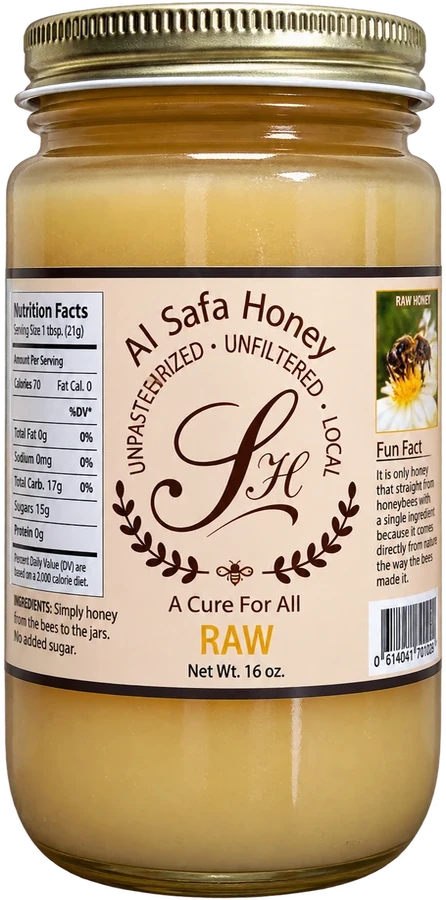
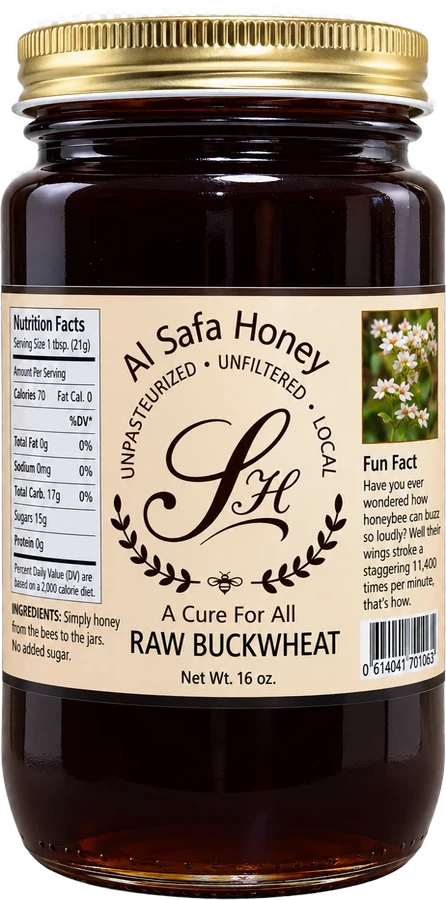
Stock up on Pure Raw Honey or Raw Buckwheat Honey with a 3 or 6 jar pack from our shop, and enjoy free shipping on orders over $50.
Sources
Outside health sources we used for this article. They open in a new tab.
- Managing the risks of fermented honey · Apiculture New Zealand
- United States Standards for Grades of Extracted Honey · USDA Agricultural Marketing Service
- The Science Behind Honey's Eternal Shelf Life · Smithsonian Magazine
Frequently asked questions
- How do I know if honey has fermented?
- Fermented honey smells sour, yeasty or alcoholic, may fizz when opened and often has bubbles throughout or a watery top layer.
- Can fermented honey make you sick?
- Mild fermentation is not usually considered dangerous, but flavor suffers. Discard honey that smells strongly off or shows mold.
- Why did my honey ferment?
- Most often because it absorbed moisture from the air or a wet spoon, or because it was harvested with too much water.
- Can I fix fermented honey?
- You cannot reverse fermentation. Mildly affected honey can be used in cooking. Badly fermented honey should be discarded.
- Does honey ferment in the fridge?
- Cold slows yeasts, but fridges can cause condensation when jars are opened. A sealed jar in a cupboard is better.
- Is fermented honey the same as mead?
- No. Mead is diluted honey fermented on purpose with selected yeast. Accidental fermentation in a jar is a spoilage problem.
- Can raw honey ferment more easily than processed honey?
- Raw honey is not heated to kill yeasts, so it depends on being ripe and sealed. Ripe raw honey stored properly rarely ferments.
Al Safa Honey is a food producer, not a medical provider. Nothing here is medical advice, and these statements have not been evaluated by the Food and Drug Administration. Talk to your doctor about any health concern. Never give honey of any kind to a baby under 12 months old.