Foam on Honey: What That White Layer on Top Really Is
Foam on honey is one of the most common questions raw honey buyers ask. You open a new jar and find a pale, frothy layer on top. It can look like something has spoiled, but in most cases it is simply air that rose to the surface after the honey was bottled. This article explains why foam on honey forms, why it is more common in raw honey, how to tell harmless foam from fermentation, and what to do with it.
For general education only, not medical advice. Our honey is a food and is not intended to diagnose, treat, cure or prevent any disease.
Where foam on honey comes from
When honey is spun out of the comb, poured through strainers and filled into jars, it traps air. Because honey is thick, those bubbles rise very slowly, sometimes over days or weeks.
Once they reach the top, they collect as a light-colored froth. In raw honey, the foam may also contain tiny bits of wax and pollen, which are natural parts of honey that a simple strainer does not catch.
An extension expert answering a question about cloudy honey on Ask Extension explained that foam is usually extra air from extraction, straining or pouring, and that the honey should be fine.
Why raw honey has more foam
Large packers often heat honey and let it settle in big tanks before bottling. Heat lowers honey's thickness so bubbles rise quickly, and the foam is skimmed away before jars are filled.
Raw honey producers avoid high heat. That means air can stay trapped longer and rise after bottling. So foam on honey is often a small clue that the honey was handled gently.
Is foam on honey safe to eat?
Yes, ordinary foam is safe. It is just honey with air in it. Some people enjoy its light, whipped texture on toast.
If you prefer the look of clear honey, you can skim the foam off with a spoon and use it in tea or baking.
| Foam type | Smell | What it means |
|---|---|---|
| Pale, fine bubbles on top | Sweet, like honey | Trapped air, harmless |
| Foam with specks | Sweet | Air plus wax or pollen, harmless |
| Bubbles throughout, fizzing | Sour or alcoholic | Possible fermentation |
When foam on honey signals fermentation
Fermentation happens when honey has too much water and natural yeasts become active. The yeasts turn sugar into alcohol and carbon dioxide, which forms bubbles.
Fermenting honey usually smells sour, beery or like vinegar. It may fizz when opened, push the lid up or separate into a watery layer. Our article on fermented honey explains what to do.
- Smell: sour or alcoholic instead of sweet
- Sound: a hiss when you open the lid
- Look: bubbles all through the jar, not just on top
- Texture: a thin, watery layer above the honey
Foam on honey and crystallization
If honey crystallizes with foam on top, the foam can set into a white, chalky layer. This is common and harmless. It can look different from the honey below because of the air trapped inside.
Gently warming the jar will soften the whole thing, and stirring will blend the foam back in. Our crystallized honey guide covers the warm water method.
Foam versus honey frosting
Foam sits on top of the honey. Honey frosting forms on the sides of the glass in crystallized honey, as white lacy streaks. Both come from air and both are harmless. Read more in our article on honey frosting.
How to use honey foam
Honey foam is lighter and airier than the honey below, so it spreads easily. Try it on warm toast, stir it into oatmeal, or whisk it into a vinaigrette. Our honey vinaigrette guide is a good place to start.
It also dissolves quickly in warm drinks, making it handy for tea.
Storing honey to limit foam
Once bottled, there is not much you can do about foam that is already there. Keeping the jar still at room temperature lets bubbles rise and settle. Shaking or stirring vigorously adds more air.
Always close the lid tightly to keep moisture out, which protects against fermentation.
Foam on honey in comb honey and chunk honey
Jars that contain a piece of honeycomb, often called chunk honey, can show more foam and specks than plain honey. Pieces of wax and air trapped in the comb cells rise to the top over time.
That is completely normal. Our chunk honey guide explains how this style is packed and how to eat the comb.
Gently handled raw honey
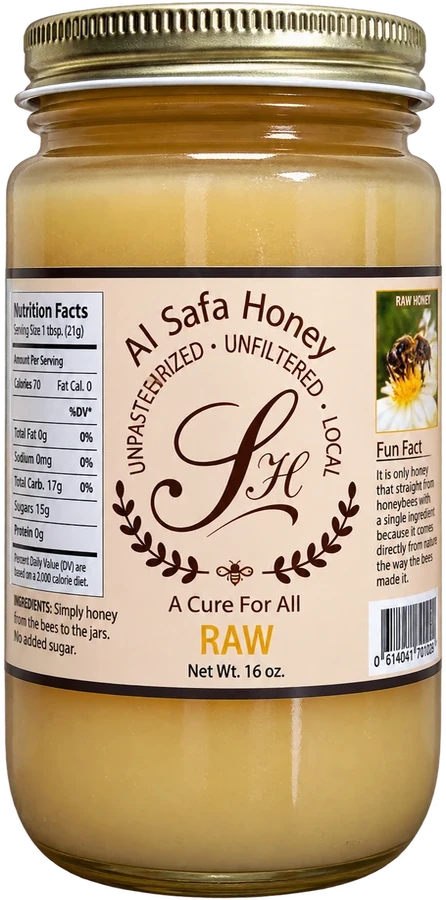
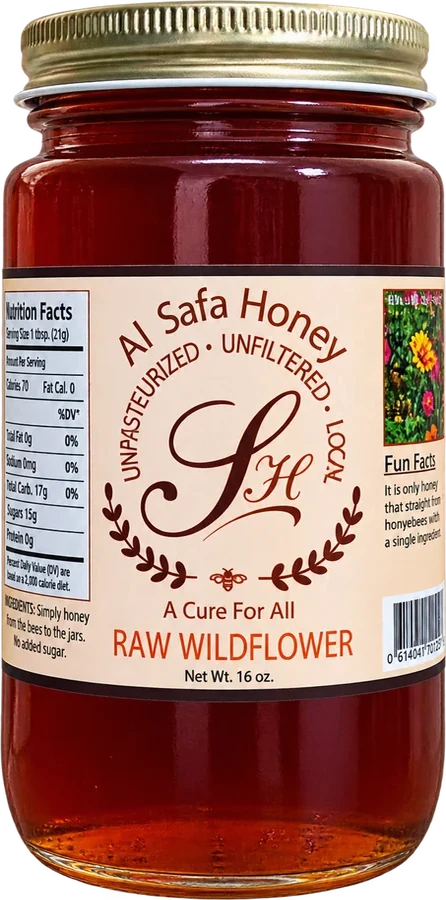
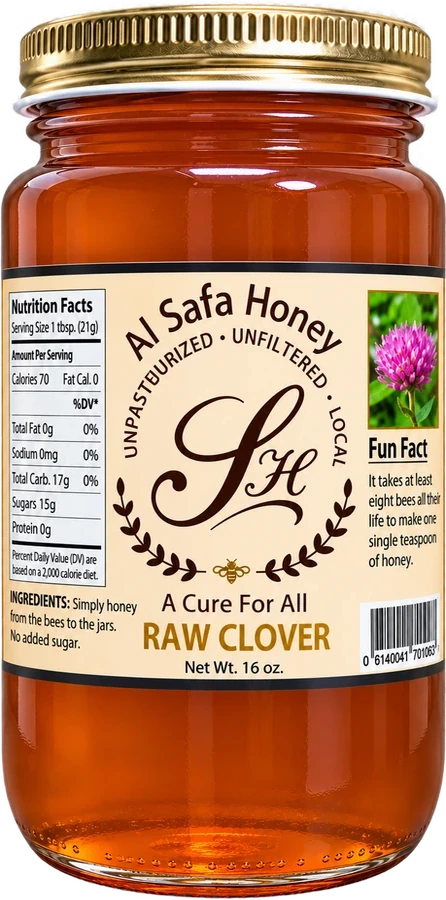
Al Safa honeys are raw and strained only of wax, so a little foam is part of the deal. They are never heated above hive temperature.
Try Pure Raw Honey for everyday use or Raw Wildflower Honey for a layered meadow taste. Find them in our shop.
Sources
Outside health sources we used for this article. They open in a new tab.
- Cloudy Honey #844624 · Ask Extension (Cooperative Extension)
- Managing the risks of fermented honey · Apiculture New Zealand
- United States Standards for Grades of Extracted Honey · USDA Agricultural Marketing Service
Frequently asked questions
- Why is there foam on my honey?
- Air mixed in during extraction and bottling rises slowly to the top and forms a pale foam layer.
- Is foam on honey safe?
- Ordinary foam that smells sweet is safe to eat. Sour-smelling foam with fizzing may mean fermentation.
- Should I remove foam on honey?
- You do not have to. You can stir it in, eat it on toast, or skim it off if you prefer a clear look.
- Why does raw honey have more foam?
- Raw honey is not heated, so bubbles rise slowly and may appear after bottling rather than being skimmed off in a factory.
- What are the white specks in honey foam?
- Usually tiny bits of wax or pollen that a simple strainer does not catch. They are natural and harmless.
- Can foam on honey turn hard?
- Yes. When honey crystallizes, foam can set into a white, chalky layer. Warming the jar softens it.
- Does foam on honey mean it has water in it?
- Usually not. Most foam is air. If the honey also smells sour or fizzes, extra water and fermentation could be the cause.
Al Safa Honey is a food producer, not a medical provider. Nothing here is medical advice, and these statements have not been evaluated by the Food and Drug Administration. Talk to your doctor about any health concern. Never give honey of any kind to a baby under 12 months old.