Honey Frosting: Those White Streaks in Your Jar Are Harmless
Honey frosting surprises many first-time raw honey buyers. You open the cupboard and find white, lacy streaks or patches on the inside of the glass, as if the jar has frosted over. It looks like something has gone wrong, but it has not. Honey frosting is a cosmetic effect linked to crystallization and tiny pockets of air. This article explains what honey frosting is, why it shows up mostly in raw honey, and what you can do if you prefer a clear look.
For general education only, not medical advice. Our honey is a food and is not intended to diagnose, treat, cure or prevent any disease.
What honey frosting looks like
Honey frosting usually starts as a small white patch or crescent near the shoulder of the jar. Over weeks or months it can spread into feathery streaks, swirls or a lacy layer covering much of the glass.
The honey inside is usually crystallized or partly set. From the outside the jar can look as if it contains two different substances, but when you open it the honey is uniform.
Why honey frosting happens
The beekeeping writer behind The Apiarist's article on frosting in honey explains that frosting is caused by tiny air bubbles that collect where honey meets the glass. Air is mixed in during extraction and bottling.
As honey crystallizes, glucose crystals pack together and the honey shrinks very slightly. That can pull the honey away from the glass in places and let those small air pockets spread, forming the white pattern.
Temperature swings make it more noticeable, because honey expands and contracts a little as it warms and cools.
Honey frosting and raw honey
Honey frosting is far more common in raw honey than in heavily processed honey. Ultrafiltered honey is often heated and pushed through fine filters, which removes pollen and particles that help crystals form. It stays liquid longer, so it rarely frosts.
Raw honey keeps its natural pollen and crystallizes over time, which creates the right conditions for frosting. Many beekeepers see it as a visual hint that the honey has not been cooked or ultrafiltered. Our article on pollen in honey explains why that matters.
Is frosted honey safe?
Yes. Honey frosting is purely cosmetic. It does not affect flavor, nutrition or safety. The honey is as good as it was before the streaks appeared.
The only thing to watch for is a different problem altogether: fermentation. Fermented honey smells sour or alcoholic and may bubble or separate with a watery layer on top. Our article on fermented honey explains how to tell the difference.
| What you see | What it means |
|---|---|
| White lacy streaks on the glass | Honey frosting, harmless |
| Uniform cloudy, grainy honey | Crystallization, harmless |
| Thin foam layer on top | Air bubbles, usually harmless |
| Sour smell, fizzing, watery top layer | Possible fermentation |
Honey frosting versus crystallization
Crystallization is the whole honey turning from liquid to a soft solid. Honey frosting is a pattern on the surface where that crystallized honey meets the glass. You usually see frosting only once crystallization has started.
Our crystallized honey guide explains why some honeys, like sunflower and clover, set faster than others.
How to reduce honey frosting
If you prefer a clear look, a few habits help:
- Store honey at a steady room temperature away from drafts.
- Avoid moving jars between warm and cold places.
- Use honey within a few months if appearance matters to you.
- Warm the jar gently in water to re-liquefy it, which clears the frosting for a while.
Why we do not try to prevent it
Large packers sometimes heat honey to slow crystallization and frosting so jars look perfect on a shelf for months. We would rather keep honey raw. Our honeys are never heated above hive temperature, so frosting can appear naturally over time.
Think of it like the sediment in an unfiltered wine or the cloudiness in fresh cider: a small visual quirk that comes with less processing.
Frosting in gift jars
If you are giving honey as a gift, frosting can look unexpected to the recipient. A short note saying that white streaks are natural in raw honey can help. Our honey gift ideas guide has more presentation tips.
Honey frosting in creamed honey
Creamed honey, sometimes called whipped or spun honey, is made by seeding liquid honey with fine crystals and stirring it so it sets smooth. It frosts often, because the controlled crystallization and air incorporated during mixing create the right conditions.
Makers of creamed honey sometimes see honey frosting as a quality signal rather than a flaw. Our creamed honey guide explains how the spread is made at home.
Raw honey that behaves naturally
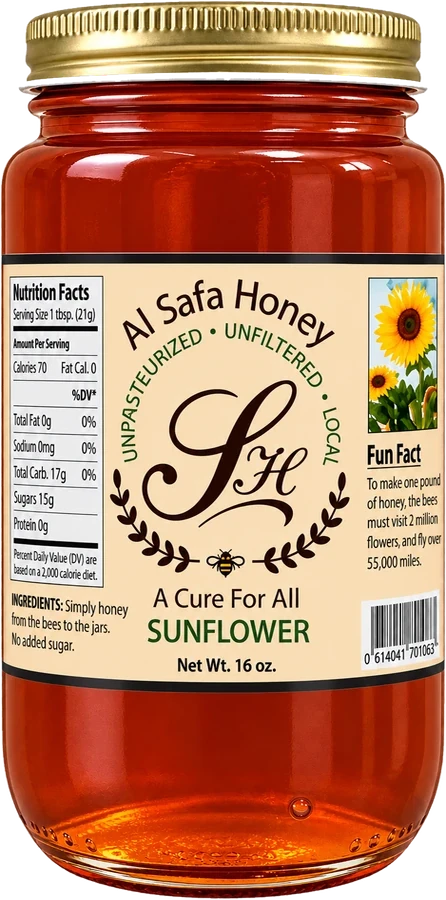
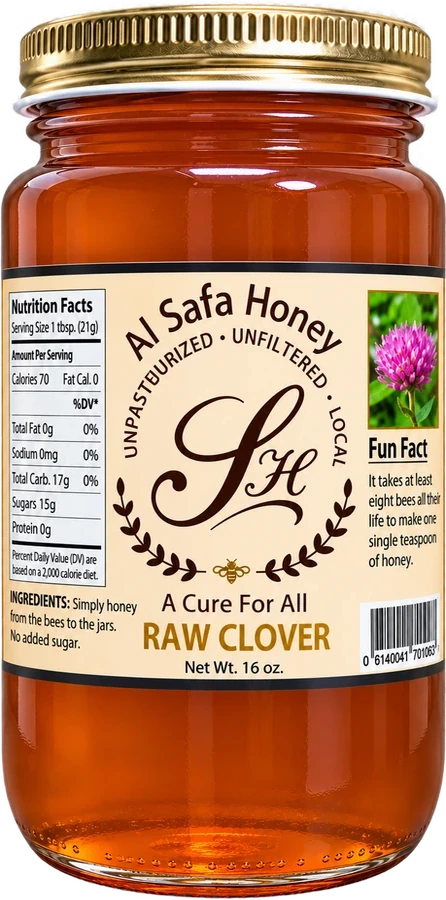
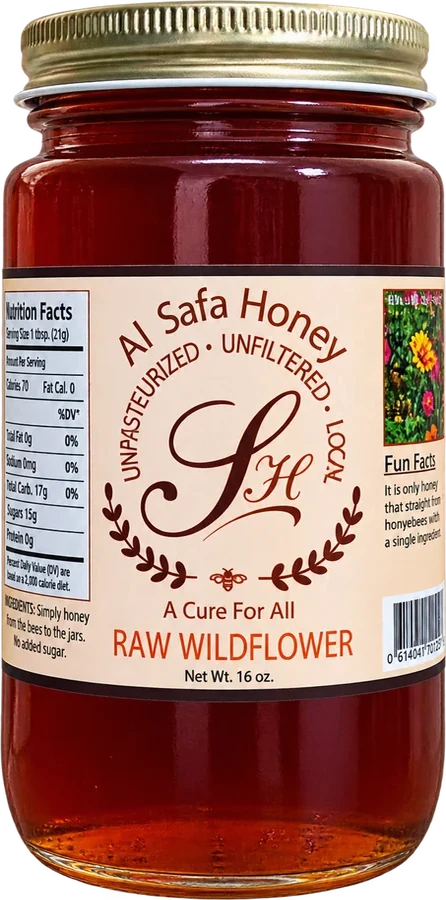
Our Raw Sunflower Honey sets into a soft crystal quickly and may frost beautifully. Raw Clover Honey and Raw Wildflower Honey crystallize more gradually.
Explore all our raw honeys in the shop. Free shipping applies to orders over $50.
Sources
Outside health sources we used for this article. They open in a new tab.
- Frosting in honey · The Apiarist
- Crystals in Honey as Seen Through a Polariscope · American Bee Journal
- Raw vs Regular Honey: What's the Difference? · Healthline
Frequently asked questions
- What is honey frosting?
- It is the white, streaky or lacy pattern that forms on the glass of crystallized honey, caused by tiny air bubbles at the glass surface.
- Is honey frosting a sign of bad honey?
- No. It is cosmetic and often seen in raw honey that has not been heated or ultrafiltered.
- Can I remove honey frosting?
- Gently warming the jar in a water bath will re-liquefy the honey and clear the frosting for a while.
- Why does my store honey never frost?
- Heavily processed honey is often heated and ultrafiltered, which slows crystallization and frosting.
- Does honey frosting affect taste?
- No. Flavor, aroma and texture are unchanged.
- How is frosting different from fermentation?
- Frosting is a visual pattern. Fermentation brings a sour or alcoholic smell, fizzing and sometimes a watery layer.
- Does honey frosting mean my honey is old?
- Not necessarily. Frosting can appear within weeks in honeys that crystallize quickly, such as sunflower.
Al Safa Honey is a food producer, not a medical provider. Nothing here is medical advice, and these statements have not been evaluated by the Food and Drug Administration. Talk to your doctor about any health concern. Never give honey of any kind to a baby under 12 months old.