Creamed Honey: What It Is and How to Make It at Home
Creamed honey is pure honey that has been crystallized under control, so instead of coarse, crunchy grains it sets into a silky, spreadable texture like soft butter. Nothing is added: no cream, no dairy, no thickeners. The method was refined in the early twentieth century and is sometimes called the Dyce process after the Cornell University researcher who developed it. This guide explains how creamed honey works, how it differs from whipped and spun honey, and how to make your own from raw honey with a simple seed batch.
What is creamed honey?
All honey that crystallizes naturally forms crystals, but the size of those crystals varies. Left alone, many honeys grow large, gritty crystals and a hard, uneven set. Creamed honey solves that by starting the process with crystals that are already very fine. New crystals copy the small structure of the seed, so the whole batch sets with a smooth, fine grain.
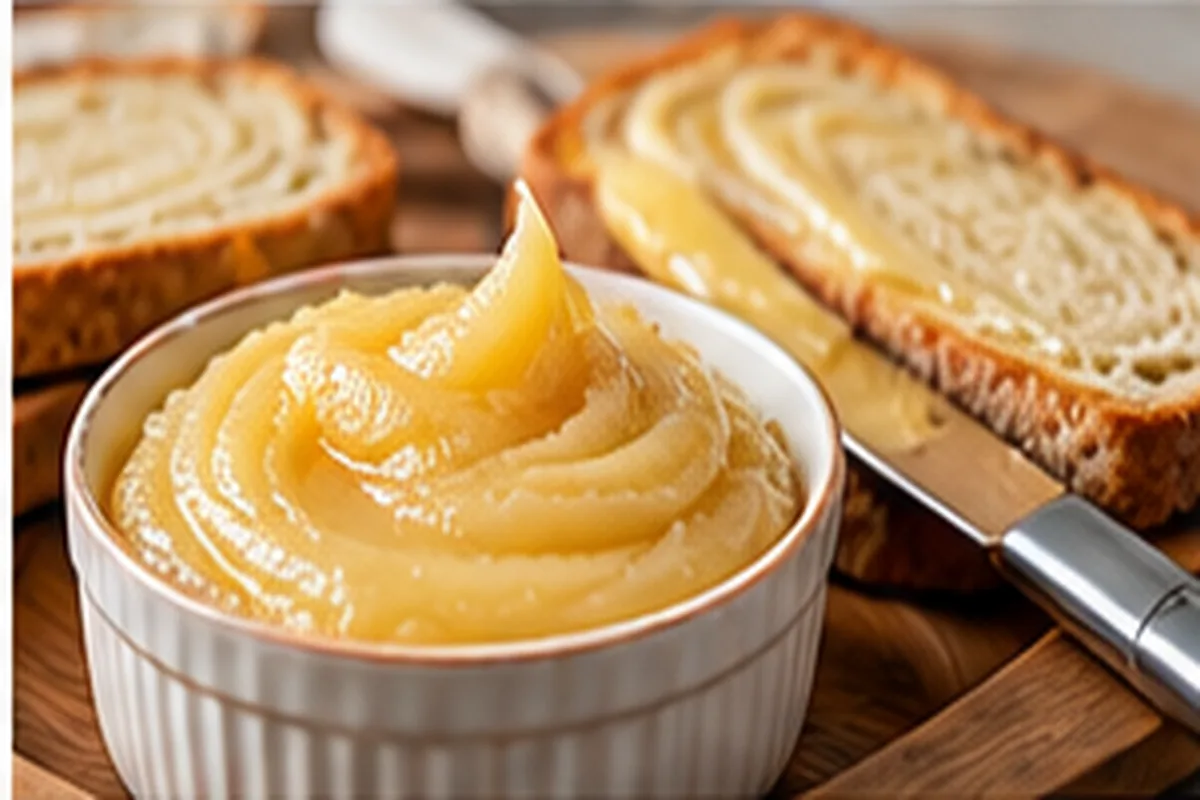
The result is opaque, pale and creamy, holds its shape on a knife, and melts quickly on the tongue. It spreads easily on toast without dripping, which is why it is popular for breakfast and with children.
The word cream refers only to texture. Creamed honey contains no dairy and is suitable for people avoiding milk.
The technique that made creamed honey common came from Elton Dyce, who studied crystallization at Cornell University and showed that seeding honey with fine crystals and storing it cool produced a consistently smooth product. Beekeepers and packers around the world still use the same basic idea, often with gentle stirring equipment for large batches.
Creamed vs whipped vs spun honey: what is the difference?
These names overlap, and different sellers use them differently. In general, they all describe honey crystallized on purpose into a smooth texture.
| Name | What it usually means | Ingredients |
|---|---|---|
| Creamed honey | Honey seeded with fine crystals and stored cool until set | Honey only |
| Whipped honey | Often the same product; sometimes beaten to add air for a lighter texture | Honey only, unless flavored |
| Spun honey | Another regional name for creamed honey | Honey only |
| Honey butter | Honey blended with actual butter | Honey and butter |
| Naturally crystallized honey | Honey that set on its own, often with coarser crystals | Honey only |
How to make creamed honey at home
Making creamed honey is mostly a matter of patience. You need liquid honey, a seed of finely crystallized honey, clean jars and a cool spot. Raw honey works best because it has not been heated and still contains the natural particles that help crystals form evenly.
- Choose a seed: a few tablespoons of store-bought creamed honey, or naturally crystallized raw honey ground smooth with a mortar and pestle or the back of a spoon.
- Use about one part seed to ten parts liquid honey by weight, for example 1.5 ounces of seed to 15 ounces of liquid honey.
- If your liquid honey has started to set, warm it gently in a water bath until fully clear, then let it cool to room temperature.
- Stir the seed into the liquid honey slowly and thoroughly for several minutes, avoiding whipping in large air bubbles.
- Pour into clean, dry jars and cap them.
- Store at about 55 to 60 degrees Fahrenheit, such as a cool basement, wine fridge or the warmest part of a refrigerator door.
- Check after a week. Most batches set firm and smooth within one to two weeks; then store at room temperature.
Which honey makes the best creamed honey?
Honeys with a fair amount of glucose set most reliably. Clover, sunflower, canola and alfalfa are classic choices because they crystallize readily and produce a pale, creamy result. High-fructose honeys such as acacia or tupelo tend to stay soft or never set fully.
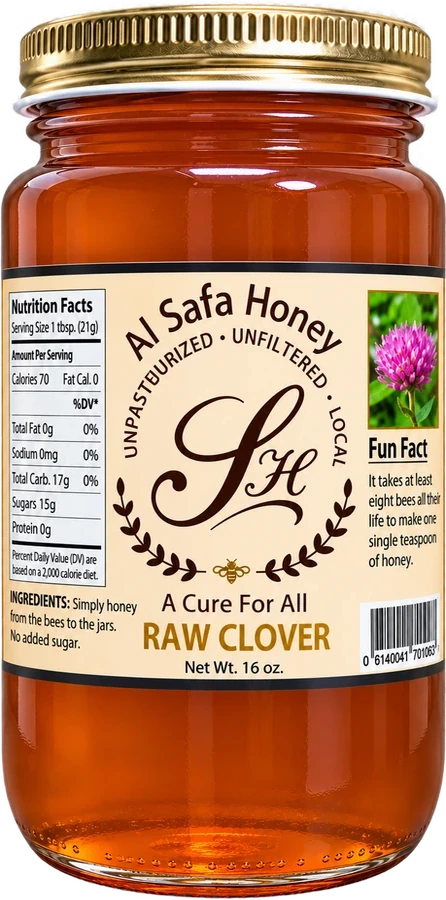
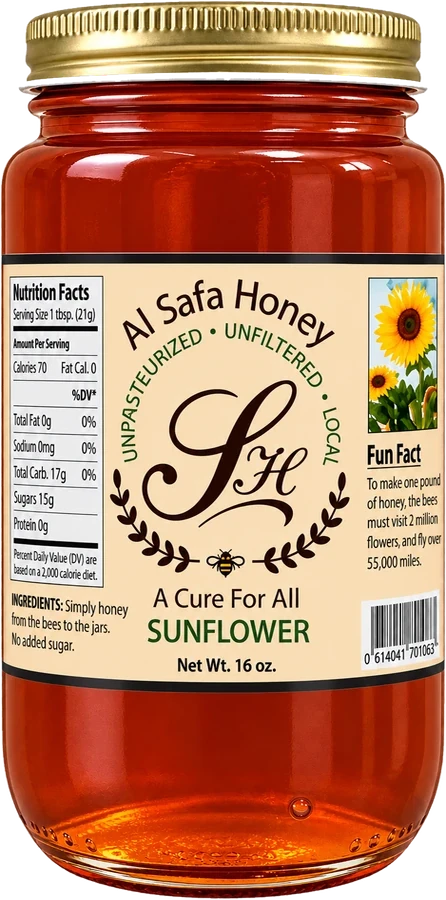
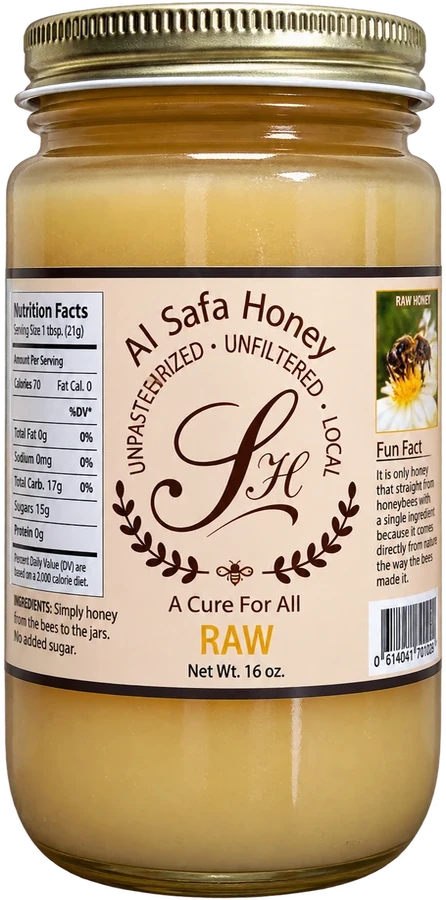
Al Safa does not sell creamed or whipped honey, but our raw honeys can be used as the base for a homemade batch. Pure Raw Clover Honey from New York State gives a classic pale, mild cream. Pure Raw Sunflower Honey, also from New York State, crystallizes on its own very quickly, so a jar that has already set finely can serve as your seed. Stronger honeys like buckwheat make a darker, bolder spread.
Your first batch also teaches you about the honey itself. A mild honey like clover produces a pale, almost white spread with a soft floral taste. A stronger honey makes a tan or brown cream with more flavor. Many home cooks keep a jar of each and use them for different breakfasts.
Troubleshooting homemade creamed honey
If your batch feels gritty, the seed crystals were probably too coarse. Grind them finer next time, or stir the set honey vigorously to break the crystals. If the batch never sets, the honey may be high in fructose or the storage spot too warm. Move it somewhere cooler or add more seed.
White streaks or frosting on the glass are harmless. They come from tiny air pockets between the honey and the jar and do not affect taste.
If the honey separates into a liquid layer on top, stir it back in and keep it a little cooler. Honey with a high water content is more likely to separate and, over time, ferment, so start with well-ripened honey.
Keep a little of your finished batch as the seed for the next one. A tablespoon or two of a smooth batch will seed a new jar, so after the first try you never need to buy a starter again. Just make sure the seed is fine and smooth, since any grit will copy itself into the next batch.
How to use creamed honey
Creamed honey is primarily a spread, but its thick texture opens up other uses too. It stays on whatever you put it on and melts into anything warm.
Try it on toast, English muffins, bagels and scones; swirled into oatmeal; layered in a sandwich with nut butter and banana; on apple slices for a snack; or as a cheese board spread that will not run. Mix in a pinch of cinnamon or vanilla seeds for an easy flavored version.
As with every honey, creamed honey is not safe for babies under 12 months because of the risk of infant botulism.
Flavored creamed honey ideas
Once you have made a plain batch, flavored versions are easy. Stir dry flavorings into the liquid honey at the same time you add the seed, so they are evenly suspended as the honey sets. Avoid adding anything wet, such as fresh fruit or juice, which raises the water content and can lead to fermentation.
Ground cinnamon is the classic choice, about one to two teaspoons per pound of honey. Vanilla bean seeds, finely grated dried orange or lemon zest, cocoa powder and a pinch of ground cardamom or ginger also work well. For a savory spread, try a little finely ground dried rosemary or thyme to serve with cheese.
Label jars with the flavor and the date you made them, and use flavored batches within a few months for the best aroma. Plain creamed honey keeps far longer, just like any other honey.
- Cinnamon creamed honey for toast and oatmeal.
- Cocoa creamed honey for a breakfast spread or fruit dip.
- Vanilla bean creamed honey for scones and pancakes.
- Orange zest creamed honey with clover for a bright, mild spread.
Frequently asked questions
- Does creamed honey contain cream?
- No. Creamed honey is made only from honey. The name describes its smooth, creamy texture, so it is dairy-free.
- Is creamed honey raw?
- It can be. If it is made from raw honey without heating above hive temperature, it remains raw. Many commercial versions start with heated honey, so check the label.
- Does creamed honey need to be refrigerated?
- No. Once it has set, store it at room temperature with the lid closed. Very warm kitchens may soften it, and a cooler spot keeps it firm.
- Why does my creamed honey have white streaks?
- Those streaks, called frosting, come from small air pockets where the honey pulls away from the glass as it crystallizes. They are harmless and are a common sign of honey with nothing added.
- Does Al Safa sell creamed honey?
- No. We offer raw liquid honey that crystallizes naturally, and our raw clover or sunflower honey can be used to make creamed honey at home.
- How long does homemade creamed honey take to set?
- Most batches set within one to two weeks when stored around 55 to 60 degrees Fahrenheit. Warmer storage slows the process, and high-fructose honeys may take longer or stay softer even with a good seed.
Al Safa Honey is a food producer, not a medical provider. Nothing here is medical advice. Never give honey of any kind to a baby under 12 months old.