Sunflower Honey: Why It Is So Yellow, Why It Sets So Fast, and How to Bake With It
Sunflower honey is the sunniest jar in any collection, a vivid egg-yolk yellow that often turns solid within a few weeks of harvest. People who have never seen it before sometimes assume something has gone wrong. Nothing has. Fast crystallization is one of sunflower honey's defining traits, and it makes this variety one of the most practical honeys for spreading and baking. Here is why it looks and behaves the way it does, what it tastes like, and how to get the most from it.
What is sunflower honey?
Sunflowers are grown on a large scale for oil seed and confection seed, and smaller plantings dot farms across New York, the Dakotas, Kansas and Europe. Each sunflower head is actually a cluster of hundreds of tiny florets, and they open in rings from the outside in over several days. That gives bees a steady supply of nectar and pollen across the bloom.
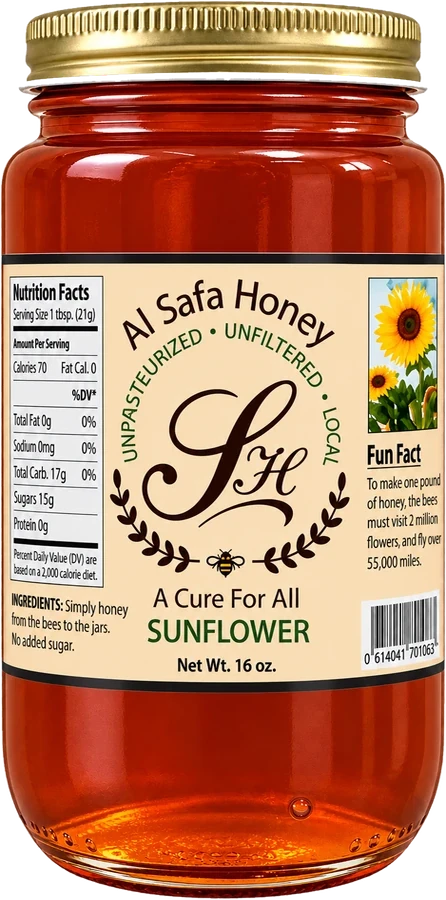
Sunflower nectar flows mainly in late July and August in northern states, at a time when many other sources have faded. Beekeepers who can place colonies near large fields can harvest a fairly pure single-source honey. Al Safa's Pure Raw Sunflower Honey is harvested by partner beekeepers in New York State from late-summer sunflower fields.
Sunflower honey is a staple in much of Eastern Europe, where vast sunflower fields support large beekeeping operations, and it is a familiar breakfast honey in Bulgaria, Romania and Ukraine. In the United States it is less common on supermarket shelves, partly because its quick crystallization makes it a poor fit for packers who want honey to stay clear for a long time.
Why is sunflower honey so yellow?
Sunflower nectar and pollen are rich in yellow pigments, including carotenoids and flavonoids, the same families of compounds that color the petals and seeds. Some of that pigment carries into the honey, and the pollen left in raw honey adds even more color.
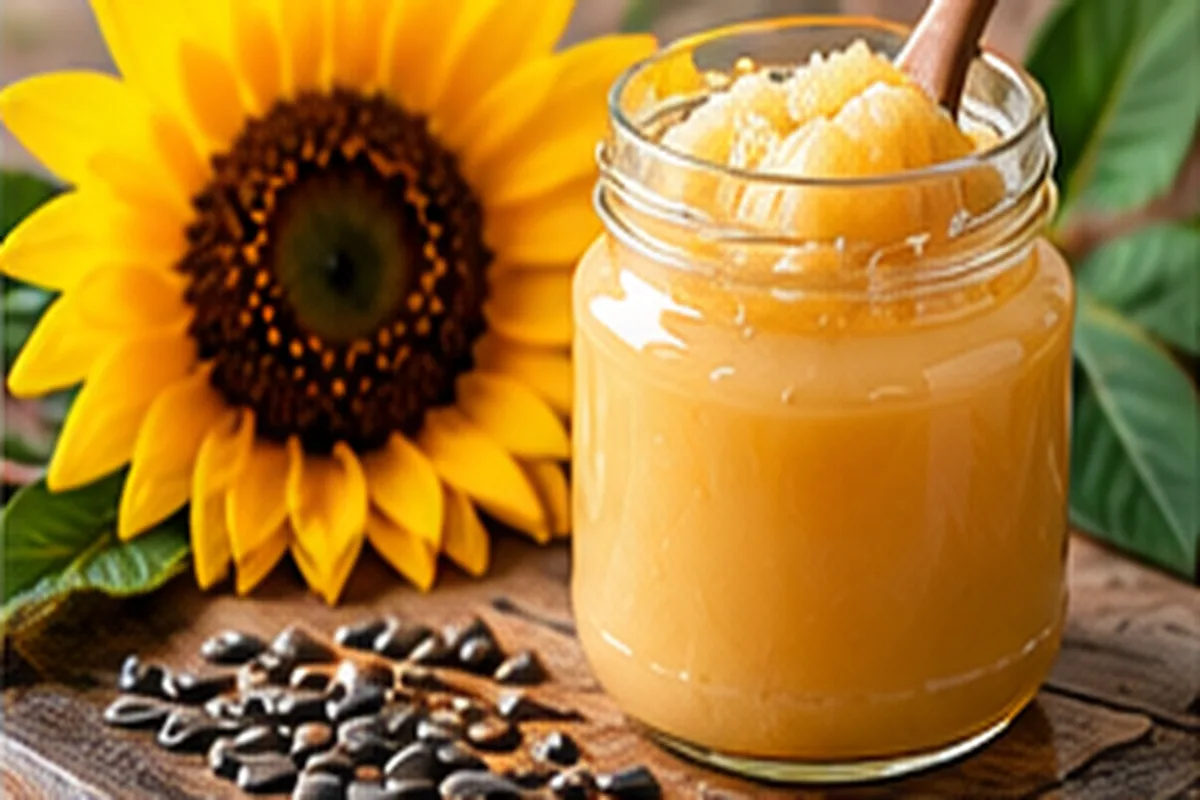
When the honey crystallizes, the fine crystals scatter light and make the color look even brighter and more opaque, closer to butter or lemon curd than to amber. A jar of set sunflower honey is often the most striking thing on a honey shelf.
Why does sunflower honey crystallize so fast?
All honey is a supersaturated sugar solution, holding more sugar than water can normally dissolve. Over time, glucose falls out of solution and forms crystals. Honeys with a high ratio of glucose to fructose and a low water content crystallize fastest, and sunflower is near the top of that list.
Raw honey also contains pollen grains and tiny particles that act as starting points for crystals. Put a high-glucose nectar together with intact pollen and you get a honey that may set firm within two to six weeks of extraction, sometimes before it even reaches the store.
This is not spoilage, added sugar or a sign of poor quality. Honey that is heated and fine-filtered stays liquid longer precisely because processing removes those crystal starters. A naturally set sunflower jar is a quiet signal that it was left alone.
| Honey | Glucose tendency | Typical time to set (raw) | Crystal texture |
|---|---|---|---|
| Sunflower | High | 2 to 6 weeks | Fine to medium, firm |
| Clover | Moderately high | 1 to 3 months | Fine, creamy |
| Wildflower | Varies with flowers | Weeks to many months | Varies |
| Orange blossom | Moderate | Several months | Medium |
| Acacia | Low | A year or more | Rarely sets |
What does sunflower honey taste like?
Expect warmth rather than perfume. Sunflower honey tastes mellow and rounded, with notes some people describe as apricot, dried hay or a faint waxy richness. It is sweeter on the front than wildflower and less floral than clover, and the finish is short and clean.
Texture changes the experience. Liquid sunflower honey feels light on the tongue; once crystallized it melts slowly, which makes its flavor seem fuller. Many fans actually prefer it set.
Raw sunflower honey can also carry a faint herbal or grassy edge from the field margins, since bees rarely visit only one plant. That small variation from year to year is normal and part of what makes a single-origin honey interesting to follow over several harvests.
Our Pure Raw Sunflower Honey is described as vivid golden with a warm, mellow, faintly fruity character, and it naturally sets into a soft, spoonable crystal. It is cold-extracted and strained of wax only, so its texture is entirely the honey's own doing.
How to bake and cook with sunflower honey
Crystallized honey measures and mixes differently from liquid honey, but it bakes perfectly well. The heat of the oven melts the crystals completely, so the finished texture is the same as with liquid honey. For batters and doughs, warming the measured honey briefly makes it easier to blend.
- Cream set sunflower honey with softened butter for an easy honey butter that holds its shape on warm rolls.
- Replace one third of the sugar in shortbread, oatmeal cookies or banana bread for a warmer golden note.
- Whisk into a mustard glaze for chicken thighs or pork chops; it caramelizes beautifully.
- Add a tablespoon to yeasted bread dough to feed the yeast and soften the crumb.
- Spoon straight onto a cheese board next to aged gouda or cheddar; the set texture does not run.
- Stir into warm oatmeal, where it melts instantly.
Sunflower honey tips: storing, scooping and re-liquefying
Store the jar sealed at room temperature. Cold accelerates crystallization, so the refrigerator will make it even firmer. If you want it pourable, set the open jar in a bowl of warm water around 95 to 105 degrees Fahrenheit and stir occasionally until smooth. Avoid boiling water and the microwave on high, which can scorch the sugars and flatten the aroma.
If you like it spreadable but softer, stir the set honey vigorously with a sturdy spoon. Breaking up the crystal network turns it into a creamy, scoopable texture without any heat.
Like all honey, sunflower honey is not for babies under 12 months. Older children and adults can enjoy it as any other added sugar, in sensible amounts.
Sunflower honey vs other golden honeys
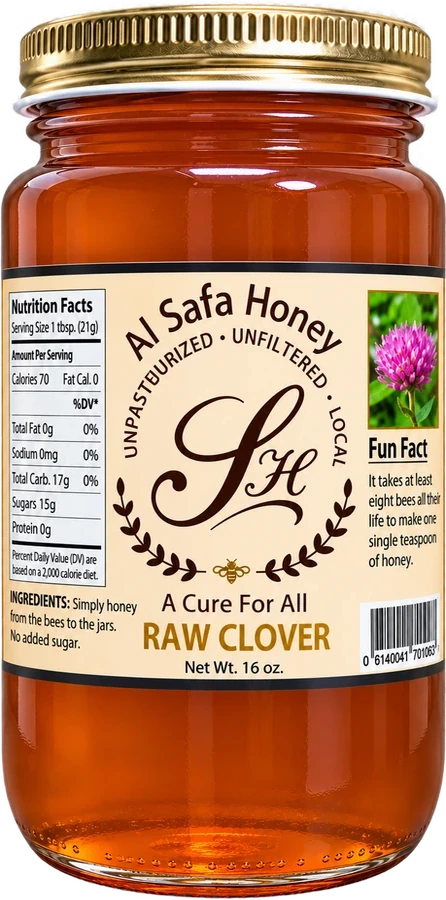
Sunflower honey is often grouped with wildflower and clover because all three are golden and approachable. In practice they behave quite differently in the kitchen. Clover is pale and neutral, which suits delicate tea and light cakes. Wildflower carries more layered floral and herbal notes and changes from batch to batch. Sunflower brings a warm, slightly fruity richness and a texture that turns spoonable fast.
That texture is the deciding factor for many cooks. If you want a honey that stays where you put it, on a slice of toast, in a sandwich or on a cheese board, sunflower is hard to beat. If you mostly drizzle honey over yogurt or into iced drinks, a slower-setting honey such as orange blossom may be more convenient day to day.
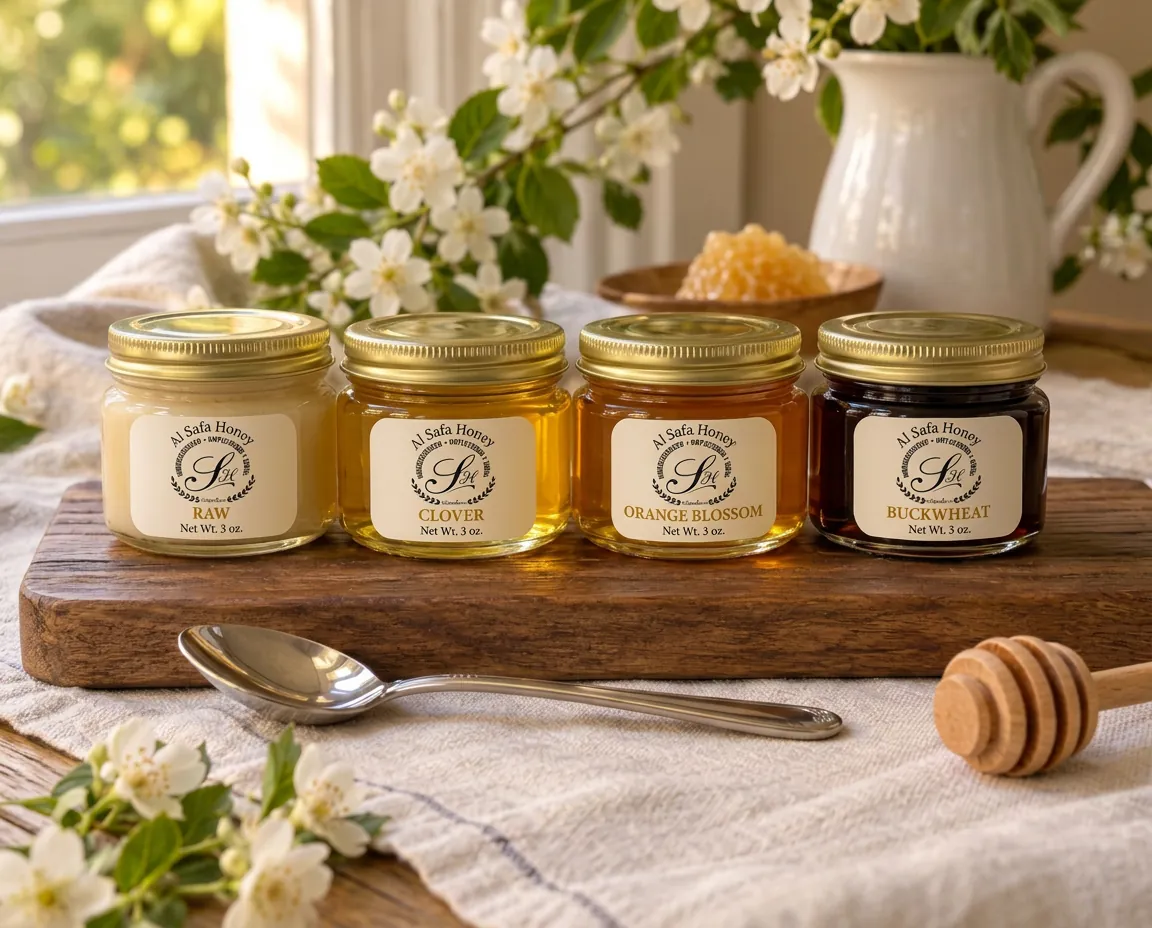
Sunflower also works as a bridge for people who find dark honeys too strong but clover too plain. It has more body than clover without the malt or bitterness of buckwheat. A sampler with sunflower, clover and wildflower side by side is one of the clearest ways to taste how much the flowers change honey.
Frequently asked questions
- Is it normal for sunflower honey to be solid?
- Yes. Sunflower honey is one of the fastest-setting honeys, and raw jars often turn solid within weeks. The texture is natural and the honey is completely fine to eat.
- Does crystallized sunflower honey mean it has sugar added?
- No. Crystallization comes from the glucose already in the nectar. Honey with added syrups often stays liquid longer, so a firm set is not a warning sign.
- Can you use sunflower honey in tea?
- Yes. Spoon a bit of the set honey into hot tea and stir; it dissolves within seconds. Its mellow taste works especially well with black tea and rooibos.
- Is sunflower honey the same as sunflower seed butter or oil?
- No. Sunflower honey is made by bees from the plant's nectar, while seed butter and oil come from pressing the seeds. The honey contains no seed fat and does not carry seed allergens in the way seed products do.
- How long does sunflower honey last?
- Sealed and stored at room temperature, honey keeps essentially indefinitely. Its color may darken and its aroma soften over a few years, but it remains safe to eat.
- Is sunflower honey good for people who do not like strong honey?
- Usually, yes. It is warmer and fuller than clover but far gentler than buckwheat or knotweed, with no bitterness. Many people who find dark honey too intense enjoy sunflower spread on toast or stirred into oatmeal, where its mellow sweetness fits in easily.
Al Safa Honey is a food producer, not a medical provider. Nothing here is medical advice. Never give honey of any kind to a baby under 12 months old.