Honey Viscosity: Why Some Honey Pours Fast and Some Barely Moves
Honey viscosity is the scientific word for how thick honey is, or how strongly it resists flowing. Anyone who has waited for the last drops to leave a cold jar knows it can change a lot. Temperature, water content and the flowers the bees visited all play a role. This article explains what controls honey viscosity, why it matters for measuring and baking, and how to choose a honey with the texture you like. If you have not yet, read our article on honey moisture content, which is closely related.
For general education only, not medical advice. Our honey is a food and is not intended to diagnose, treat, cure or prevent any disease.
What honey viscosity means
Viscosity describes internal friction in a liquid. Water has low viscosity and pours instantly. Honey has high viscosity because its dense sugars and small amount of water create a lot of resistance as layers slide past each other.
Scientists measure honey viscosity with instruments called viscometers or rheometers. They report it in units such as pascal-seconds. You do not need the numbers to see the difference, though. Tilt a spoon of cold honey and a spoon of warm honey and watch.
Most honey behaves as what scientists call a Newtonian liquid, which means its thickness does not change when you stir it. A few unusual honeys, such as heather, are thixotropic and become runnier when stirred.
Temperature is the biggest factor
Studies on honey rheology, such as research on the influence of temperature on orange honey, consistently find that viscosity falls steeply as temperature rises. A few degrees can make a visible difference.
That is why honey seems to thicken in winter and loosen in summer. It is also why a jar left near a warm stove pours like syrup while the same honey from a cold pantry clings to the spoon.
| Condition | What happens to honey viscosity |
|---|---|
| Cold pantry, around 55°F | Very thick and slow |
| Room temperature, around 70°F | Thick but pourable |
| Warm water bath, around 95°F | Noticeably runnier |
| In hot tea | Dissolves quickly |
Water content and honey viscosity
Even small changes in water make a big difference. Honey with 16 percent water is far thicker than honey with 19 percent. Beekeepers sometimes judge ripeness partly by how slowly honey moves on a tilted frame.
This is also why thick honey often signals ripe, low-moisture honey, while unusually runny honey from the same floral source may have more water and a higher risk of fermentation over time.
How floral source shapes texture
Different flowers produce honeys with different sugar balances and minor components. Those differences change honey viscosity even at the same temperature and water content.
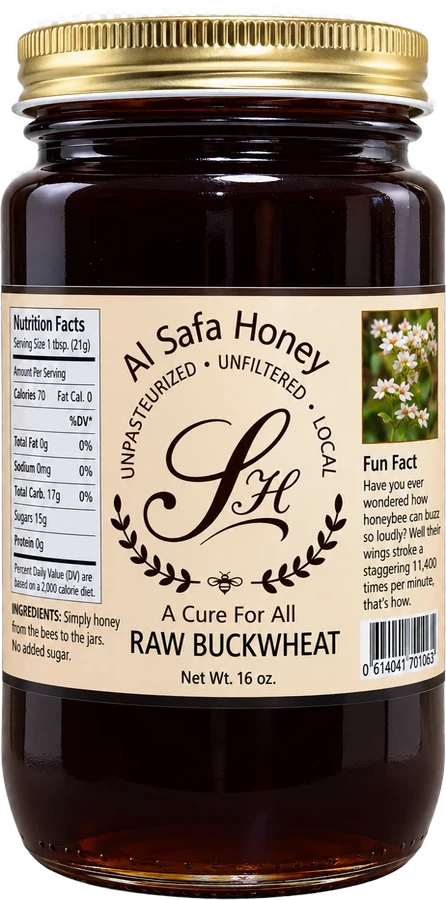
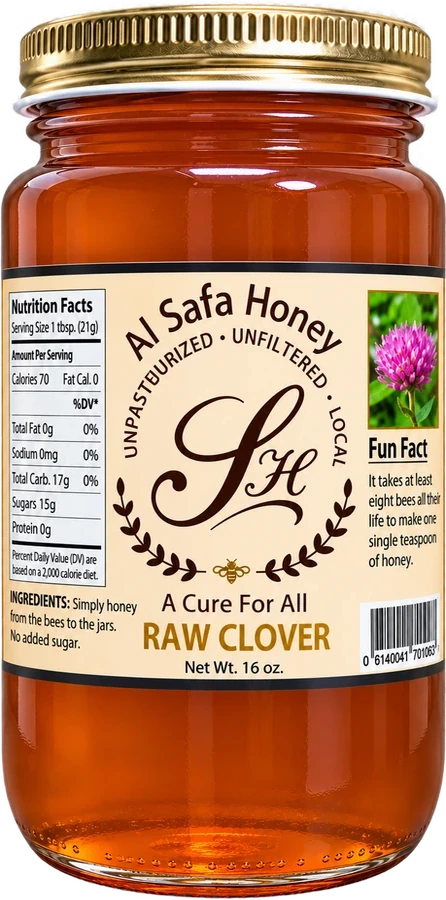
Dark, robust honeys often feel heavy and syrupy. Light honeys like clover and orange blossom tend to feel lighter on the spoon. Buckwheat honey is famous for being thick and slow, almost like molasses.
- Thick and heavy: buckwheat, knotweed
- Medium body: wildflower, blueberry blossom, pure raw blends
- Lighter pour: clover, orange blossom
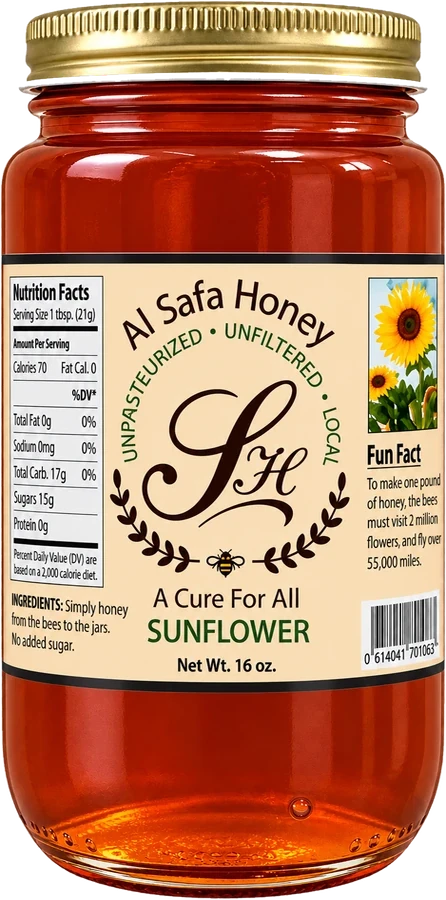
- Sets into soft crystals quickly: sunflower
Viscosity versus crystallization
Thick honey and crystallized honey are not the same. Crystallized honey has formed solid glucose crystals, so it looks cloudy or grainy and no longer pours. Thick liquid honey is still clear and flows slowly.
Warmth helps both, but in different ways. A slightly warmer room lowers honey viscosity in liquid honey. Crystallized honey needs a warm water bath to dissolve its crystals. Our crystallized honey guide explains the method.
Honey viscosity in the kitchen
Thick honey is hard to measure accurately because it clings to spoons and cups. A light coating of oil on the measuring spoon helps it slide out cleanly. Measuring by weight on a kitchen scale is even more accurate.
When baking, slightly warming honey makes it easier to blend with butter or eggs. For drizzling, a thicker honey stays in place on yogurt, cheese or pancakes, while a runnier honey soaks in. Our honey conversion chart helps with measurements.
Honey viscosity and flavor release
Texture affects taste. A thick honey lingers on the tongue longer, which can make its flavor feel deeper. A lighter honey spreads quickly and can taste brighter. Tasters at honey shows often comment on body and mouthfeel as well as flavor.
If you are pairing honey with food, think about texture as well as taste. Thick, dark honey is wonderful against sharp cheddar, while a lighter honey disappears gracefully into iced tea.
Storing honey for the right pour
Keep honey at a steady room temperature for the most reliable pour. The fridge makes honey very thick and speeds crystallization. A sunny windowsill thins it but harms aroma and color over time.
If your jar has become too thick to use easily, stand it in warm water for a few minutes. Avoid the microwave, which heats unevenly.
Find your favorite texture
Love a slow, rich pour? Raw Buckwheat Honey is our thickest. Prefer something lighter for tea? Try Raw Clover Honey. For a soft, spreadable set, Raw Sunflower Honey is a favorite.
Every jar is raw and never heated above hive temperature. Compare them in our shop, where a 3 or 6 jar pack of one honey saves you money.
Sources
Outside health sources we used for this article. They open in a new tab.
- Influence of Temperature on the Rheological Behavior of Orange Honey · Oriental Journal of Chemistry
- Honey as Nutrient and Functional Food · Bee Product Science (Stefan Bogdanov)
- United States Standards for Grades of Extracted Honey · USDA Agricultural Marketing Service
Frequently asked questions
- Why is my honey so thick?
- Cold temperatures and low water content raise honey viscosity. Some floral sources, like buckwheat, are naturally thicker too.
- Does thick honey mean better quality?
- Thickness often means low moisture, which helps honey keep, but a lighter honey can be just as ripe and high quality.
- How can I make honey runnier?
- Warm the jar gently in a bowl of warm water. Avoid the microwave and boiling water.
- Is runny honey watered down?
- Not necessarily. Warm temperatures and floral source can make genuine honey quite runny.
- What is the thickest Al Safa honey?
- Raw Buckwheat Honey is our thickest and darkest, followed by Raw Knotweed Honey.
- Does honey viscosity change in recipes?
- Yes. Warm honey blends more easily into batters and dressings. Weighing honey avoids measuring errors caused by thickness.
Al Safa Honey is a food producer, not a medical provider. Nothing here is medical advice, and these statements have not been evaluated by the Food and Drug Administration. Talk to your doctor about any health concern. Never give honey of any kind to a baby under 12 months old.