Sugars in Honey: Fructose, Glucose and the Rest of the Mix
The sugars in honey make up about four fifths of every jar, and they decide much of how honey looks, tastes and behaves. Fructose and glucose lead the way, but there are also smaller sugars that most people never hear about. This article breaks down the sugars in honey, explains how bees create the mix, shows how it affects crystallization and sweetness, and puts it in context with nutrition advice on added sugars. For calories and serving sizes, see calories in honey.
For general education only, not medical advice. Our honey is a food and is not intended to diagnose, treat, cure or prevent any disease.
The main sugars in honey
Classic analyses of American honey found an average of about 38 percent fructose and 31 percent glucose, with water around 17 percent. Individual honeys range widely. Bogdanov's review lists fructose between about 28 and 58 grams per 100 grams across the honeys it compares.
| Component | Typical share of honey |
|---|---|
| Fructose | About 38% |
| Glucose | About 31% |
| Water | About 17% |
| Maltose and other disaccharides | About 7 to 9% |
| Sucrose | About 1 to 2% |
| Oligosaccharides, acids, minerals, proteins | The small remainder |
How bees create the sugar mix
Nectar is mostly sucrose, the same sugar as table sugar. Bees add the enzyme invertase, which splits sucrose into fructose and glucose. That is why finished honey contains so little sucrose compared with the nectar it came from.
Bees also produce smaller amounts of other sugars as their enzymes rearrange sugar units. Our article on honey oligosaccharides covers the longer chains.
Finally, bees evaporate water until the sugars in honey are concentrated enough to keep for a long time.
Sugars in honey and crystallization
Glucose crystallizes more easily than fructose. Honeys with more glucose, such as sunflower, clover and many wildflower honeys, tend to set into a soft, spoonable crystal. Honeys with more fructose, such as tupelo or acacia, stay liquid much longer.
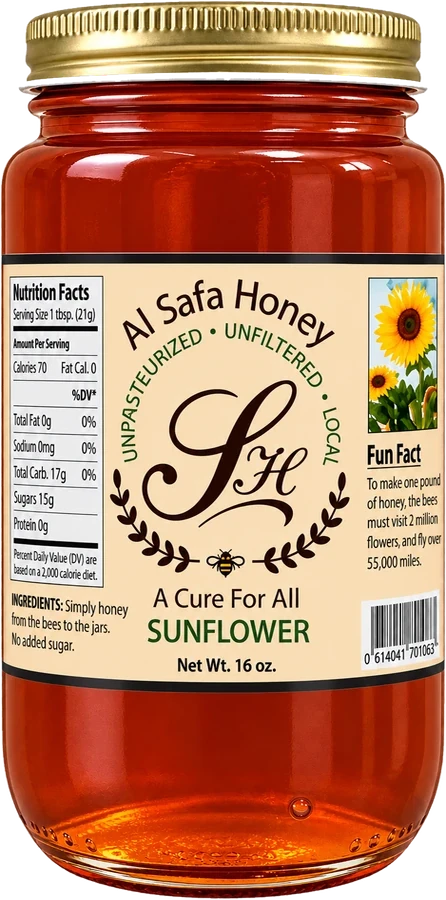
Crystallization is natural and harmless. Our Raw Sunflower Honey naturally sets into a creamy texture that many customers love on warm bread.
To soften crystals, stand the jar in warm water. Our crystallized honey guide explains more.
Sugars in honey and sweetness
Fructose tastes sweeter than glucose or sucrose. Because honey is rich in fructose, many people find it sweeter than table sugar spoon for spoon, which can make it easier to use a little less.
Honey also has more water than granulated sugar, so a tablespoon of honey weighs more and contains slightly more calories than a tablespoon of sugar. Measured by weight, the two are closer.
What nutrition experts say
The sugars in honey are natural, but in nutrition guidance honey counts as an added sugar when you stir it into foods. The American Heart Association suggests limiting added sugars to about 6 teaspoons a day for most women and 9 for most men.
Harvard Health notes that the body handles sugars from honey much like other sugars, with modest differences. That is why it makes sense to choose honey for taste and enjoy it in sensible amounts.
- 1 teaspoon of honey: about 6 grams of sugar
- 1 tablespoon of honey: about 17 grams of sugar
- AHA added sugar guide: about 25 g a day for most women, 36 g for most men
Sugars in honey compared with other sweeteners
Table sugar is pure sucrose. High fructose corn syrup is a mix of free fructose and glucose, similar in broad terms to honey but without honey's trace compounds. Maple syrup is mostly sucrose. Agave is very high in fructose.
Our guides comparing honey vs agave and honey vs maple syrup go deeper.
Sugars in honey and the glycemic index
The mix of sugars in honey affects how quickly it raises blood sugar. Fructose has a low glycemic index on its own, while glucose is the reference point at 100. Honeys with more fructose generally have lower glycemic index values than honeys with more glucose.
Bogdanov's review reports honey glycemic index values ranging from the low 30s for acacia to the high 80s for some honeydew honeys, with many common honeys in the middle. Our honey glycemic index guide explains what those numbers mean.
People managing blood sugar should follow advice from their own care team. Our article on honey vs sugar and blood sugar reviews the research.
How labs check the sugars in honey
Testing the sugars in honey is one of the main ways labs look for adulteration. Unusual ratios of fructose and glucose, high sucrose or the presence of sugars that do not occur naturally in honey can all point to added syrups.
The CDC's added sugars page is a good reminder of why this matters for shoppers too: honey on the ingredient list should mean honey, and nothing else.
Choosing honey you enjoy
Since every spoonful counts toward added sugar, it is worth choosing honey that tastes wonderful so a little goes a long way. Al Safa honeys are raw, never heated above hive temperature and strained only of wax.
Try Pure Raw Honey for everyday use, or save on a 3 or 6 jar pack in our shop.
Sources
Outside health sources we used for this article. They open in a new tab.
- Honey: nutrient profile · USDA FoodData Central
- Honey as Nutrient and Functional Food · Bee Product Science (Stefan Bogdanov)
- How much sugar is too much? · American Heart Association
- Are certain types of sugars healthier than others? · Harvard Health Publishing
Frequently asked questions
- What are the main sugars in honey?
- Fructose and glucose. Together they make up most of honey's sugar, with smaller amounts of maltose, sucrose and other sugars.
- How much sugar is in a tablespoon of honey?
- About 17 grams, according to USDA data.
- Is the sugar in honey healthier than table sugar?
- Honey carries small amounts of other compounds that table sugar lacks, but both count as added sugars. Moderation applies to both.
- Why does honey crystallize?
- Glucose forms crystals when honey is cool or high in glucose. It is natural and reversible with gentle warmth.
- Does honey contain sucrose?
- Only a little, usually a few percent at most, because bee enzymes split most of the nectar's sucrose into fructose and glucose.
- Is honey sweeter than sugar?
- Many people find it slightly sweeter because of its fructose content, which makes it easy to use a little less.
Al Safa Honey is a food producer, not a medical provider. Nothing here is medical advice, and these statements have not been evaluated by the Food and Drug Administration. Talk to your doctor about any health concern. Never give honey of any kind to a baby under 12 months old.