Fructose in Honey: How Much There Is and What It Means for You
Fructose in honey is the single biggest ingredient in most jars. It is the reason honey tastes so sweet, why some honeys stay runny for years, and why honey shows up in conversations about fructose and health. This article explains how much fructose in honey there is, how it compares with corn syrup, agave and table sugar, what research says about fructose in general, and how to enjoy honey sensibly. For the full sugar breakdown, see sugars in honey.
For general education only, not medical advice. Our honey is a food and is not intended to diagnose, treat, cure or prevent any disease.
How much fructose in honey there is
On average, American honey has been measured at about 38 percent fructose and 31 percent glucose. Bogdanov's review of honey as a food reports fructose ranging from roughly 28 to 58 grams per 100 grams across different honeys.
In a tablespoon of honey, which contains about 17 grams of sugar, that means roughly 8 grams of fructose and 6 to 7 grams of glucose, depending on the honey.
Fructose in honey compared with other sweeteners
Different sweeteners carry different ratios of fructose and glucose. Here is a simple comparison by approximate share of total sugars.
| Sweetener | Fructose | Glucose | Notes |
|---|---|---|---|
| Table sugar | 50% | 50% | Bonded together as sucrose |
| Honey | About 50 to 55% | About 40 to 45% | Mostly free sugars, plus traces of other compounds |
| HFCS-55 | 55% | About 42% | Common in soft drinks |
| Agave syrup | Often 70 to 85% | Lower | Very high fructose |
| Maple syrup | Low | Low | Mostly sucrose |
Why fructose keeps some honeys liquid
Fructose dissolves more easily than glucose and is slow to crystallize. Honeys with a high fructose to glucose ratio, such as tupelo and acacia, can stay liquid for a very long time.
Honeys with more glucose, such as sunflower and clover, set faster into soft crystals. Neither is better. They simply behave differently. Our guide to creamed honey shows how crystallization can be turned into a smooth spread.
What research says about fructose
Most research concern about fructose centers on large intakes, especially from sugary drinks. The liver handles most fructose, and very high intakes over time are linked in studies to unwanted changes in blood fats and liver fat.
Harvard's Nutrition Source explains that added sugars of all kinds, rather than any single one, are the main issue in the typical Western diet. Honey is part of that total when you add it to foods.
The useful takeaway is about amount. A drizzle of honey on oatmeal is very different from several sodas a day.
Fructose in honey and sensitive digestion
Some people do not absorb fructose well, especially when a food has more fructose than glucose. Honey usually has a small fructose excess, which is why it is considered high FODMAP. Our article on whether honey is low FODMAP explains what that means.
If you have ongoing digestive symptoms, speak with a doctor or registered dietitian before changing your diet.
Fructose in honey and sweetness
Fructose tastes sweeter than glucose or sucrose, especially when cold. That is why honey can taste sweeter in iced tea than in hot tea. It also means a small amount of honey goes a long way.
- Use about three quarters of a cup of honey in place of a cup of sugar in many recipes.
- Taste as you go in drinks and dressings, since honey's sweetness builds quickly.
- Pair honey with tart foods like citrus and berries to balance it.
The fructose to glucose ratio by variety
Experts often describe honey by its fructose to glucose ratio. A ratio well above 1 means the honey is likely to stay liquid for a long time. A ratio close to 1 means it may crystallize sooner. Fructose in honey is almost always the larger share, but how much larger depends on the flowers.
Some well-known patterns: tupelo, acacia and sage honeys are high in fructose and stay runny. Sunflower, rapeseed and dandelion honeys are richer in glucose and set quickly. Clover and wildflower honeys usually fall in between.
| Honey type | Typical behavior |
|---|---|
| High fructose (tupelo, acacia) | Stays liquid for a long time |
| Balanced (clover, wildflower) | Crystallizes over weeks or months |
| Higher glucose (sunflower) | Sets quickly into soft crystals |
Fructose in honey and food labels
Nutrition labels do not list fructose separately. They show total sugars and, on packaged foods that contain honey as an ingredient, added sugars. A tablespoon of honey on its own lists about 17 grams of total sugars.
The American Heart Association's guidance on sugar suggests most women keep added sugars to about 25 grams a day and most men to about 36 grams, which helps put a spoonful of honey in perspective.
Enjoying honey sensibly
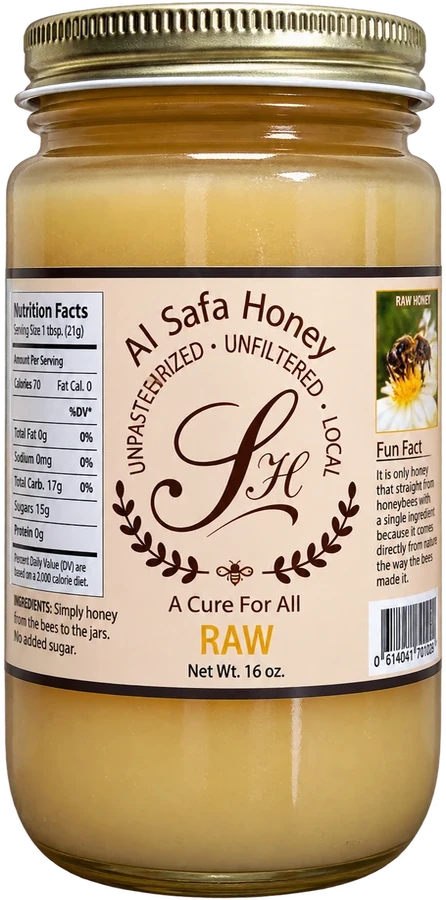
A good rule is to choose a honey you love so a teaspoon feels like a treat. Al Safa honeys are raw, never heated above hive temperature and strained only of wax.
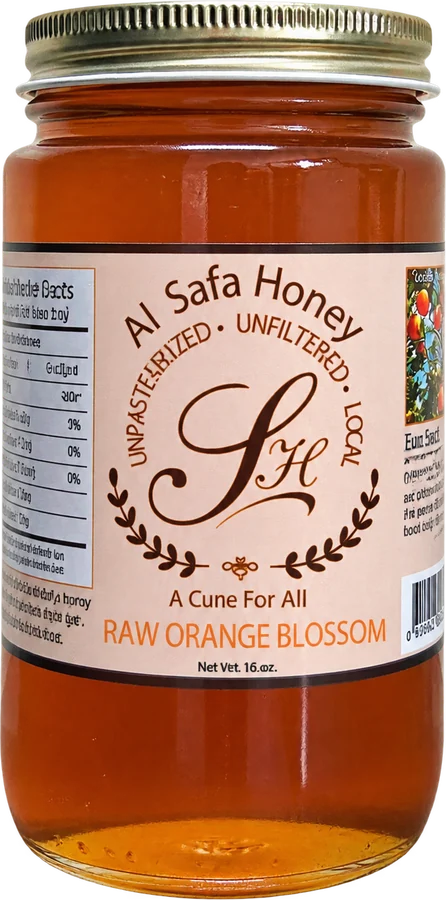
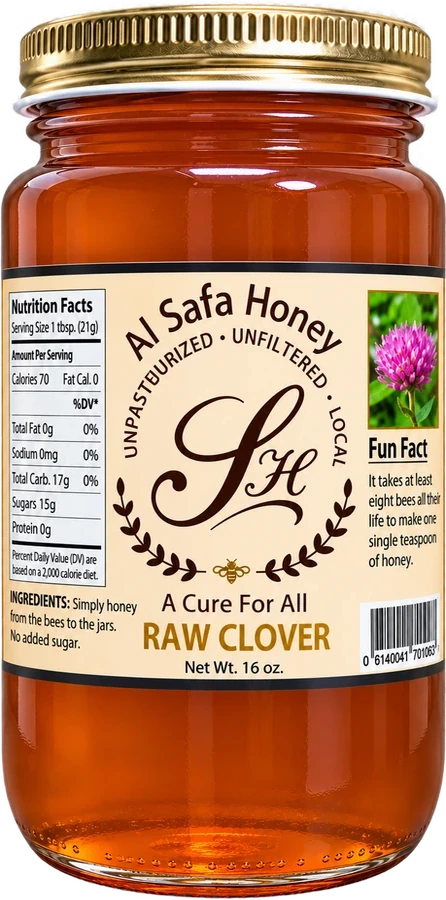
Light, bright jars like Raw Orange Blossom Honey shine in iced tea, while Raw Clover Honey is a gentle everyday sweetener. Find both in our shop.
Sources
Outside health sources we used for this article. They open in a new tab.
- Honey as Nutrient and Functional Food · Bee Product Science (Stefan Bogdanov)
- Added Sugar in the Diet · Harvard T.H. Chan School of Public Health
- Honey: nutrient profile · USDA FoodData Central
- How much sugar is too much? · American Heart Association
Frequently asked questions
- How much fructose is in honey?
- Usually around 38 percent of the jar by weight, or about 8 grams in a tablespoon, though it varies by floral source.
- Is fructose in honey different from fructose in corn syrup?
- Chemically, fructose is the same molecule. Honey also contains glucose, other sugars and trace compounds, but it still counts as added sugar.
- Does honey have more fructose than table sugar?
- Slightly more as a share of its sugars. Table sugar is half fructose and half glucose. Honey usually has a little more fructose than glucose.
- Which honey has the most fructose?
- Honeys that stay liquid for a long time, like tupelo and acacia, are typically higher in fructose.
- Is fructose in honey bad for you?
- Concerns about fructose mostly involve large intakes from sugary drinks and processed foods. Moderate amounts of honey fit within added sugar guidelines.
- Why is honey sweeter in cold drinks?
- Fructose tastes sweeter at cooler temperatures, so honey can seem sweeter in iced tea than in hot tea.
Al Safa Honey is a food producer, not a medical provider. Nothing here is medical advice, and these statements have not been evaluated by the Food and Drug Administration. Talk to your doctor about any health concern. Never give honey of any kind to a baby under 12 months old.