Acacia Honey: Why It Stays Liquid, What It Tastes Like, and Mild Alternatives
Acacia honey is one of the most prized light honeys in the world, famous for its near-transparent color and for staying liquid long after other honeys have set. Despite the name, the honey sold as acacia in Europe and the United States comes mostly from the black locust tree, not from true acacias. This guide explains the black locust connection, why acacia honey resists crystallization, how it tastes and how to use it, and which mild honeys make good stand-ins when you cannot find it.
What is acacia honey, really?
True acacias are a large group of trees and shrubs found mostly in Africa and Australia, and some of them do produce honey locally. The jar labeled acacia honey on most Western shelves, though, comes from Robinia pseudoacacia, a North American tree called black locust. European settlers carried it across the Atlantic centuries ago, and its feathery leaves reminded people of acacia, so the name stuck.
Black locust spread especially well in the Carpathian Basin. Hungary now has some of the largest black locust forests in Europe, and Hungarian acacia honey carries a protected designation. Romania, Bulgaria, Italy, France and parts of China also produce significant amounts.
The tree blooms for a short window in late spring, usually ten days to two weeks, with heavy clusters of fragrant white flowers. A cold snap or heavy rain during that window can wipe out most of a season's crop, which helps explain the honey's price.
Why does acacia honey stay liquid?
Crystallization depends mostly on the balance of two sugars. Glucose crystallizes readily, while fructose stays dissolved. Black locust nectar is unusually high in fructose and low in glucose, so acacia honey can stay clear and pourable for a year or longer at room temperature.
This trait makes acacia useful for products that need to stay fluid, such as squeeze bottles, drinks and some confectionery. It also means a cloudy or quickly granulating acacia honey deserves a second look, since it may have been blended with other honey.
| Honey | Fructose to glucose balance | Tendency to crystallize | Color |
|---|---|---|---|
| Acacia (black locust) | Very high fructose | Very slow, often a year or more | Water white to pale straw |
| Tupelo | High fructose | Very slow | Light amber with green cast |
| Orange blossom | Moderate | Months | Light gold |
| Clover | Higher glucose | Weeks to a few months | Pale gold |
| Sunflower | High glucose | Very fast | Bright yellow |
What does acacia honey taste like?
Acacia honey tastes clean, sweet and gentle, with a soft floral aroma that many people compare to vanilla or fresh flowers. It has almost no bitterness or acidity and a very short finish. Because fructose tastes sweeter than glucose, acacia can seem sweeter than other light honeys even at the same sugar content.
That subtlety is why chefs use it when they want sweetness without a honey taste, for example in delicate desserts, fresh cheeses or tea where they do not want to mask the leaf.
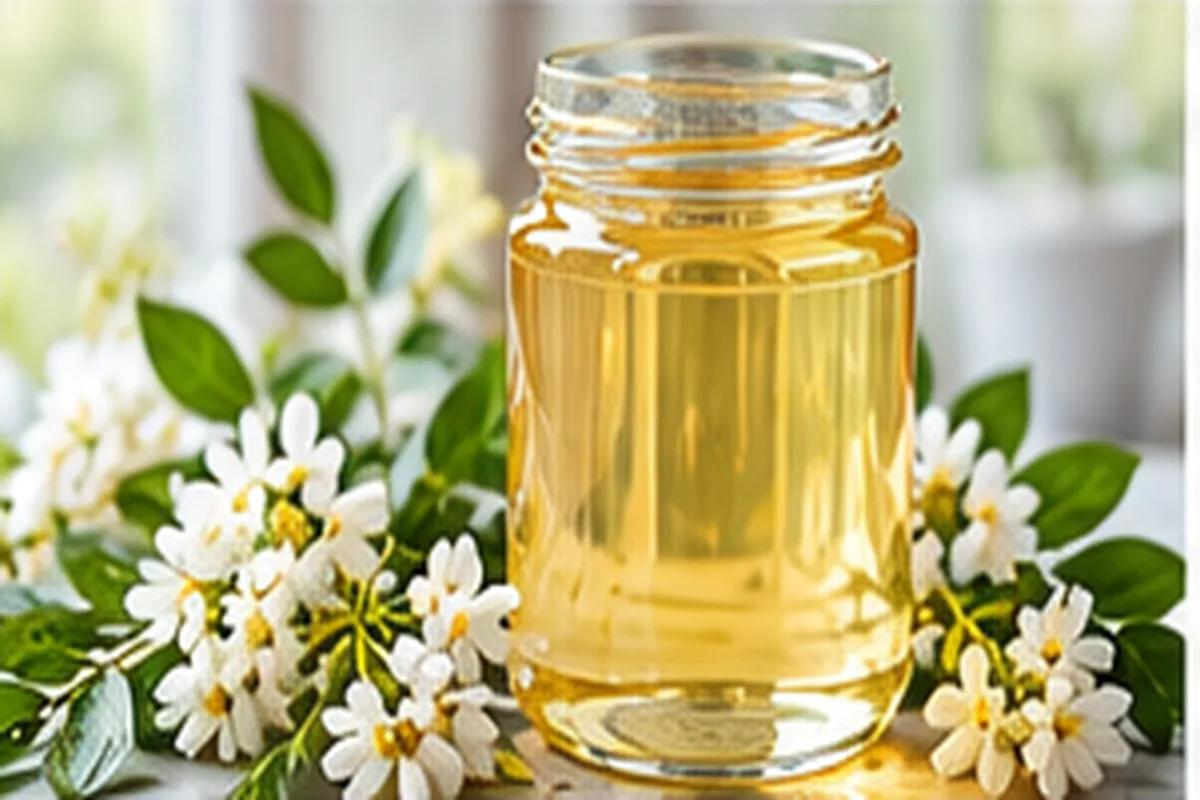
Its texture is part of the appeal. Acacia pours in a thin, glassy ribbon and feels light in the mouth, without the thickness of many set honeys. On a spoon it looks almost like liquid sunlight, which is why it is so often photographed and gifted.
Because its flavor is so delicate, acacia is also a favorite base for infused honeys and for pairing with strongly flavored foods where the cook does not want honey to compete. It lets blue cheese, spicy dishes or fresh herbs take the lead while adding gentle sweetness.
How to use acacia honey
Use acacia anywhere you want sweetness that stays in the background and a honey that pours easily even straight from a cool pantry.
Because it stays fluid, acacia is also convenient for making simple honey syrups for cocktails and iced coffee: stir equal parts honey and warm water until smooth, cool and refrigerate for up to two weeks.
- Sweeten green and white teas without overpowering them.
- Drizzle over fresh ricotta, burrata or mild goat cheese.
- Stir into cold drinks, since it dissolves more readily than set honey.
- Use in panna cotta, custards and light fruit salads.
- Spread on crepes or croissants for a simple breakfast.
Mild alternatives to acacia honey
Al Safa does not sell acacia honey. If you love acacia for its mildness, a couple of our raw honeys are honest alternatives, though not identical. None of them will stay liquid as long as acacia, and each has its own character.
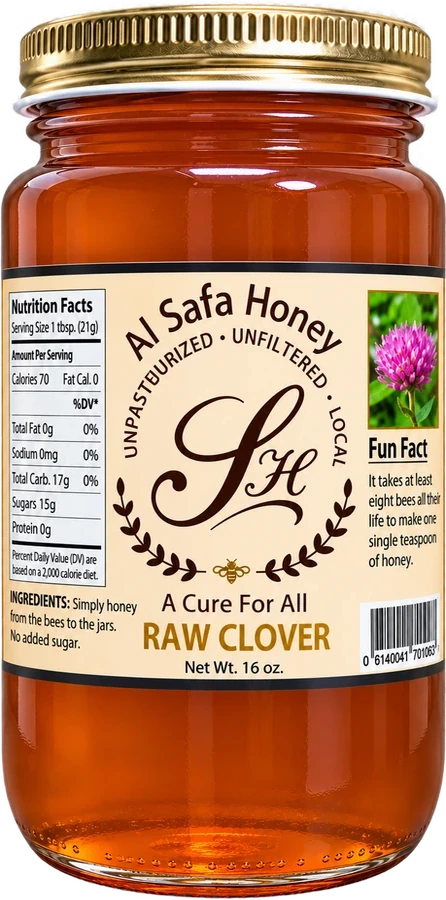
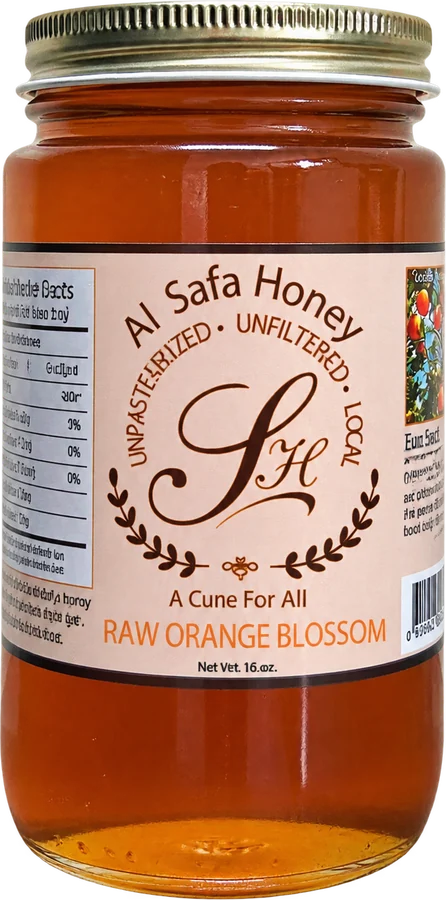
Pure Raw Clover Honey, harvested by partner beekeepers in New York State, is the closest in taste: pale, clean and gently floral. It will crystallize into a creamy set within months rather than staying clear, which you can reverse with gentle warmth. Pure Raw Orange Blossom Honey, harvested in Florida, is also light and delicate but brings a distinct citrus-blossom perfume that acacia does not have.
If what you love about acacia is that it never crystallizes, set expectations accordingly: raw clover will set, and orange blossom will eventually set too, though more slowly. Either can be warmed gently in a water bath whenever you want it pourable.
- For the most neutral sweetness: raw clover honey.
- For a light honey with a floral lift: raw orange blossom honey.
- For a honey that stays fluid longest: look for acacia or tupelo from a specialty seller.
Buying acacia honey: what to check
Acacia's high price makes it a target for blending and adulteration. Look for a clear country of origin and, ideally, the Latin name Robinia on the label. A reputable seller should be able to tell you the region it was harvested in.
Color and texture are useful clues. Genuine acacia is very pale and should stay liquid for many months. A deep gold color or rapid granulation suggests a blend. Remember that no honey, including acacia, is safe for babies under 12 months.
Expect to pay more for genuine acacia than for most everyday honeys, especially for single-region jars from Hungary or Italy. If you mainly want a mild honey for daily use rather than acacia specifically, a raw clover honey from a named American region is usually far easier to find and more affordable, with the trade-off that it will crystallize sooner.
Acacia honey vs clover honey vs orange blossom honey
All three are light honeys, and all three are often recommended to people who find stronger honey overwhelming. They are not interchangeable, though, and knowing the differences helps you pick the right one for a recipe or a cup of tea.
Acacia is the most neutral and the most fluid. It is very pale, tastes faintly of vanilla and flowers, and stays liquid for a long time. Clover is close in mildness but a touch more rounded, with a soft hay-like note, and it crystallizes into a creamy set in a few months when raw. Orange blossom is still light but clearly aromatic, with a citrus-blossom perfume that comes through in tea, lemonade and desserts.
In practice, choose acacia or clover when you want sweetness with almost no flavor, and orange blossom when you want the honey itself to add a gentle fragrance. If you buy raw clover and prefer it liquid, a short warm water bath brings it back to a pourable state without harming its flavor.
- Most neutral flavor: acacia, then clover.
- Most aromatic of the three: orange blossom.
- Stays liquid longest: acacia.
- Easiest to find raw from a named American state: clover.
Frequently asked questions
- Is acacia honey from acacia trees?
- Usually not. Most acacia honey on Western shelves comes from the black locust tree, which is sometimes called false acacia. A few countries do produce honey from true acacia species, but it is less common.
- Is acacia honey good for diabetics?
- Acacia's higher fructose share gives it a slightly lower glycemic index than many honeys, but it is still sugar. People with diabetes should count it like any added sugar and follow their care team's guidance.
- Does acacia honey ever crystallize?
- Eventually it can, especially in cold storage or after a year or more, but far more slowly than most honeys. If yours set within weeks, it may have been blended.
- Does Al Safa sell acacia honey?
- No. If you are after a mild, light honey, our raw clover and raw orange blossom honeys are the closest choices, each with its own taste and texture.
- Is acacia honey good for tea?
- It is one of the best tea honeys because it adds sweetness with very little flavor of its own and dissolves easily. Raw clover is a good substitute when acacia is not available.
- Why is acacia honey so expensive?
- Black locust blooms for only about two weeks, and a cold snap or heavy rain during that window can ruin the crop. Strong demand in Europe, protected regional names and the need to verify purity all add to the price on store shelves.
Al Safa Honey is a food producer, not a medical provider. Nothing here is medical advice. Never give honey of any kind to a baby under 12 months old.