Chestnut Honey: Europe's Bitter, Tannic Specialty and How to Enjoy It
Chestnut honey is the honey for people who think they do not like sweet things. Made from the flowers of the sweet chestnut tree in the hills of Italy, France, Spain and the Balkans, it is dark, aromatic and distinctly bitter, with a tannic grip that feels closer to red wine or dark coffee than to clover. This guide explains where chestnut honey comes from, why it tastes the way it does, how Europeans use it, and what to try if you want a similar bold experience from an American honey.
Where does chestnut honey come from?
The sweet chestnut is a large, long-lived tree native to southern Europe and Asia Minor. It blooms in early summer, usually June, with long, pale catkins that smell strongly and attract huge numbers of bees. Chestnut trees cover wide stretches of hillside forest in Piedmont, Tuscany, Lombardy, the Cévennes in France, Galicia in Spain, and parts of Greece, Turkey and the Balkans.
Italy is the best-known producer, and Italian miele di castagno is a staple in food shops there. Chestnut trees shed a great deal of pollen, so a genuine chestnut honey typically contains a very high share of chestnut pollen grains, which labs use to confirm its origin.
North America once had vast forests of American chestnut, but a blight wiped out nearly all mature trees in the early twentieth century. As a result, almost all chestnut honey sold in the United States is imported.
Chestnut trees bloom after most spring nectar sources have finished, so chestnut honey can be harvested as a fairly pure single-source crop in forested hill country. Beekeepers in those regions often move hives up into chestnut woods specifically for this bloom.
What does chestnut honey taste like?
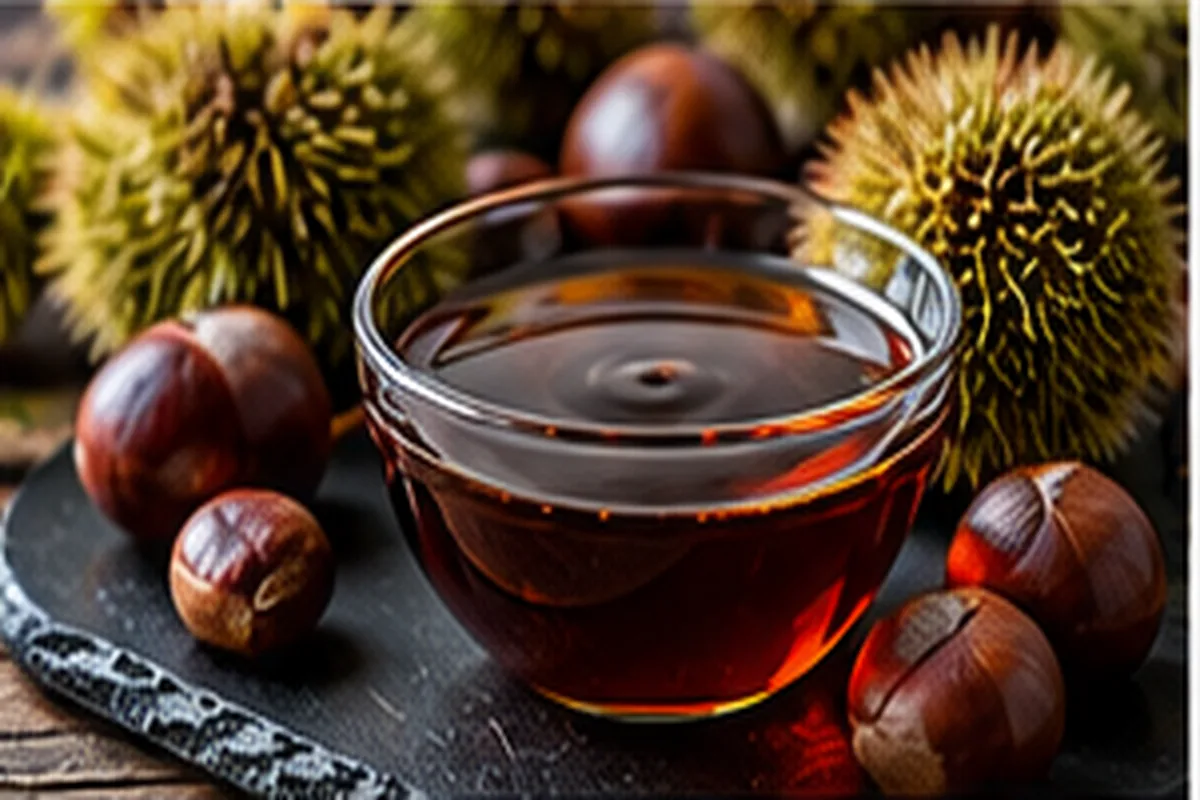
The first impression is aroma: woody, smoky and a little like leather or tobacco. Then comes a modest sweetness that fades quickly into a long, bitter, slightly astringent finish. Tasting notes often mention coffee, licorice, dark caramel and walnut skins.
The bitterness comes from compounds in the nectar, including tannins and other phenolic substances, and the honey's relatively high mineral content adds to its savory edge. Chestnut honey tends to be less acidic and more alkaline than most honeys, which also changes how it feels in the mouth.
It usually stays liquid for a long time thanks to a high fructose share, though it can develop a coarse set in cold storage. The color runs from dark amber to reddish brown.
Because the bitterness is so pronounced, first-time tasters are often surprised and sometimes put off. Most people come around once they try it with food rather than on its own. Paired with cheese or meat, the bitterness reads as depth rather than harshness, much the way a bitter espresso feels balanced next to a pastry.
How Europeans use chestnut honey
Chestnut honey is rarely used just to sweeten. It is treated more like a condiment, chosen precisely because its bitterness balances rich, salty and fatty foods.
In Italy, chestnut honey often appears on menus as a finishing touch rather than a main ingredient: a few drops over a slice of aged cheese at the end of a meal, or a thin drizzle over roasted figs. That restraint is the best way to approach it at home too.
- A thin drizzle over aged pecorino, Parmigiano-Reggiano, gorgonzola or Roquefort.
- Glazed onto roast pork, duck or game birds near the end of cooking.
- Spread on crusty bread with ricotta and walnuts.
- Added in small amounts to chestnut, chocolate or coffee desserts.
- Whisked into a dressing for radicchio, endive or other bitter greens.
- Stirred into strong coffee or black tea by people who dislike sugary drinks.
Chestnut honey vs buckwheat and knotweed honey
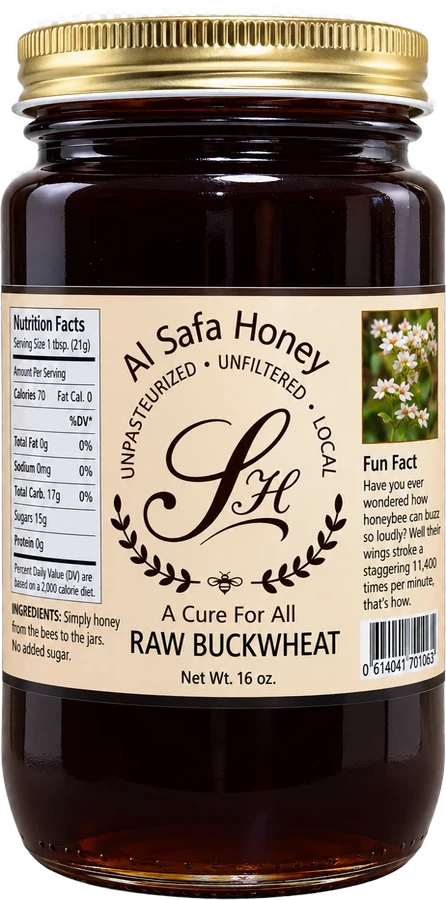
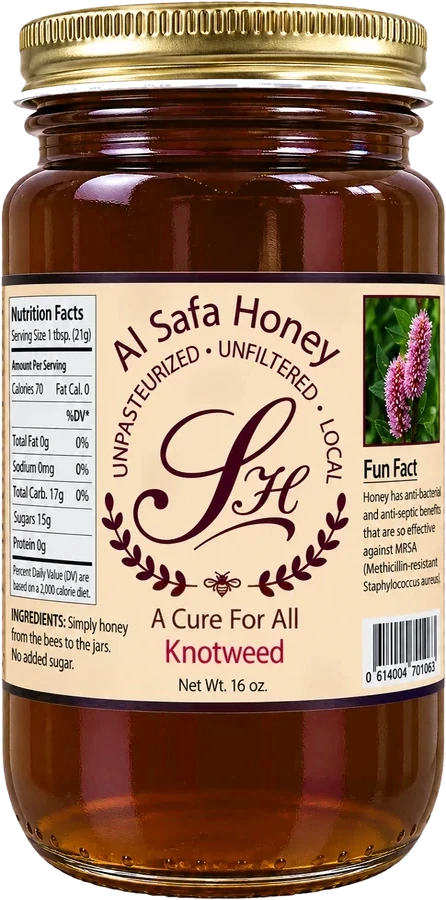
Al Safa does not sell chestnut honey. If you like the idea of a bold, not-too-sweet honey, our raw buckwheat and raw knotweed honeys are honest alternatives worth exploring, but they are not the same as chestnut. Each comes from a completely different plant and has its own profile.
Raw buckwheat honey, harvested by partner beekeepers in New York State, is the closest in intensity: near-black, malty and earthy, with a faint bitterness. Raw knotweed honey, harvested in North Dakota, is dark amber with a herbal, resinous depth and a slightly sweeter, smoother finish.
| Honey | Color | Bitterness | Main notes | Classic pairing |
|---|---|---|---|---|
| Chestnut | Dark amber to brown | High | Woody, tannic, smoky | Pecorino, roast pork |
| Buckwheat | Near-black | Moderate | Malty, earthy, molasses | Sharp cheddar, gingerbread |
| Knotweed | Dark amber | Low to moderate | Herbal, resinous, dried fruit | Black tea, roasted roots |
Is chestnut honey healthier than other honey?
Dark honeys such as chestnut generally contain more polyphenols and minerals than pale honeys, and laboratory studies have measured relatively high antioxidant activity in chestnut samples. That is interesting, but it does not make chestnut honey a treatment for anything, and the amounts in a spoonful are modest.
Nutritionally it is still mostly sugar and should be counted as such. It is not suitable for babies under 12 months, like every other honey.
Some people also seek out chestnut honey because it tends to have a lower glycemic index than many honeys, linked to its higher fructose share. That does not make it a free food for people with diabetes. It still raises blood sugar, and anyone managing diabetes should count it as added sugar and follow their care team's advice.
How to buy chestnut honey
Look for a named region of origin, such as a specific Italian or French area, and a single-variety label rather than a blend. Specialty food shops and importers are the most reliable sources in the United States.
Taste is the clearest test. A true chestnut honey will be noticeably bitter. If a jar labeled chestnut tastes simply sweet and mild, it is probably blended with other honey.
Expect a noticeably dark color, from deep amber to reddish brown, and a strong, woody aroma as soon as you open the jar. Chestnut honey usually stays liquid for a long time, so a jar that has turned fully solid within weeks may be blended or mislabeled.
Imported chestnut honey can be expensive, and quality varies widely between producers. If you are curious but not ready to commit to a large jar, look for a small tasting size first, or explore dark American honeys such as buckwheat or knotweed to see how you feel about bold, less sweet honey before investing in a specialty import.
How to use chestnut honey at home
Because chestnut honey is so assertive, a little goes a long way. Start with half the amount you would use of a mild honey, then adjust. Its bitterness works best when it has something rich, salty or fatty to play against.
A simple way to start is a cheese plate. Set out a hard aged cheese, a blue cheese and a fresh cheese such as ricotta, and drizzle a thin thread of chestnut honey over each. Most people find it transforms the aged and blue cheeses and overwhelms the fresh one, which shows exactly where it belongs.
In the kitchen, try brushing it on pork tenderloin or duck breast in the final minutes of roasting, so it glazes without burning. It also adds depth to chocolate brownies, coffee cakes and chestnut flour pancakes, where its bitterness balances the sugar.
If you are using buckwheat or knotweed as an alternative in these ideas, expect a slightly different result: buckwheat brings more malt and earthiness, while knotweed brings more fruit and herbal notes and a gentler finish.
Frequently asked questions
- Why is chestnut honey bitter?
- Chestnut nectar is rich in tannins and other phenolic compounds that taste bitter and astringent. Those compounds carry into the honey, giving it its long, dry finish.
- Is chestnut honey made from chestnuts?
- No. Bees make it from the nectar of chestnut tree flowers, which bloom in early summer, long before the nuts form. It contains no nut material.
- Is chestnut honey safe for people with nut allergies?
- Chestnut honey is made from flower nectar and pollen, not nuts, but it does contain chestnut pollen. People with severe allergies should check with their allergist before trying it.
- What cheese goes best with chestnut honey?
- Aged sheep and cow milk cheeses are classic partners, especially pecorino, Parmigiano-Reggiano and blue cheeses. The honey's bitterness cuts through their salt and richness.
- Does Al Safa sell chestnut honey?
- No. For a bold, dark honey from our range, try raw buckwheat or raw knotweed honey, keeping in mind they each taste different from chestnut.
- Can I substitute regular honey for chestnut honey in a recipe?
- You can, but the dish will taste sweeter and lose the bitter, smoky edge that makes chestnut honey distinctive. A dark honey such as buckwheat or knotweed gets closer, and adding a small pinch of espresso powder can help mimic chestnut's bitterness in baking.
Al Safa Honey is a food producer, not a medical provider. Nothing here is medical advice. Never give honey of any kind to a baby under 12 months old.