Knotweed Honey: The Dark Late-Season Honey From an Invasive Plant
Knotweed honey is the rare case where a plant most landowners would love to eradicate gives beekeepers something special. Japanese knotweed is one of the most aggressive invasive plants in North America, yet its late-summer flowers produce a dark, full-bodied honey that has a loyal following. This guide covers where knotweed honey comes from, why it tastes so different from summer honeys, how it compares with buckwheat, and how to cook with it.
What is knotweed honey?
Japanese knotweed (Reynoutria japonica, long known as Polygonum cuspidatum) arrived in North America as a garden ornamental more than a century ago. It spreads by underground rhizomes, grows in dense thickets taller than a person, and crowds out native plants along riverbanks, roadsides and disturbed ground. Most states list it as invasive, and removing it is notoriously difficult.
Its saving grace for bees is timing. Knotweed opens sprays of tiny creamy white flowers from about late August into early October, when most other nectar sources have finished. Bees swarm the plants, sometimes so heavily that the thickets audibly hum, and colonies can store a substantial late crop right when they need winter food.
Beekeepers sometimes call it bamboo honey because of the plant's hollow, jointed stems, though it is not related to true bamboo. It is closely related to buckwheat, which helps explain the family resemblance in the jar.
Where does knotweed honey come from?
Knotweed honey is produced wherever knotweed has spread widely enough to give bees a reliable flow, including parts of the Northeast, the Mid-Atlantic, the Upper Midwest and the Northern Plains. Related species, such as giant knotweed and their hybrids, also contribute in some regions.
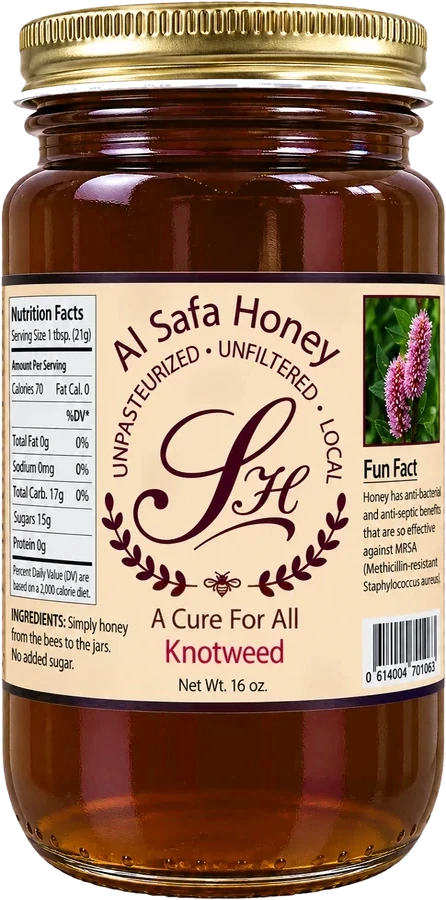
Al Safa's Pure Raw Knotweed Honey is harvested by partner beekeepers in North Dakota. It is a once-a-year jar from the autumn bloom, poured raw and unfiltered with its natural pollen left in.
In the Northern Plains, knotweed and related plants often grow along rivers, creeks and shelterbelts, where moisture keeps them blooming into early fall. Bees working those stands can bring in a meaningful late flow when the surrounding prairie and crop fields have little left to offer.
Knotweed honey is not a recent discovery. Beekeepers in the Northeast and Mid-Atlantic have harvested it for generations, and some regional honey fans seek it out every fall. It has a cult following partly because supply is unpredictable and it rarely appears in mainstream stores.
What does knotweed honey taste like?
Expect dark amber color and a flavor that is assertive without being harsh. Common descriptions include molasses, dried fruit, cocoa, herbs and a resinous, almost woodsy finish. Many people find it rounder and less barnyard-like than buckwheat, with a touch more sweetness up front.
Because knotweed blooms when goldenrod and aster are also flowering, some knotweed honey carries traces of those plants too, which can add a spicy or slightly floral edge. The balance shifts a little from year to year.
| Honey | Bloom season | Color | Flavor | Best for |
|---|---|---|---|---|
| Knotweed | Late summer to fall | Dark amber | Herbal, resinous, molasses | Black tea, glazes, root vegetables |
| Buckwheat | Mid to late summer | Near-black | Malty, earthy, slightly bitter | Marinades, gingerbread, sharp cheese |
| Wildflower (fall) | Late summer to fall | Amber | Spicy, floral, variable | Everyday use, biscuits, yogurt |
| Clover | Early summer | Pale gold | Mild, clean | Delicate tea, light baking |
Knotweed honey vs buckwheat honey
The two plants belong to the same botanical family, Polygonaceae, and both produce dark, strong honey. If you enjoy buckwheat, knotweed is the natural next jar to try. If buckwheat felt like too much, knotweed is often the gentler entry point into dark honey.
Buckwheat tends to taste maltier and more savory, with an earthy aroma that can read as funky. Knotweed is usually smoother and fruitier, with herbal and resin notes taking the place of malt. In recipes they can often substitute for each other, but knotweed will give a slightly sweeter, less bitter result.
Texture differs a little too. Raw buckwheat is often thick and slow to pour, then sets into a soft, fudge-like mass. Knotweed is full-bodied but usually pours a touch more easily, and its crystallized texture tends to be smooth. Both are excellent spooned straight into hot drinks, where any crystals vanish instantly.
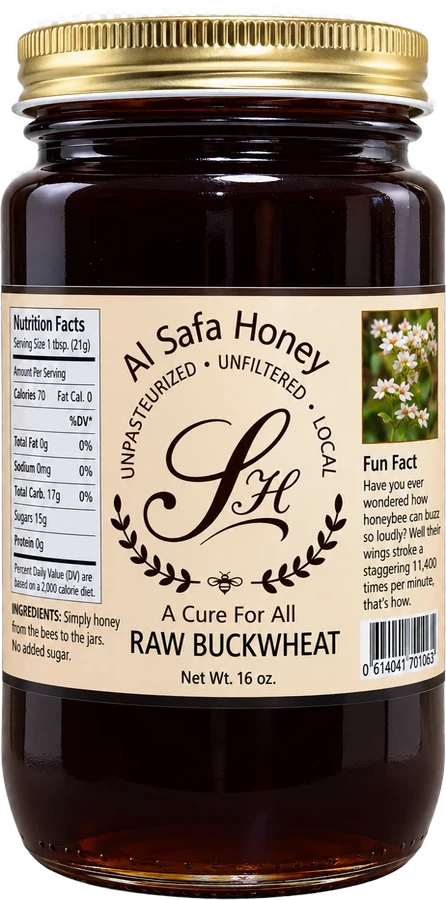
If you are building a honey collection, buying both and comparing them side by side is a rewarding way to learn how plant family, season and region shape flavor. Our raw buckwheat comes from New York State, while our raw knotweed comes from North Dakota, so the comparison also crosses two very different landscapes.
Is knotweed honey safe if the plant is invasive?
Yes. Being invasive describes how a plant behaves in an ecosystem, not whether its nectar is harmful. Knotweed honey is eaten widely and has no known toxicity.
The more relevant question is herbicide use, since knotweed is often sprayed. Experienced beekeepers place colonies away from areas under active control, and reputable sellers source from beekeepers who know their forage. Japanese knotweed root is also used in supplements as a source of resveratrol, but that compound comes from the root, and the honey should not be treated as a supplement or remedy.
As with every honey, never give knotweed honey to babies under 12 months. For everyone else, enjoy it as an added sugar in sensible amounts.
Some people also wonder whether buying knotweed honey encourages the plant to spread. It does not. Beekeepers simply use stands that already exist; the bees do nothing to help knotweed spread, since it spreads mainly through roots and broken stem pieces.
How to use knotweed honey
Knotweed honey has enough backbone to hold up in cooking and strong drinks, where milder honeys disappear.
Start with a teaspoon in a hot drink to learn the flavor, then move on to cooking. Because it is bold, you can often use a little less than you would of a mild honey and still get plenty of character.
- Stir into strong black tea, chai or coffee.
- Toss with carrots, beets, squash or sweet potatoes and olive oil before roasting.
- Mix with soy sauce, garlic and ginger for a glaze on salmon or chicken wings.
- Whisk into a lamb or pork marinade with rosemary and black pepper.
- Swap for molasses in spice cookies, brown bread or baked beans.
- Drizzle over aged cheddar, blue cheese or walnuts on a fall cheese board.
Why late-season honey like knotweed matters to bees and beekeepers
By late August across much of the northern United States, the summer nectar flow is fading. Clover has slowed, basswood is long finished and many pastures have been cut. Colonies still need to build stores to survive winter, which in North Dakota can mean months of cold when bees cannot fly.
Knotweed, along with goldenrod and aster, fills that gap. A strong knotweed flow can let a colony pack its brood nest with honey just before cold weather, and beekeepers watch it closely. Responsible beekeepers make sure colonies keep enough of that fall honey for themselves before any surplus is harvested.
That timing also shapes the honey. Late-season nectar often comes in during cooler nights and shorter days, and fall-blooming plants tend to produce darker nectar richer in minerals and aromatic compounds. The result is the deep amber color and bold, herbal flavor that make knotweed honey so distinct from a June honey.
Because a single cold snap or dry spell can cut the knotweed flow short, the size of each year's crop varies a great deal, which is why knotweed honey is harvested once a year and can sell out.
Frequently asked questions
- Why is knotweed honey called bamboo honey?
- Japanese knotweed has hollow, jointed stems that look like bamboo, so the plant is sometimes nicknamed Japanese bamboo. The two plants are not related, and the honey comes from knotweed flowers.
- Does knotweed honey crystallize?
- Yes, raw knotweed honey usually crystallizes over a few months into a soft, fudge-like set. Warm the jar in a bath of warm water if you want it pourable again.
- Is knotweed honey rare?
- It is less common than clover or wildflower because it depends on large knotweed stands and good autumn weather. Many beekeepers also leave much of the fall crop to the bees for winter.
- Does knotweed honey contain resveratrol?
- Resveratrol supplements are typically extracted from knotweed roots, not flowers. Any amount reaching the honey is not established as meaningful, so do not buy knotweed honey expecting supplement effects.
- What is a good substitute for knotweed honey?
- Buckwheat honey is the closest substitute, though it is maltier and slightly more bitter. A dark fall wildflower honey also works in cooking.
- Is knotweed honey the same as buckwheat honey?
- No, though the plants are botanical cousins. Knotweed honey tends to be smoother and fruitier with herbal, resinous notes, while buckwheat is maltier, earthier and a little more bitter. They can often stand in for each other in cooking, but each has its own character in a cup of tea.
Al Safa Honey is a food producer, not a medical provider. Nothing here is medical advice. Never give honey of any kind to a baby under 12 months old.