Honey vs Molasses: Taste, Nutrition and How to Swap Them
Honey vs molasses is a common question for bakers, because both are thick, dark-to-golden liquid sweeteners that can stand in for each other in some recipes. They come from very different places, though, and they taste nothing alike. This guide compares how they are made, how they taste, what is in them, and how to swap one for the other in cooking.
How each is made
Honey begins as flower nectar that bees collect, add enzymes to, and evaporate inside the hive until it is thick and stable. See how honey is made.
Molasses is what is left when sugar is extracted from sugar cane or beet juice. The juice is boiled to crystallize sugar, which is spun out; the remaining syrup is molasses. Repeating the process gives darker grades: light molasses after the first boiling, dark molasses after the second, and blackstrap after the third, which has the least sugar and the strongest flavor.
Honey vs molasses at a glance
| Honey | Molasses | |
|---|---|---|
| Source | Flower nectar, made by bees | Sugar cane or beet refining |
| Flavor | Sweet, floral, varies by flower | Bittersweet, dark, smoky |
| Sweetness | Sweeter than sugar | Less sweet, especially blackstrap |
| Color | Pale gold to near black | Dark brown to black |
| Minerals | Small amounts | Notable iron, calcium, potassium in blackstrap |
| Common uses | Tea, toast, dressings, baking | Gingerbread, baked beans, barbecue sauce |
Nutrition differences
Both are mostly sugar and have roughly similar calories per tablespoon. Honey is mainly fructose and glucose. Molasses contains more sucrose along with glucose and fructose. Blackstrap molasses stands out for minerals: because it is concentrated from cane juice, it carries meaningful amounts of iron, calcium, magnesium and potassium, more than honey. Honey contains small amounts of enzymes, amino acids and plant compounds that vary with the flower.
Neither is a health food. Both count as added sugars, which US dietary guidelines advise limiting to less than 10 percent of daily calories. See calories in honey for honey's numbers.
How to substitute honey for molasses
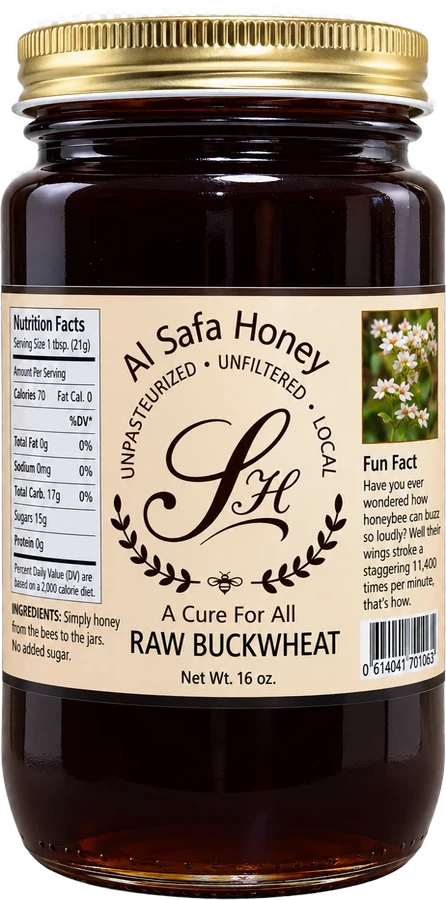
You can usually swap honey for molasses one to one by volume. Honey is sweeter, so the result will taste sweeter, lighter in color, and less spicy-dark. In gingerbread or molasses cookies, a dark honey such as buckwheat keeps more of the deep flavor. Both are acidic, so the baking soda in a molasses recipe usually still works with honey.
Going the other way, replacing honey with molasses works best in dark, spiced recipes. In delicate cakes, dressings or tea, molasses will overpower the dish.
- Gingerbread or spice cake: swap 1:1, use dark honey like buckwheat
- Baked beans or barbecue sauce: swap 1:1; add a pinch of smoked paprika for depth
- Honey cake or vinaigrette: do not swap to molasses; it will dominate
Dark honey: the middle ground
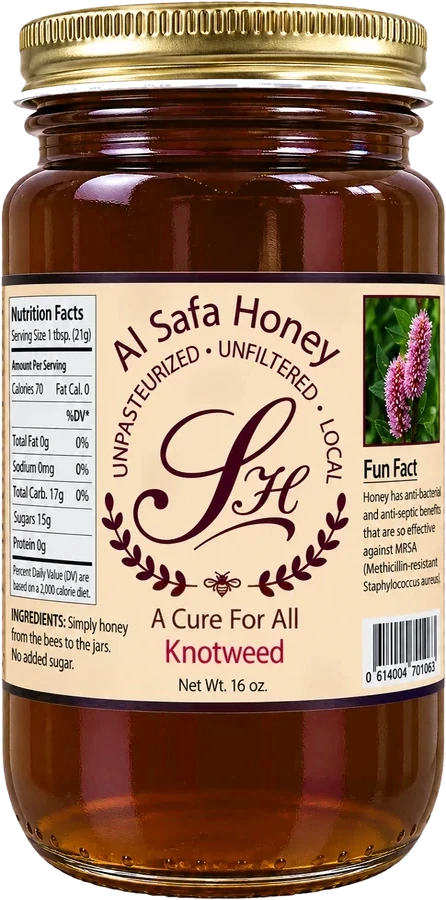
If you like molasses for its depth but want a sweeter, more rounded flavor, dark honeys are the bridge. Our Buckwheat honey, harvested in New York State, is malty and molasses-like, while Knotweed honey from North Dakota brings herbal depth. Try them in honey BBQ sauce or gingerbread. For other swaps, see our honey substitute guide.
Sources
- Honey · USDA FoodData Central
Frequently asked questions
- Can I use honey instead of molasses?
- Yes, usually one to one. The result will be sweeter and lighter. Dark honey like buckwheat keeps more of the molasses depth.
- Is honey or molasses healthier?
- Both are added sugars. Blackstrap molasses has more minerals; honey has small amounts of other plant compounds. Use either in moderation.
- What is blackstrap molasses?
- The darkest grade of molasses, left after the third boiling of cane juice. It is the least sweet and richest in minerals.
- Does molasses taste like honey?
- No. Molasses is bittersweet and smoky; honey is sweeter and floral.
- Can I use molasses instead of honey in tea?
- You can, but it will taste strong and bittersweet. A dark honey is a gentler option if you like deep flavors.
Al Safa Honey is a food producer, not a medical provider. Nothing here is medical advice. Never give honey of any kind to a baby under 12 months old.