Local Honey for Allergies: Does It Really Work?
Local honey for allergies is one of the most repeated tips in seasonal-allergy season: eat a spoonful of honey made near your home every day, and your body will slowly get used to the pollen that makes you sneeze. It sounds logical, and plenty of people swear by it. The research, though, is thin and mixed. Here is an honest look at what the idea is based on, why it often does not hold up, and what you can do instead.
Where the local honey for allergies idea comes from
The theory borrows from allergen immunotherapy, a real medical treatment. In allergy shots or under-the-tongue tablets, an allergist gives you carefully measured, gradually increasing doses of a specific allergen. Over months and years, the immune system can become less reactive to it.
Raw honey contains pollen grains, and honey from your area might contain pollen from plants near your home. So, the reasoning goes, a daily spoonful should act like a gentle, tasty version of allergy shots. It is an appealing story, and it is easy to see why it spread.
The trouble is in the details. Immunotherapy works because the dose is standardized, the allergen is identified and the treatment is supervised. Honey offers none of those things: the amount and type of pollen in a jar varies from batch to batch, and nobody measures it.
There is a timing problem as well. Allergy shots usually take months of build-up before they help, and they target the specific pollen you react to. A spoonful of honey started the week your eyes begin to itch is working on a very different schedule.
What the research says
Only a handful of small studies have looked at the question directly. One often-cited trial in Connecticut gave allergy sufferers local raw honey, commercially processed honey or a honey-flavored placebo, and found no meaningful difference in symptoms among the three groups.
A small study in Finland had a more encouraging result, but with an important twist: the honey used had birch pollen deliberately added to it, and participants started before the birch pollen season. That is closer to a homemade immunotherapy experiment than to buying a jar at a market. Some other small trials have reported modest improvements, often with high doses of honey alongside regular allergy medication.
Taken together, the evidence is weak and mixed. Major allergy organizations do not recommend honey as an allergy treatment, and it should not replace anything your doctor has prescribed.
Why the theory often does not work
The biggest problem is the type of pollen. Hay fever is mostly triggered by wind-pollinated plants: grasses, ragweed and trees such as oak, birch and maple. Their pollen is light, dry and produced in huge amounts so the wind can carry it. Bees have little reason to visit those plants, because many offer no nectar at all.
Bees prefer showy, insect-pollinated flowers like clover, fruit blossoms and wildflowers. Their pollen is heavier and stickier and rarely floats into your nose in large amounts. So the pollen most likely to be in your honey is often not the pollen you are allergic to.
Even when tree pollen does end up in honey, the amount is tiny and unpredictable, nothing like the measured doses an allergist uses. And because bees may forage several miles from the hive, the pollen in any jar reflects their flight range, not your street.
| Common allergy trigger | How it is pollinated | Likely in honey? |
|---|---|---|
| Grasses | Wind | Rarely, in small amounts |
| Ragweed | Wind | Rarely |
| Oak, birch, maple | Wind | Occasionally, in traces |
| Clover, fruit blossoms, wildflowers | Insects | Often, but these seldom cause hay fever |
What honey can and cannot do for allergy season
Honey is not useless during allergy season. A spoonful in warm water or tea can coat and soothe a throat made scratchy by post-nasal drip, and a warm drink can simply feel good when you are congested. Those are comfort benefits, and they are real, but they are not the same as reducing your immune reaction.
There is also a risk worth knowing. Because raw honey can contain pollen, people with severe pollen allergies occasionally react to it. If your allergies are serious, talk to an allergist before eating raw honey in large amounts.
- Can: soothe a dry or scratchy throat in a warm drink.
- Can: replace refined sugar in tea for people who enjoy the flavor.
- Cannot: reliably reduce sneezing, itchy eyes or congestion.
- Cannot: substitute for antihistamines, nasal sprays or allergy shots.
- Never: be given to babies under 12 months, for any reason.
Why some people feel local honey helps
If the evidence is so weak, why do so many people say a daily spoonful of local honey changed their spring? There are a few likely explanations, and none of them mean those people are imagining things.
Allergy seasons vary a great deal. A wet spring, a late frost or a shift in wind can raise or lower pollen counts from one year to the next, so a person who starts eating honey in a mild year may credit the honey for the easier season. Symptoms also rise and fall naturally within a season, and people tend to try a new remedy when they feel worst, just before things would have improved anyway.
Expectation matters too. Allergy studies routinely find that people taking a placebo report some relief, which is why the honey trials that used a placebo group are the most useful ones. Finally, the ritual itself helps: a warm drink with honey eases a scratchy throat, and that comfort is easy to mistake for fewer allergy symptoms overall.
Better ways to manage seasonal allergies
If allergies are making you miserable, the options with real evidence behind them start with a visit to a doctor or allergist. Testing can show exactly which pollens you react to, which makes every other step more targeted.
From there, over-the-counter antihistamines and steroid nasal sprays help many people. Allergy shots and under-the-tongue tablets offer the controlled, standardized exposure that the honey theory imitates. Simple habits help too: checking pollen counts, keeping windows closed on high-count days, showering and changing clothes after time outdoors, and rinsing your nose with saline.
If you enjoy honey and want to keep it in your routine, there is no harm in doing so for most adults, as long as it sits alongside proven care rather than replacing it. Just count it as added sugar, and stop if you notice itching in your mouth or throat after eating it.
Enjoy raw honey for what it is
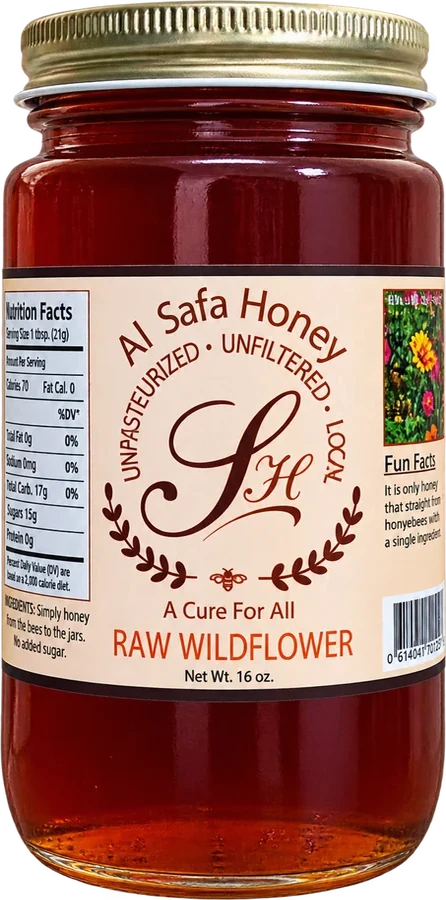
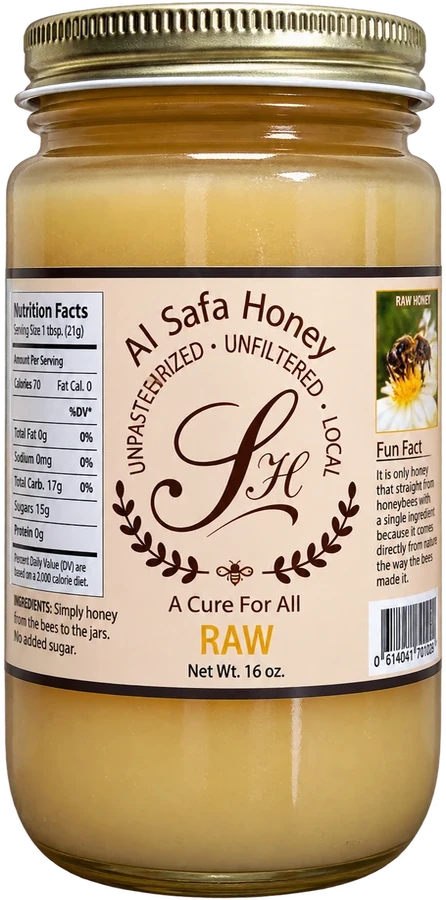
We think raw honey is worth eating for its flavor and character, not as a remedy. Al Safa honeys are raw, unfiltered and sourced from partner beekeepers, with most of our range harvested in New York State. We do not sell them as local honey or as an allergy treatment, and we would rather you enjoy a jar for the taste.
If a warm cup is part of your allergy-season comfort routine, Raw Wildflower Honey brings a layered meadow flavor that suits herbal tea, and Pure Raw Honey is a reliable everyday choice. Stir it in once the water has cooled a little so the aroma comes through.
Frequently asked questions
- How much local honey should I eat for allergies?
- There is no proven dose, because there is no proven effect. If you enjoy honey, a teaspoon or two a day fits in most diets, but count it as added sugar and keep taking any allergy treatment your doctor recommends.
- Does it have to be raw honey to help allergies?
- The theory depends on pollen, which heavy filtering removes, so believers favor raw honey. Since the evidence for any honey is weak, raw honey is better chosen for flavor than for allergy relief.
- How local does honey need to be?
- Supporters often say within a certain number of miles, but no study has set a meaningful distance. The bigger issue is that bees rarely gather the wind-borne pollens that cause most hay fever, wherever the hives are.
- Can honey make allergies worse?
- Occasionally. People with strong pollen allergies can react to the pollen in raw honey, from mild mouth itching to, rarely, a serious reaction. Check with an allergist if your allergies are severe.
- Is honey good for an allergy sore throat?
- A spoonful in warm water or tea can soothe a throat irritated by post-nasal drip. That is comfort, not treatment, and honey should never be given to children under 12 months.
- When should I see a doctor about allergies?
- See a doctor if over-the-counter options do not control your symptoms, if allergies disturb your sleep or work, or if you wheeze or feel short of breath. An allergist can test for specific triggers and discuss shots or tablets.
Al Safa Honey is a food producer, not a medical provider. Nothing here is medical advice. Never give honey of any kind to a baby under 12 months old.