New York Honey: The Flowers, Seasons and Flavors of the State
New York honey is far more varied than most people expect from a state better known for apples and a famous city. Between the dairy pastures of the north, the orchards and vineyards of the Finger Lakes, the buckwheat fields of the southern tier and the wild margins of the Adirondacks and Catskills, beekeepers here produce pale clover, layered wildflower, near-black buckwheat and several harder-to-find honeys. This guide walks through what blooms where and when, why the state's honey tastes as it does, and which of our jars come from New York State.
Why New York is good honey country
New York has a lot going for bees. It has huge acreage of pasture and hay, where clover and alfalfa bloom for weeks. It has abandoned farmland, hedgerows and roadsides that fill with wildflowers, goldenrod and aster each summer and fall. And it has a large fruit industry, apples above all, that depends on honey bees for pollination in spring.
The climate shapes the honey, too. Winters are long and cold, so the main honey flows are compressed into roughly June through September. Cool nights and reasonably steady summer rainfall help many plants keep producing nectar, while the short season means beekeepers have to time their harvests carefully to capture particular blooms.
The result is a state with a real honey identity. Cornell University and the state beekeeping associations support a sizable community of commercial and hobby beekeepers, and New York regularly ranks among the honey-producing states in USDA surveys.
Bees in New York also do a great deal of work that never ends up in a jar. Each spring, colonies are moved into apple orchards in the Hudson Valley, the Lake Ontario fruit belt and elsewhere for pollination, and later into fields of pumpkins, squash and other crops. Many of the same colonies then go on to make the summer honeys described below.
New York honey varieties at a glance
Not every jar fits neatly in one category, since bees forage widely and blooms overlap. But these are the honeys most associated with the state, and the table shows the general pattern of when each is made.
| Honey | Main region | Bloom season | Flavor |
|---|---|---|---|
| Clover | Dairy country statewide, north and west | June to July | Pale, clean, gently floral |
| Wildflower | Statewide meadows and field edges | June to September | Layered, changes by season |
| Sunflower | Farm fields where grown | Late July to August | Bright gold, mellow, sets fast |
| Blueberry blossom | Pockets with cultivated and wild blueberries | May to early June | Rounded, fruit-blossom |
| Buckwheat | Southern tier, Finger Lakes, western NY | July to early September | Near-black, malty |
| Goldenrod and aster | Statewide fall fields | Late August to October | Golden, spicy, sets quickly |
Clover and wildflower: the backbone of New York honey
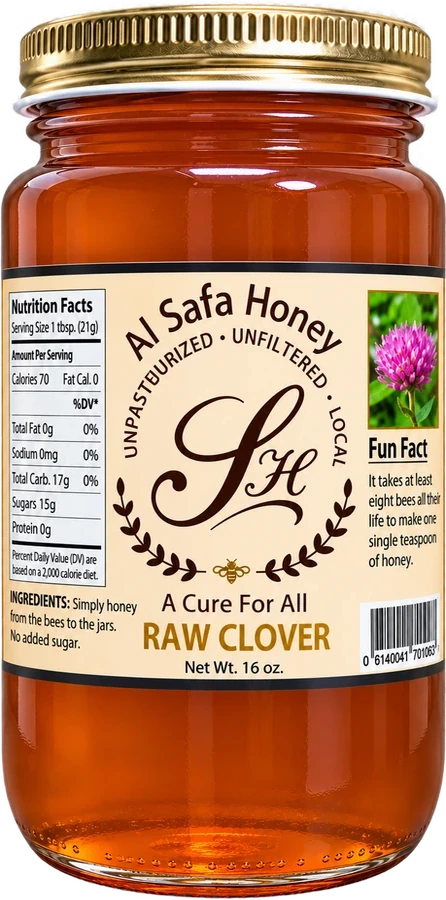
Clover is the honey that put New York on the beekeeping map. White and alsike clover grow thickly in pastures and hayfields across the north country and western New York, and in a good June they produce a pale, mild honey that is many people's idea of what honey should taste like. Alfalfa and birdsfoot trefoil often contribute alongside it.
Wildflower honey is the other staple, and it changes with the calendar. An early-summer wildflower may lean on black locust, basswood, sumac and clover, and taste light and fresh. A late-summer harvest picks up purple loosestrife, knapweed and, eventually, goldenrod and aster, which make it darker and spicier. No two years are identical, which is part of the appeal.
Basswood, also called linden, deserves a mention. When the trees bloom in July, beekeepers in some parts of the state get a short burst of honey with a minty, almost woody freshness. It is rarely sold on its own but often shows up in early wildflower jars.
Buckwheat, sunflower and blueberry: New York's specialty crops
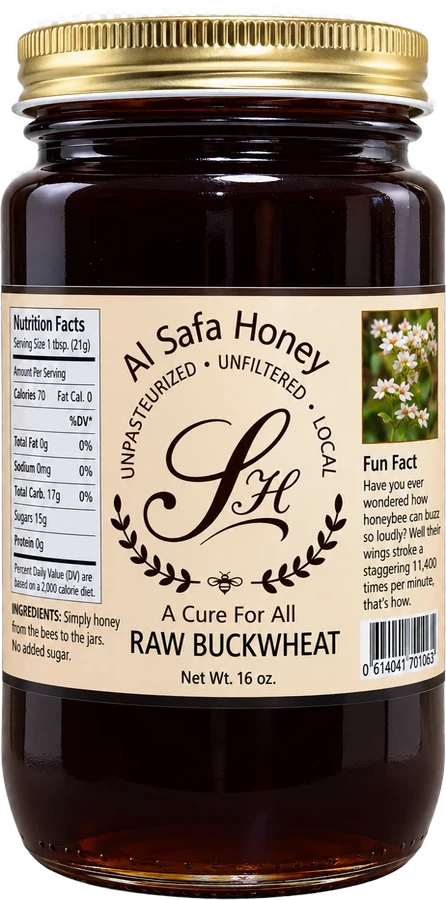
Buckwheat honey is New York's most distinctive variety. The state is one of the country's leading buckwheat growers, mostly in the southern tier and around the Finger Lakes, where farmers plant it as a summer crop or cover crop. Its honey is almost black, with a malty, molasses-like depth, and it has a loyal following among bakers and people who like strong flavors.
Sunflower honey comes from fields of sunflowers grown for seed, birdseed or agritourism. It is vivid gold and high in glucose, so it crystallizes within weeks into a soft, spoonable set. Blueberry blossom honey is one of the earliest and smallest harvests of the year, made when blueberry bushes flower briefly in late spring; it is deeper and rounder than clover, with a gentle fruit-blossom character.
What gives New York honey its taste
Flavor in honey comes first from the nectar source, so New York's mix of pasture, specialty crops and wild land is the main reason its honeys range so widely. A pale clover and a black buckwheat can come from hives a few counties apart, harvested only weeks apart.
Climate affects the details. Cool nights tend to preserve delicate aromatic compounds, and the state's short season pushes beekeepers to pull honey promptly after each major bloom, which keeps varieties more distinct. Many New York honeys also crystallize fairly readily, because clover, goldenrod and sunflower nectars are glucose-rich.
Color follows the season too. Early honeys from black locust, clover and blueberry tend to be light; midsummer honeys deepen as basswood, sumac and field crops come in; and late honeys from buckwheat, goldenrod and aster run from deep gold to almost black. Line up a year of New York honey in jars and you can practically read the calendar from left to right.
- Nectar source: pasture legumes, field crops, trees and wildflowers.
- Season: harvest timing separates early light honeys from late dark ones.
- Soil and weather: moisture and temperature change how much nectar plants produce.
- Handling: raw, unheated honey keeps the most aroma.
- Crystallization: many New York honeys set naturally, a normal sign of raw honey.
Al Safa's New York State harvested honeys
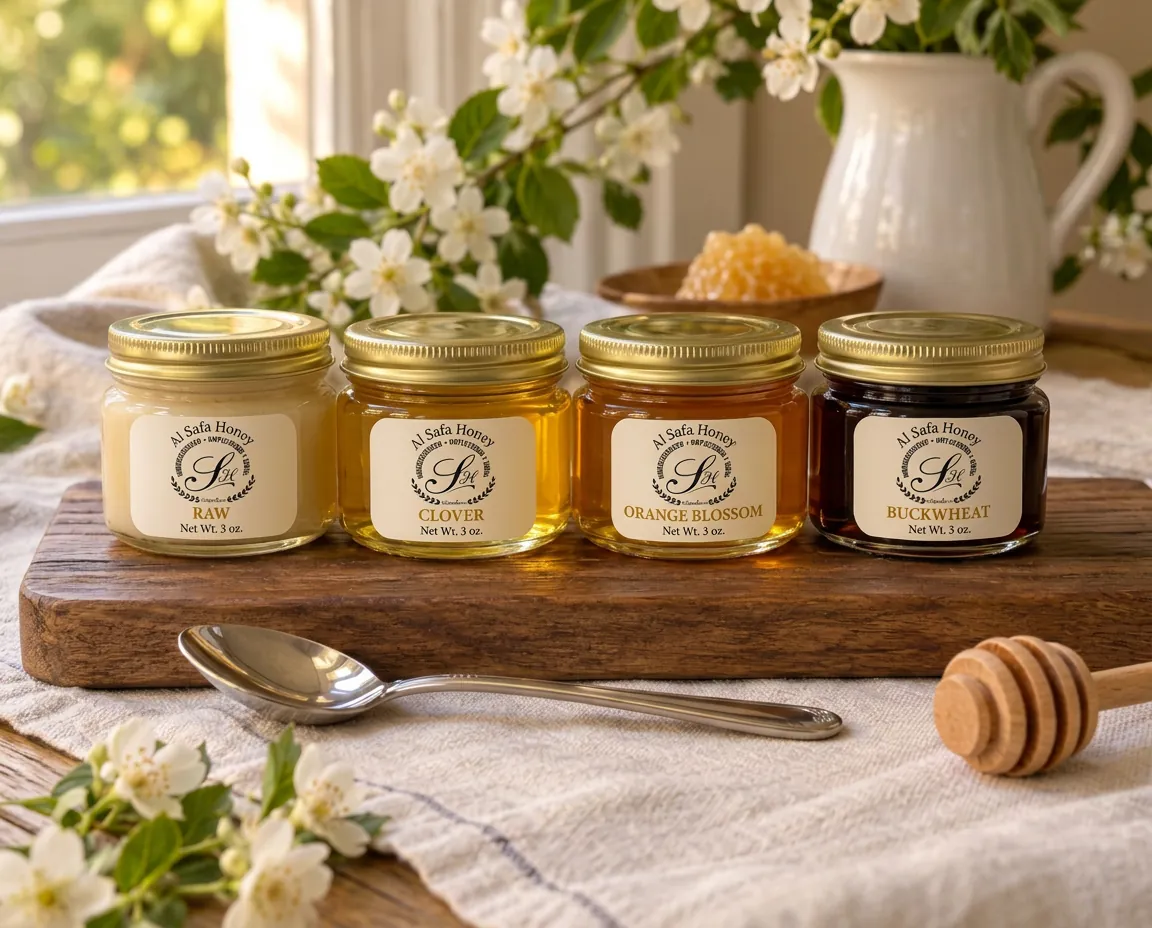
Six of our eight honeys are harvested in New York State by our partner beekeepers: Clover, Pure Raw Honey (our house harvest), Wildflower, Sunflower, Blueberry Blossom and Buckwheat. Al Safa is a honey brand, not a farm, so we do not keep bees ourselves; we work with beekeepers who harvest each variety and then offer it raw, unfiltered except for straining out wax, unpasteurized and with nothing added, in 16 oz glass jars.
Two of our honeys come from outside New York, and we want to be clear about that. Our Knotweed honey is harvested in North Dakota, where autumn knotweed gives a dark, herbal, resinous honey. Our Orange Blossom honey comes from Florida citrus groves, since New York has no orange groves. Both are excellent, but neither is New York honey.
Because these are raw, unpasteurized honeys, expect them to change in the jar. Clover turns pale and creamy as it sets, sunflower firms up quickly into a soft crystal, and buckwheat can thicken into a fudge-like paste. All of that is normal, and a gentle warm-water bath brings any of them back to a pour.
If you want to taste the range of the state in one sitting, a sampler of clover, sunflower, wildflower and buckwheat runs from palest to darkest. As with any honey, keep it away from babies under 12 months.
Frequently asked questions
- What is the most common honey in New York?
- Wildflower and clover honeys make up much of the state's crop, since pasture and mixed meadow cover so much land. Buckwheat is the state's best-known specialty honey.
- When is honey harvested in New York?
- Most harvests happen between July and September, after the main summer blooms. Some beekeepers take an early pull after clover and a late pull after goldenrod and aster, which gives two quite different honeys.
- Why are bees important to New York agriculture?
- Apples, cherries, pumpkins, squash and many other New York crops rely heavily on bee pollination. Many commercial beekeepers move colonies into orchards each spring for pollination and then on to summer honey flows.
- Does New York honey crystallize?
- Often, yes. Clover, sunflower and goldenrod honeys are glucose-rich and can set within weeks or months. Crystallization is natural and reversible with gentle warmth.
- Is buckwheat honey from New York?
- New York is one of the main sources of buckwheat honey in the United States, along with a few other northern states and Canada. Our Buckwheat honey is harvested in New York State.
- Is orange blossom honey made in New York?
- No. Orange blossom honey needs citrus groves, which grow in warm states like Florida and California. Any orange blossom honey sold in New York was harvested elsewhere.
Al Safa Honey is a food producer, not a medical provider. Nothing here is medical advice. Never give honey of any kind to a baby under 12 months old.