Iron in Honey: How Much Is There and Is Dark Honey Richer?
Iron in honey comes up often in online lists of honey nutrients, sometimes with the suggestion that honey can help people who are low in iron. The real picture is more modest. Honey does contain iron, and darker honeys tend to contain more, but a typical serving supplies only a tiny fraction of what the body needs each day. This article gives real numbers for iron in honey, compares honey with iron-rich foods and explains how honey can still play a small, tasty role at mealtimes. For the full mineral picture, see minerals in honey.
For general education only, not medical advice. Our honey is a food and is not intended to diagnose, treat, cure or prevent any disease.
How much iron in honey there is
USDA FoodData Central lists generic honey with about 0.42 mg of iron per 100 grams. A tablespoon weighs about 21 grams, so it contains less than a tenth of a milligram.
Stefan Bogdanov's review of honey as a food reports iron ranging from about 0.03 to 4 mg per 100 grams across different honeys. That wide range reflects floral source, soil and processing.
| Amount of honey | Iron (USDA average) |
|---|---|
| 1 teaspoon (7 g) | About 0.03 mg |
| 1 tablespoon (21 g) | About 0.09 mg |
| 100 g | About 0.42 mg |
How much iron people need
According to the NIH Office of Dietary Supplements, most adult men need about 8 mg of iron a day, while most adult women aged 19 to 50 need about 18 mg. Needs are higher during pregnancy.
Even a very iron-rich dark honey would supply only a small slice of those amounts in a normal serving. To get meaningful iron from honey, you would need to eat far more sugar than is healthy.
Is iron in honey higher in dark honey?
Generally, yes. Darker honeys tend to carry more minerals, including iron, than light honeys. Buckwheat and honeydew honeys are often near the top of mineral rankings, while clover and acacia tend to be lower.
Still, higher is relative. A dark honey might contain several times more iron than a pale one and still provide only a small amount per tablespoon. Our dark honey benefits article covers what darker honeys do offer.
Better sources of iron
If you are thinking about iron, these foods matter far more than honey:
- Lean red meat, poultry and seafood (heme iron, absorbed well)
- Beans, lentils and chickpeas
- Tofu and tempeh
- Spinach and other dark leafy greens
- Fortified breakfast cereals and breads
- Pumpkin seeds and cashews
Helping your body absorb iron
Iron from plant foods, called non-heme iron, is absorbed less easily than iron from meat. Vitamin C helps. Eating beans with tomatoes or peppers, or having fruit with an iron-fortified cereal, can improve absorption.
Tea and coffee can reduce absorption when taken with meals. The NIH fact sheet explains these factors in more detail.
Where honey fits at an iron-rich meal
Honey can still be a tasty helper. A honey and citrus dressing over a spinach salad, a drizzle over oatmeal topped with pumpkin seeds, or a honey glaze on lentil fritters all pair honey with iron-rich foods.
Our honey vinaigrette guide is an easy starting point for salads.
Iron in honey and anemia claims
Some traditional remedies and websites suggest honey for anemia. Research has not shown that eating honey treats iron deficiency or anemia. Anyone who feels unusually tired, pale or short of breath should see a doctor, who can check iron levels with a simple blood test.
Iron supplements should only be taken with medical advice, since too much iron can be harmful.
Why iron in honey varies
Iron in honey comes from the plants the bees visited and, indirectly, from the soil those plants grew in. Regional geology leaves a fingerprint, which is why scientists can sometimes use minerals to help trace a honey's origin.
Processing can also play a part. Contact with metal equipment during extraction and storage may add tiny amounts, while filtering and blending can change the overall profile.
Iron in honey compared with other sweeteners
Among sweeteners, honey has a little more iron than refined white sugar, which has almost none. Blackstrap molasses is a notable exception, with far more iron than honey. Our honey vs molasses guide compares the two.
All of them count as added sugars, so they are best enjoyed in modest amounts.
How researchers measure iron in honey
Labs usually burn a honey sample to ash, dissolve the ash in acid and then measure metals with techniques such as atomic absorption or plasma mass spectrometry. These methods can detect iron in honey at very low levels, down to fractions of a milligram per kilogram.
Because results depend on the sample, the season and the method, published numbers vary from study to study. That is why reviews give ranges rather than a single figure for iron in honey.
Choosing a darker honey
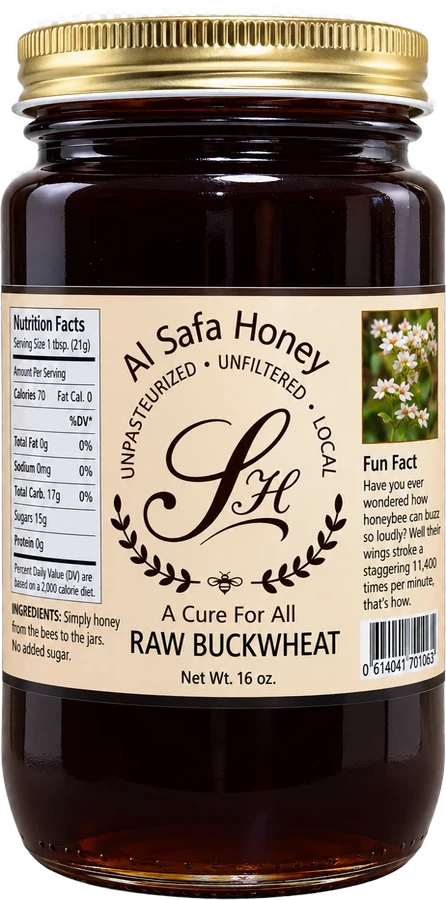
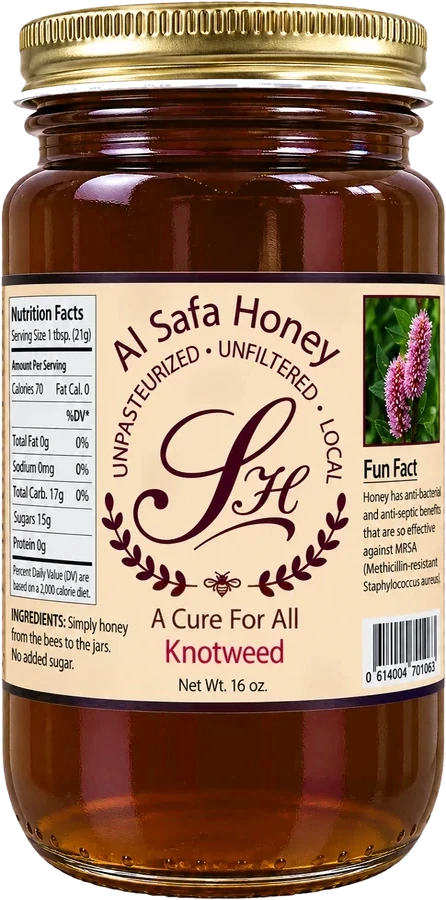
If you like the idea of a mineral-rich honey, try Raw Buckwheat Honey, our darkest jar, or Raw Knotweed Honey, a full-bodied late-season honey from North Dakota.
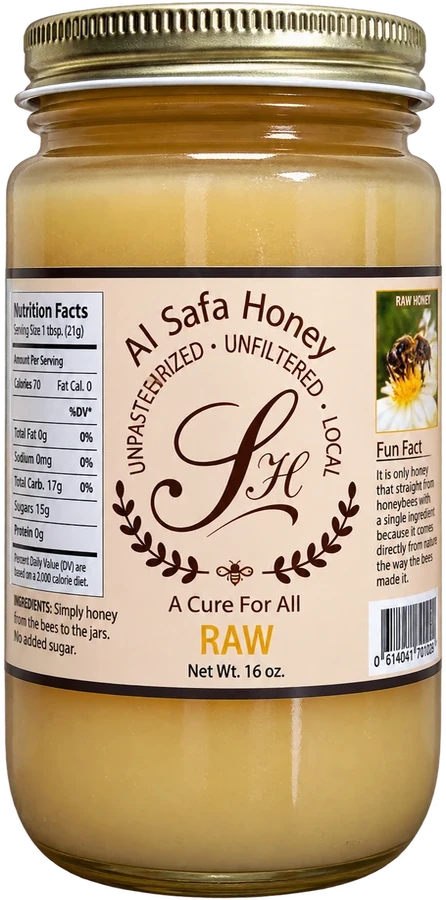
Both are raw and strained only of wax. Pick one up, or save with a 3 or 6 jar pack, in our shop.
Sources
Outside health sources we used for this article. They open in a new tab.
- Honey: nutrient profile · USDA FoodData Central
- Honey as Nutrient and Functional Food · Bee Product Science (Stefan Bogdanov)
- Iron: Fact Sheet for Consumers · NIH Office of Dietary Supplements
Frequently asked questions
- How much iron is in a tablespoon of honey?
- Less than a tenth of a milligram on average, according to USDA data.
- Does dark honey have more iron?
- Usually, yes, but even dark honey provides only small amounts per serving.
- Can honey help with low iron?
- No. Honey contains too little iron to make a difference. See a doctor if you think your iron is low.
- Is iron in honey well absorbed?
- Iron in honey is non-heme iron, which is absorbed less efficiently than iron from meat. The amount is very small either way.
- Which sweetener has the most iron?
- Blackstrap molasses has much more iron than honey. Both are still added sugars.
- Which Al Safa honey is darkest?
- Raw Buckwheat Honey is our darkest, followed by Raw Knotweed Honey.
Al Safa Honey is a food producer, not a medical provider. Nothing here is medical advice, and these statements have not been evaluated by the Food and Drug Administration. Talk to your doctor about any health concern. Never give honey of any kind to a baby under 12 months old.