Is Honey Sustainable? Footprint, Bees and Better Choices
Is honey sustainable? Compared with many sweeteners, honey needs no plowed fields, irrigation or fertilizer, because bees gather nectar from flowers that grow anyway. Beekeeping also supports pollination of crops and gardens. But sustainability has more than one side: transporting colonies, mite treatments, imported honey fraud and competition with native bees all raise fair questions. This article weighs honey's environmental strengths and concerns, compares it with other sweeteners, and shares how to choose honey more responsibly. For a closer look at the bee side, see does buying honey help bees.
For general education only, not medical advice. Our honey is a food and is not intended to diagnose, treat, cure or prevent any disease.
What makes a food sustainable
Sustainability usually considers land use, water, energy, emissions, effects on wildlife and fairness to producers. A sweetener's footprint depends on how it is grown, processed and shipped. Honey is unusual because the main input, nectar, comes from plants that are already growing.
Honey's environmental strengths
Bees forage on wildflowers, clover, trees and crops, so honey does not require dedicated farmland, irrigation or fertilizer. Processing raw honey uses little energy: extraction, light straining and bottling. Our honey is never heated above hive temperature, so it skips energy-intensive pasteurization. Beekeeping also adds value to farms through pollination.
- No dedicated cropland
- No irrigation or fertilizer
- Minimal processing for raw honey
- Supports crop pollination
Honey compared with other sweeteners
A general comparison:
| Sweetener | Land and inputs | Processing |
|---|---|---|
| Raw honey | Forage from existing plants | Minimal |
| Cane sugar | Large plantations, irrigation, fertilizer | Heavy refining |
| Beet sugar | Cropland, fertilizer | Refining |
| Corn syrup | Corn fields, fertilizer | Industrial enzymatic processing |
| Maple syrup | Forests, sap boiling | Energy for boiling |
Pollination as a co-benefit
Managed honey bees pollinate many crops. The U.S. Fish and Wildlife Service estimates insect pollination adds over $34 billion a year to U.S. crop value, and honey bees contribute billions of that. Honey sales help keep the beekeepers who provide those services in business.
Concern: hive transport
Commercial beekeepers truck colonies thousands of miles, especially to California almonds each winter. That uses fuel and can stress bees. The USDA Economic Research Service found almonds accounted for 61 percent of colony rentals in 2016. Stationary or regional beekeeping has a smaller transport footprint.
Concern: competition with native bees
Large numbers of honey bee hives placed in natural areas may compete with wild bees for pollen and nectar, and may share diseases. Researchers are still studying how much this matters in different places. Placing hives near crops and abundant forage, rather than fragile wild habitats, reduces the risk.
Concern: honey fraud
Honey is one of the most commonly faked foods. Cheap imports diluted with syrups mislead shoppers and undercut honest beekeepers. Traceable honey from known farms is both more ethical and more likely to be genuine. Our how to tell if honey is real guide explains warning signs.
Concern: packaging and shipping
Glass jars are reusable and recyclable but heavier to ship than plastic. Buying multi-jar packs means fewer shipments per jar. Reuse honey jars for storage, spices or gifts. Our article on honey in glass jars explains the trade-offs.
How to choose sustainable honey
Look for honey with a clear origin, preferably domestic or regional, from known farms. Raw honey uses less processing energy. Buy in multi-jar packs to cut shipping per jar. Reuse or recycle your jars. And plant flowers to support all bees.
Where Al Safa honey comes from
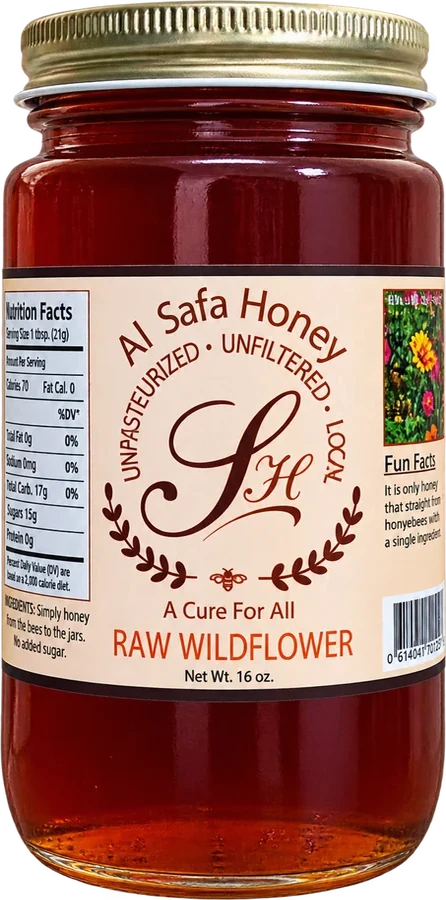
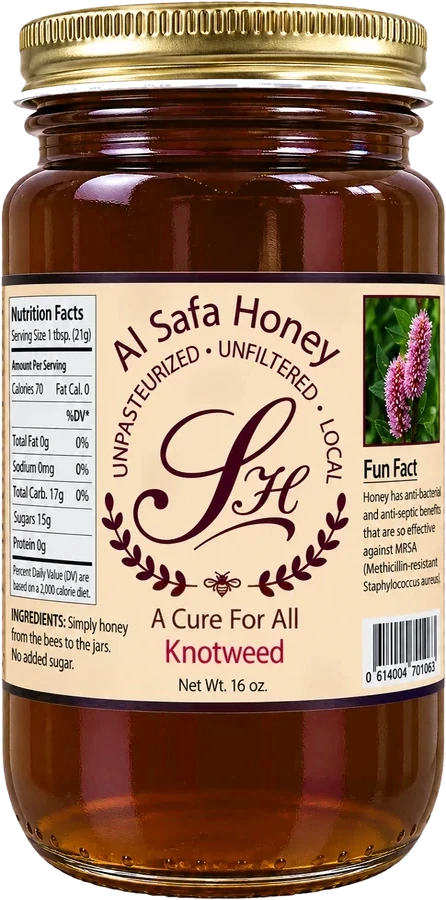
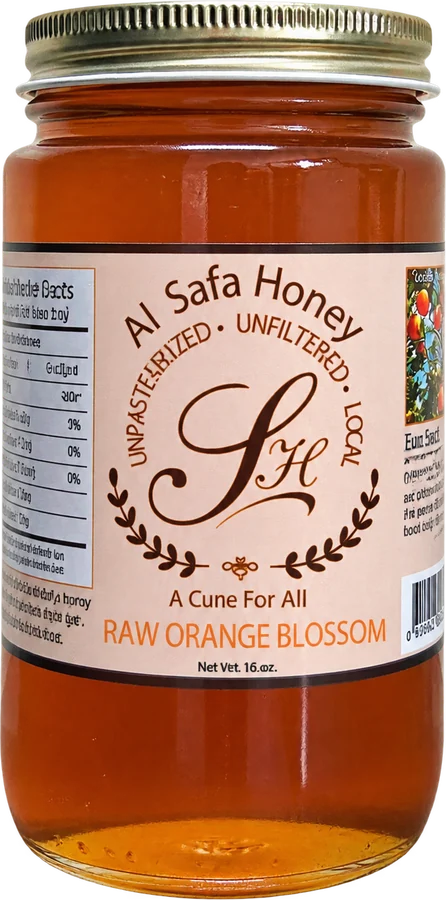
Our honey comes from a partner farm. Six varieties are harvested in New York State, Raw Knotweed Honey comes from North Dakota and Raw Orange Blossom Honey from Florida. All are raw and never heated above hive temperature, bottled in glass.
What you can do at home
Plant native flowers, let clover bloom, avoid pesticides on blooms, and keep a small patch of bare soil for ground-nesting bees. These steps help the native bees that honey alone cannot.
Honey's long shelf life
Honey's famously long shelf life means almost no food waste. Sealed honey keeps for years, as Smithsonian Magazine reports. A jar you buy will not spoil before you finish it.
The takeaway on is honey sustainable
Is honey sustainable? It can be one of the lower-impact sweeteners, with no dedicated cropland and minimal processing, plus pollination benefits. Choose traceable, raw, domestic honey, buy in packs, and plant flowers for native bees.
Honey and local food systems
Honey is one of the few sweeteners that can be produced in almost every U.S. state, from New York to North Dakota to Florida. Regional honey travels shorter distances than sugar shipped from tropical plantations, and it keeps money in farming communities. When people ask is honey sustainable, origin is a big part of the answer.
What researchers still want to know
Scientists continue to study how many honey bee hives a landscape can support without crowding out wild bees, how mite treatments affect colonies over time, and how climate shifts change bloom timing and honey flows. As that research matures, beekeeping practices will keep improving.
Reusing honey jars
Empty glass honey jars are perfect for spices, overnight oats, salad dressings, homemade jam and small gifts. Soak off the label in warm soapy water and run the jar through the dishwasher before reuse.
Choose raw honey in glass
Try Raw Wildflower Honey from New York State. Save with a 3 jar or 6 jar pack of any honey, and orders over $50 ship free. Visit our shop.
Sources
Outside health sources we used for this article. They open in a new tab.
- Pollinators Benefit Agriculture · U.S. Fish and Wildlife Service
- Driven by Almonds, Pollination Services Now Exceed Honey as a Source of Beekeeper Revenue · USDA Economic Research Service
- The Science Behind Honey's Eternal Shelf Life · Smithsonian Magazine
Frequently asked questions
- Is honey sustainable?
- It can be relatively sustainable, using no dedicated cropland and minimal processing.
- Is honey more sustainable than sugar?
- Generally yes, since sugar requires cropland, irrigation and refining.
- What are honey's environmental concerns?
- Hive transport, competition with native bees and honey fraud.
- Does honey production help the environment?
- Beekeeping supports crop pollination.
- How do I choose sustainable honey?
- Pick traceable, raw, domestic honey and buy in packs.
- Is glass packaging sustainable?
- Glass is reusable and recyclable, though heavier to ship.
- Does honey go to waste?
- Rarely. Sealed honey keeps for years.
Al Safa Honey is a food producer, not a medical provider. Nothing here is medical advice, and these statements have not been evaluated by the Food and Drug Administration. Talk to your doctor about any health concern. Never give honey of any kind to a baby under 12 months old.