Honey Before Bed: What It Can and Cannot Do for Sleep
Taking a spoonful of honey before bed is an old habit in many households, and it has picked up a long list of online promises: deeper sleep, overnight fat burning, fewer wake-ups. Some of what people say about it has real support, especially for children's nighttime coughs, and some of it is wishful thinking. This guide sorts the two, then covers how much to have, when to have it, and how to protect your teeth if it becomes a nightly ritual.

Why people take honey before bed
The habit usually starts in one of two ways. Parents reach for honey when a child coughs through the night, and adults reach for a mug of warm milk or tea with honey as a signal that the day is over. Both are reasonable, and both predate any wellness trend.
Across many cultures the pattern repeats: warm milk with honey in parts of Europe and the Middle East, honey with ginger or lemon in hot water across much of Asia, and a spoon of honey straight from the jar in countless American kitchens. These traditions grew from experience rather than lab work, and they share one useful element, which is a slow, warm, calming step before sleep. That alone can make a real difference to how quickly some people settle down.
More recently, social media posts have claimed that honey at night refuels the liver, triggers melatonin, or burns fat while you sleep. These claims usually stretch a plausible idea far past what anyone has measured. It is useful to know which category each claim falls into before you build a habit around it.
What is known: honey and nighttime cough
This is the best-supported reason to have honey before bed. Several clinical trials, mostly in children with colds, found that a dose of honey shortly before sleep reduced how often and how hard they coughed, and parents reported that both the child and the parents slept better. A Cochrane review that pooled these studies concluded that honey probably relieves cough symptoms somewhat better than no treatment and about as well as some common over-the-counter options.
The American Academy of Pediatrics mentions honey as an option for cough in children over one year old, and the CDC lists it among simple ways to ease cold symptoms. The likely mechanism is plain: thick, sweet honey coats an irritated throat and calms the urge to cough. The studies were small and short, so think of honey as comfort care, not treatment. A cough that lasts more than a few weeks, comes with fever or trouble breathing, or keeps a child from drinking needs a doctor.
The doses used in studies were roughly 1/2 teaspoon for children aged 1 to 5, 1 teaspoon for ages 6 to 11, and 2 teaspoons for older children and adults, taken within about 30 minutes of bedtime.
What is not proven about honey before bed
A popular theory says the small rise in blood sugar from honey helps tryptophan reach the brain, where it becomes serotonin and then melatonin. Each step happens in the body, but no good study shows that a spoonful of honey raises melatonin enough to change how you sleep. Another claim says honey restocks liver glycogen so your brain will not wake you up hungry; this has not been tested in a meaningful way either.
Weight loss claims deserve the most skepticism. Honey is about 80 percent sugar and a tablespoon carries roughly 64 calories. Adding it at night adds calories, and nothing in the research shows it speeds up fat burning during sleep. If someone promises otherwise, they are selling something.
None of this means honey before bed is harmful for a healthy adult. It simply means that if it helps you sleep, the likely reasons are the warm drink, the ritual and a soothed throat, not a hidden hormonal effect.
Sleep researchers generally point to steadier habits as the things that move the needle: a consistent bedtime and wake time, a dark and cool bedroom, less screen time late in the evening, and limiting alcohol and caffeine. A honey drink can fit neatly inside that routine, but it works best as one small part of it rather than the whole plan.
| Claim | What the evidence says |
|---|---|
| Eases nighttime cough from a cold | Reasonable support in children over 1; considered comfort care |
| Soothes a sore throat | Plausible and widely recommended for comfort |
| Part of a calming bedtime routine | Reasonable; the ritual itself helps many people |
| Raises melatonin and cures insomnia | Not shown in studies |
| Burns fat overnight | No evidence; honey adds calories |
| Prevents middle-of-the-night waking | Not tested in any meaningful way |
How much honey before bed, and when
For an adult, 1 to 2 teaspoons is enough to coat the throat and sweeten a drink. That adds 20 to 40 calories and about 6 to 11 grams of sugar, which counts toward the daily added-sugar limits the American Heart Association suggests. There is no benefit to eating more.
Timing is flexible. Most cough studies gave honey within 30 minutes of bedtime. If you take it in a drink, have it 30 to 60 minutes before lying down so you are not getting up to use the bathroom, and keep caffeinated teas out of the evening.
- Straight from the spoon: 1 teaspoon, let it coat the throat slowly.
- In caffeine-free herbal tea such as chamomile, once the water has cooled slightly.
- In warm milk or a plant milk with a pinch of cinnamon or nutmeg.
- In warm water with lemon if you prefer something lighter.
- Children 1 to 5: 1/2 teaspoon; 6 to 11: 1 teaspoon; 12 and up: up to 2 teaspoons.
Protecting your teeth when you have honey at night
This is the part that gets overlooked. Saliva flow drops during sleep, so sugar that stays on the teeth overnight has hours to feed the bacteria that cause cavities. Honey is sticky, which makes it worse than a sweetened drink.
The fix is simple: take your honey first, then brush. For children with a cough, give the honey, then a sip of water and a tooth brushing before lights out. If brushing again is impractical, at least rinse well with water. Dentists consistently advise against honey on pacifiers or in bottles at bedtime for the same reason.
Who should skip honey before bed
Babies under 12 months must never have honey, raw or processed, in any amount. Honey can contain spores of Clostridium botulinum, and an infant's gut cannot yet keep them from growing, which can cause infant botulism. This is the single firm rule in this whole topic.
People with diabetes or prediabetes should treat honey like any other sugar and talk to their doctor before making it a nightly habit, since a bedtime dose can affect morning glucose readings. Anyone with a pollen or bee-product allergy should be cautious with raw honey. And if poor sleep lasts more than a few weeks, it is worth a conversation with a clinician, because the cause is rarely something a spoonful of anything will fix.
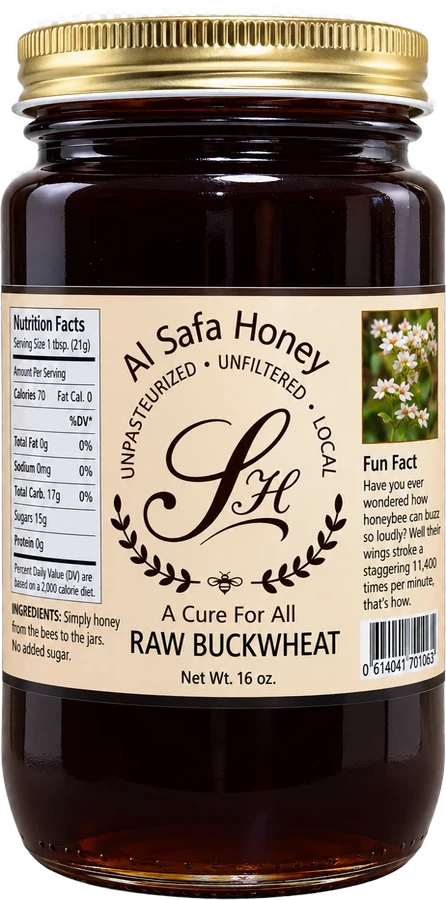
For everyone else, choose a honey you enjoy. A mild raw clover is easy in herbal tea, while a darker buckwheat has been the honey of choice in at least one well-known pediatric cough study and has a malty depth some people find comforting on a cold night.
Frequently asked questions
- Does honey before bed make you gain weight?
- Only in the way any extra calories can. A teaspoon adds about 20 calories, which is small, but a nightly tablespoon in milk adds up over months. There is no evidence that honey at night burns fat.
- Is it better to have honey in tea or straight?
- For a cough, a spoonful straight lets the honey coat the throat for longer. For relaxation, a warm caffeine-free tea with honey may be more satisfying. Either is fine as long as the drink is not caffeinated.
- Can I give my toddler honey before bed for a cough?
- Children aged one and older can have about half a teaspoon, and this is one of the better-studied uses of honey. Brush their teeth afterward, and see a doctor if the cough lasts or the child has trouble breathing or a high fever.
- Does raw honey work better at night than regular honey?
- The cough studies used several kinds of honey, and there is no strong evidence that raw honey works better for that purpose. Many people prefer raw honey for its flavor and because it has not been heated.
- Is honey and warm milk a good sleep remedy?
- It is a comforting routine with a long history, and routines help many people wind down. Science has not shown that the drink itself has a sedative effect, so enjoy it as a ritual rather than a treatment.
Al Safa Honey is a food producer, not a medical provider. Nothing here is medical advice. Never give honey of any kind to a baby under 12 months old.