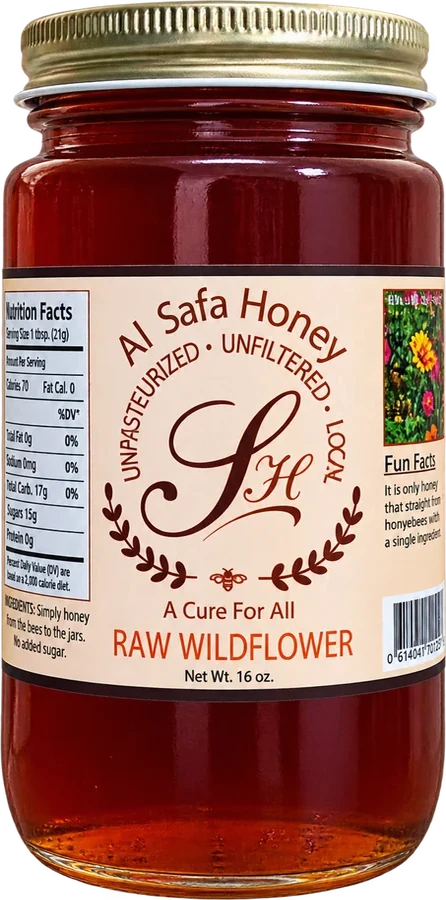
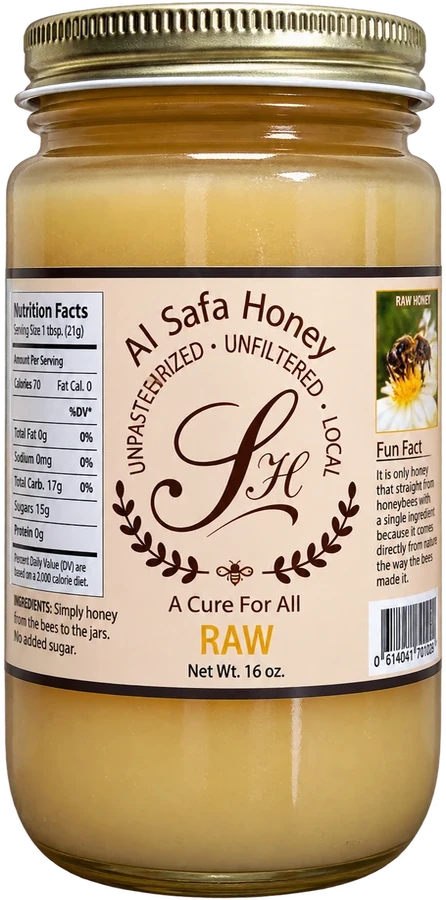
Is Wildflower Honey Raw? What the Label Really Tells You
Is wildflower honey raw? Not automatically. The two words answer different questions. Wildflower tells you where the nectar came from: a mix of whatever flowers were blooming. Raw tells you how the honey was handled after harvest. A jar can be one, both or neither. This guide untangles the labels so you know what you are buying.
Wildflower is a flower label
Wildflower honey, also called multifloral or polyfloral honey, comes from bees foraging on many different plants rather than one dominant crop. In a meadow that could mean clover, goldenrod, aster, thistle, sumac, wild berries and dozens of others. Because the mix changes with place and season, no two wildflower honeys are exactly alike. See the full wildflower honey guide.
Raw is a processing label
Raw honey has been extracted and strained, but not pasteurized, not ultrafiltered and not heated beyond the warmth of the hive. It keeps more of its pollen, aroma and natural enzymes, and it crystallizes over time. There is no federal legal definition of raw honey in the US, so the word depends on the honesty of the producer. Our raw unfiltered honey guide covers what it should mean.
The four combinations you will see
Because the words describe different things, any honey falls somewhere on this grid.
| Label | Nectar source | Processing | Typical example |
|---|---|---|---|
| Raw wildflower | Many flowers | Unheated, coarsely strained | Small-batch jar from a beekeeper |
| Wildflower (not raw) | Many flowers | Heated and filtered | Clear supermarket bottle |
| Raw single-flower | One main flower | Unheated, coarsely strained | Raw clover, raw buckwheat |
| Honey (blend) | Often unstated | Heated and filtered | Generic squeeze bear |
How to tell if your wildflower honey is raw
Read the front and back label. Raw honey producers almost always say raw, and often unfiltered or unpasteurized as well. Then look at the honey itself. Raw honey is usually a little cloudy, may show a thin white layer of fine foam or wax at the top, and turns thick or solid over time. A wildflower honey that stays perfectly clear and runny for a year has usually been heated.
Price is a clue too. Raw, small-batch honey costs more to produce. Our guide on why raw honey is expensive explains the numbers.
- Label says raw, and ideally unfiltered or unpasteurized
- Slightly hazy rather than glass-clear
- Crystallizes within weeks to months
- Producer explains how it is handled
Our raw wildflower honey
Our Pure Raw Wildflower Honey is both: a true meadow wildflower honey, harvested in New York State by our partner beekeepers, and handled raw. It is never heated above hive temperature, strained only to remove wax, and poured into glass. Its color and flavor shift from season to season, which is exactly what wildflower honey should do.
What changes when wildflower honey is not raw
When wildflower honey is heated and fine-filtered, three things change. The aroma flattens, because the floral compounds that make each meadow distinct are volatile and fade with heat. Most of the pollen is removed, which also removes the best evidence of which flowers and region the honey came from. And the honey stays clear and runny for much longer, because heat dissolves the tiny seed crystals that start crystallization.
None of that makes processed wildflower honey unsafe or fake. It is still honey. But if you are buying wildflower honey because you want to taste a season and a place, raw is the version that keeps that character.
| Raw wildflower honey | Processed wildflower honey | |
|---|---|---|
| Appearance | Hazy, sets over time | Glass-clear, stays runny |
| Pollen | Present | Mostly removed |
| Aroma | Distinct, seasonal | Mild, uniform |
| Heat | Never heated above hive temperature | Often heated well above it |
Wildflower honey in different seasons
Raw wildflower honey from spring is usually lighter, drawn from fruit trees, dandelion and early flowers. Summer wildflower picks up clover and basswood and tastes gentle and floral. Fall wildflower, from goldenrod and aster, is darker, richer and quick to crystallize. Buying raw wildflower honey in different seasons is a simple way to taste how a landscape changes over the year. See when is honey harvested.
Frequently asked questions
- Is wildflower honey the same as raw honey?
- No. Wildflower describes which flowers the bees visited. Raw describes how the honey was processed. A honey can be wildflower and raw, or wildflower and heated.
- Is store-bought wildflower honey raw?
- Usually not, unless the label says raw. Many supermarket wildflower honeys are heated and fine-filtered to stay clear on the shelf.
- Does raw wildflower honey crystallize?
- Yes. Raw wildflower honey usually crystallizes within weeks to a few months, depending on the flowers in that season's mix. It is a normal sign of raw honey.
- Is raw wildflower honey local honey?
- Only if it comes from near you. Wildflower describes the flowers, not the distance. Check where it was harvested.
- Is raw wildflower honey better than clover honey?
- Neither is better; they taste different. Clover is consistent and mild, while raw wildflower is more layered and changes by season. Our clover vs wildflower guide compares them side by side.
Al Safa Honey is a food producer, not a medical provider. Nothing here is medical advice. Never give honey of any kind to a baby under 12 months old.