Why Is Raw Honey Expensive? What You Pay For and What a Fair Price Looks Like
Why is raw honey expensive next to the plastic bear on the supermarket shelf? Mostly because it is a small, slow, weather-dependent crop, and raw honey skips the industrial steps that make cheap honey cheap. This guide walks through the real numbers, what you are paying for, and how to tell a fair price from a suspicious one.
What the price data says
The USDA counts US honey every year. Its March 2026 report found that American beekeepers produced 116 million pounds of honey in 2025, down 14% from 2024, from about 2.41 million honey-producing colonies. The average price for all honey rose to $3.05 a pound, up from $2.41 the year before.
That $3.05 is mostly a bulk price: what packers and co-ops pay for honey by the drum. When beekeepers sold honey straight to shoppers, the average was $7.15 a pound. New York honey averaged $5.14 a pound across all sales channels, well above the national figure.
So when you see a 16 oz jar of raw, single-origin honey at a specialty price, remember that 16 oz is one pound. A jar in the mid-teens is about twice the average retail price beekeepers reported, which covers glass, labels, packing, small-batch handling and shipping on top of the honey itself.
| 2025 USDA figure | Price per pound |
|---|---|
| All US honey, all sales channels | $3.05 |
| Sold through co-ops and private buyers (bulk) | $2.45 |
| Sold by beekeepers at retail | $7.15 |
| New York honey, all channels | $5.14 |
| Light amber to dark amber honey | $3.54 |
| Specialty and other honey | $5.91 |
Why bees make so little honey
A single worker bee makes only about one twelfth of a teaspoon of honey in her lifetime, and a pound of honey takes around two million flower visits, according to the Maine Department of Agriculture. Every jar is the work of thousands of bees over a season.
The crop also swings with the weather. A cold spring, a dry summer or a rainy bloom can cut a harvest sharply, and colony losses add to the strain. Cornell University researchers reported that US beekeepers lost 56% of their colonies in 2024 and 39% in 2025. Fewer colonies and smaller harvests push prices up.
What raw handling adds to the cost
Most honey on supermarket shelves is heated and pushed through fine filters. Heat makes honey thin, so it pours, filters and bottles fast, and it keeps the jar clear for months. That is efficient, and it is one reason blended honey is cheap. You can read more in our guide to raw honey vs regular honey.
Raw honey gives up that speed. It is spun out of the comb, strained only to remove wax and bits of bee, and poured cool. Thick, cool honey moves slowly, so straining and jarring take longer and work in smaller batches.
Single-origin honey adds more work. To get a jar that tastes clearly of buckwheat or orange blossom, the honey has to be harvested right after that one bloom and kept separate from the rest. That means more pulls, more containers and less honey per batch than one big blended tank.
- Smaller batches: one bloom at a time, not one giant blend
- Separate pulls for each flower source, timed to the bloom
- Slow, cool straining instead of heat and pressure filtering
- Glass jars, which cost more and weigh more to ship than plastic
- Raw honey crystallizes in time, so it cannot sit on a warm shelf for years looking the same
Why some honey is suspiciously cheap
Honey is a common target for food fraud. When the FDA tested 144 samples of imported honey collected in 2021 and 2022, it found 14 of them, or 10%, contained undeclared added sweeteners such as cane, corn, rice or beet syrup. US rules say honey mixed with other sweeteners must be labeled as a blend.
Price alone cannot prove a honey is real, and plenty of affordable honey is honest. But if a jar sells for less than the bulk price beekeepers are paid, it is fair to ask how. Our guide on how to tell if honey is real explains which home tests work and which are myths.
How to judge a fair price
Compare price per ounce, not per jar. Then look at what the label actually tells you. There is no FDA definition of "raw" or "pure" honey, so the words alone do not guarantee anything. The details around them do.
- Origin: a named country, and ideally a state or region
- Floral source: one named flower (single-origin) usually costs more than a generic blend
- Handling: words like unfiltered, unpasteurized, or never heated above hive temperature
- Ingredients: honey only, with no syrup or "blend" wording
- Seller: a brand you can contact, with a real address
Ways to pay less for good honey
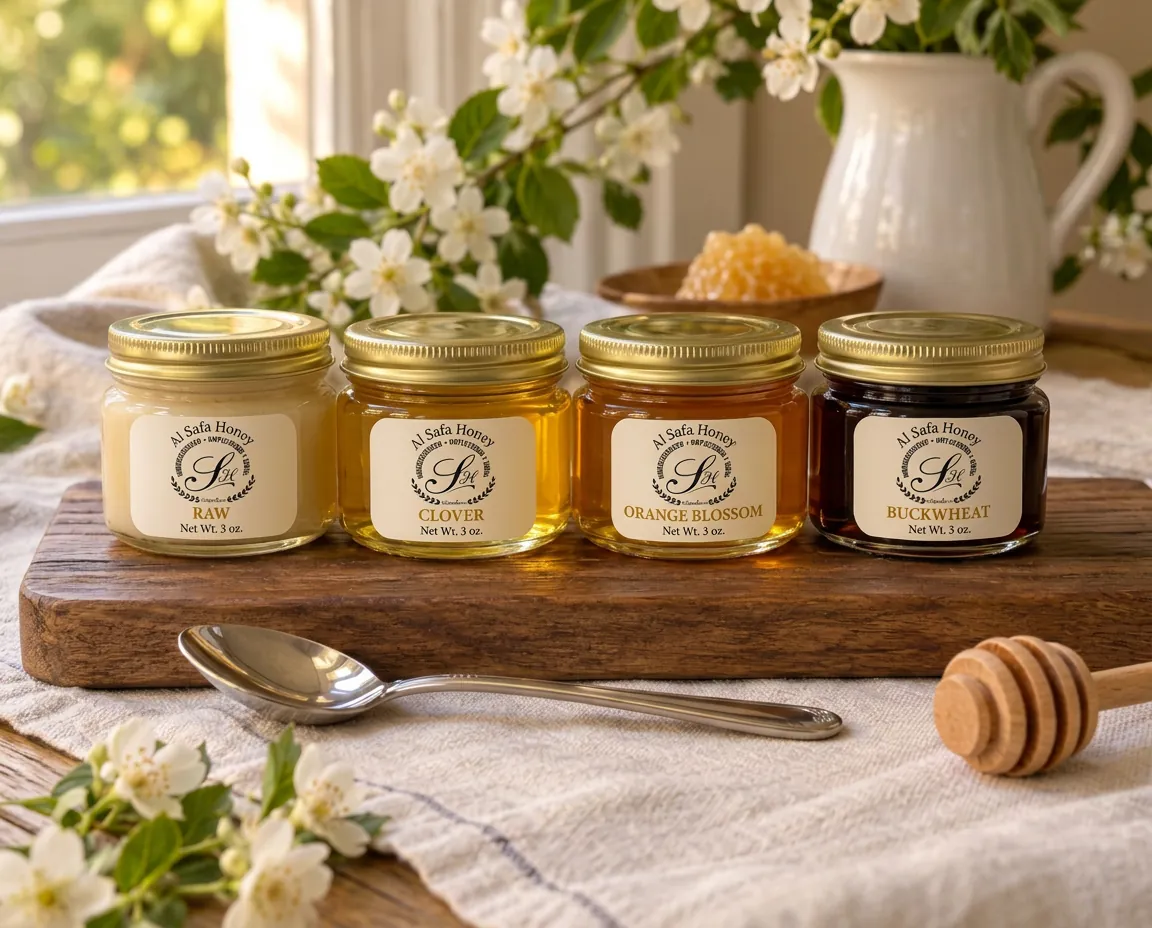
Buy a larger quantity of the honey your household already likes. Our 3-jar and 6-jar packs of each honey cost less per jar than single jars. If you are not sure which honey you like, a sampler is cheaper than buying four full jars to find out: our raw honey sampler has four 3 oz jars of your choice.
Do not throw out honey that has turned solid. Crystallized honey is not spoiled, and a warm water bath brings it back. See crystallized honey for the method, and does honey go bad for storage tips that keep a jar good for years.
What you get in an Al Safa jar
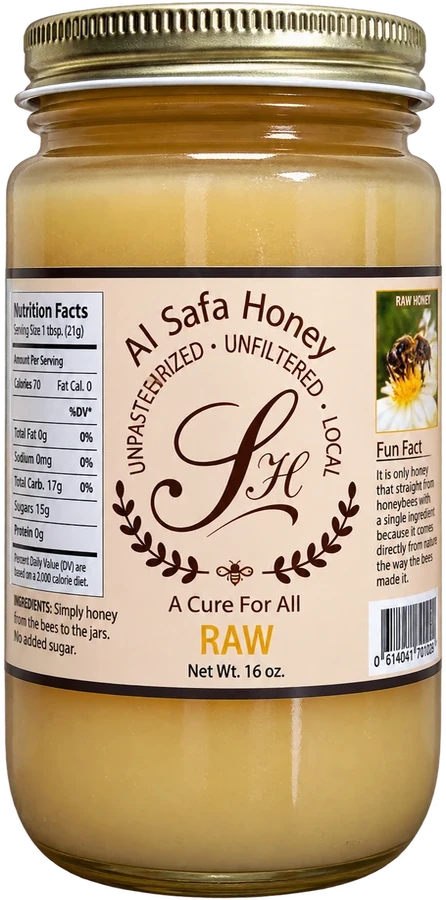
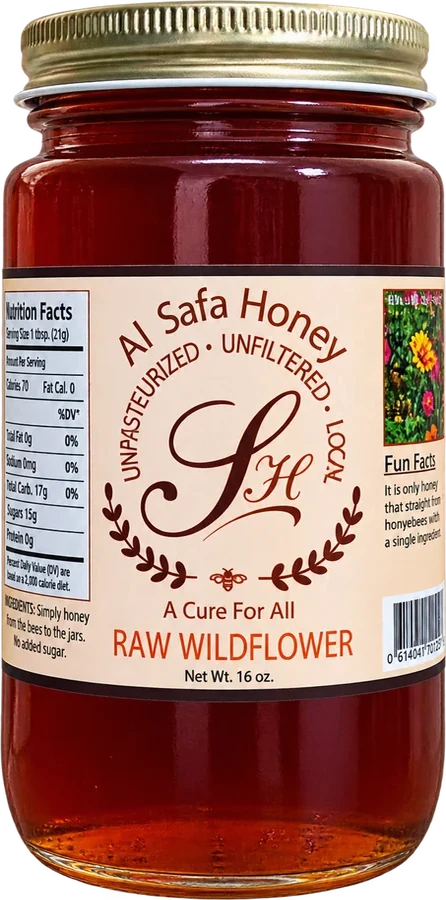
Every Al Safa honey is raw, unfiltered and unpasteurized, strained only of wax, and never heated above hive temperature. Each jar is single-origin, from our partner beekeepers. Clover, Wildflower, Buckwheat, Blueberry Blossom, Sunflower and our Pure Raw honey are harvested in New York State. Knotweed comes from North Dakota and Orange Blossom from Florida.
If you want to compare, start with Pure Raw Honey, our everyday jar, then read how to choose the best raw honey for a label-by-label checklist.
Sources
- Honey report, March 2026 (2025 production and prices) · USDA National Agricultural Statistics Service
- FY21-22 Sample Collection and Analysis of Imported Honey for Economically Motivated Adulteration · U.S. Food and Drug Administration
- Fun Bee Facts · Maine Department of Agriculture, Conservation and Forestry
- Insights into bee biology could ease US rules for organic honey · Cornell Chronicle
- Why Honey Is a Sweet Target for Consumer Litigation · Shook, Hardy & Bacon (Law360)
Frequently asked questions
- Is expensive honey always better?
- No. A high price does not prove quality. Look for a named origin, a named flower, handling words such as unfiltered or unpasteurized, and an ingredient list that says honey only.
- How much should a pound of raw honey cost?
- In 2025 US beekeepers selling at retail averaged $7.15 a pound, according to the USDA. Single-origin raw honey in glass, shipped to your door, usually costs more than that average.
- Why is raw honey more expensive than regular honey?
- Regular honey is often blended in large batches and heated so it filters and bottles quickly. Raw honey is strained cool in small batches, and single-origin raw honey has to be harvested and kept separate for each bloom.
- Why did honey prices go up?
- US honey production fell 14% from 2024 to 2025 and colony losses were high in both years. The USDA average price for all honey rose from $2.41 to $3.05 a pound over the same period.
- Is cheap honey fake?
- Not always, but it is worth checking. In FDA testing of 144 imported honey samples in 2021 and 2022, 10% contained undeclared added sweeteners.
- Does raw honey last long enough to buy in bulk?
- Yes. Sealed and stored at room temperature, honey keeps for years. It may crystallize, which is natural and reversible with gentle warmth.
Al Safa Honey is a food producer, not a medical provider. Nothing here is medical advice. Never give honey of any kind to a baby under 12 months old.