Sidr Honey: Yemen's Famous Honey, What It Is and Why It Costs So Much
Sidr honey is one of the most prized and expensive honeys in the world, especially in the Arabian Peninsula, where a jar of genuine Yemeni sidr is a gift of real honor. It comes from the sidr tree, a thorny jujube native to the region, and is traditionally harvested in the mountain valleys of Yemen. This guide explains what sidr honey is, how it tastes, why it costs so much, and how to tell real sidr from imitations.
The sidr tree
The sidr, also called Christ's thorn jujube or nabq, is a hardy, thorny tree that thrives in hot, dry climates. It produces small yellow-green flowers in autumn and small edible fruits. The tree is mentioned in the Quran, where the lote tree (sidrah) appears, and its leaves have long been used in the region for washing. That history gives sidr honey a cultural and religious significance well beyond its taste.
Where the best-known sidr honey is made
Yemen's Hadramaut region, and especially the Wadi Do'an valley, is famous for sidr honey. Many Yemeni beekeepers still keep bees in traditional log or clay hives and move them to follow the sidr bloom in late autumn. Sidr honey is also produced in Saudi Arabia, Oman, Pakistan and Iran, and in Africa, each with its own style. Prices for top Yemeni sidr can be many times those of ordinary honey.
What sidr honey tastes like
Good sidr honey is thick and smooth, amber to dark amber, with a rich, buttery, caramel-like flavor, a gentle floral note and very little bitterness. It tends to stay liquid for a long time. Many people serve it by the spoonful, with bread, or alongside dates and coffee for guests.
Why sidr honey is expensive
Several things push the price up: the sidr bloom is short, harvests are small and weather-dependent, much of the honey is produced by small traditional beekeepers, and conflict in Yemen has made production and export harder. Demand from the Gulf is very high, and genuine Hadramaut sidr carries prestige. All of this also makes sidr a target for fraud. For more on honey pricing generally, see why raw honey is expensive.
How to spot real sidr honey
There is no home test that proves a honey is sidr. Lab pollen analysis can confirm the floral source. Practical steps help: buy from sellers who can name the region and harvest, be wary of very low prices for Yemeni sidr, and look for honey that is thick, smells of caramel and does not taste of plain syrup. Our general guide on how to tell if honey is real covers which home tests work and which are myths.
Al Safa honeys for sidr lovers
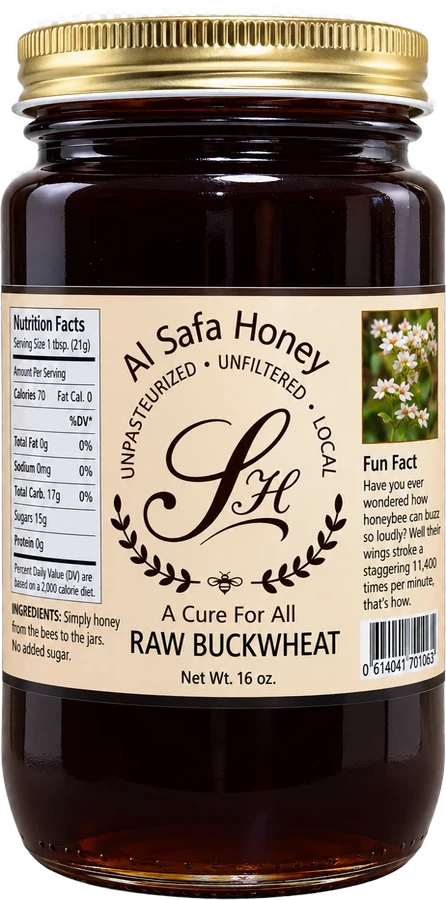
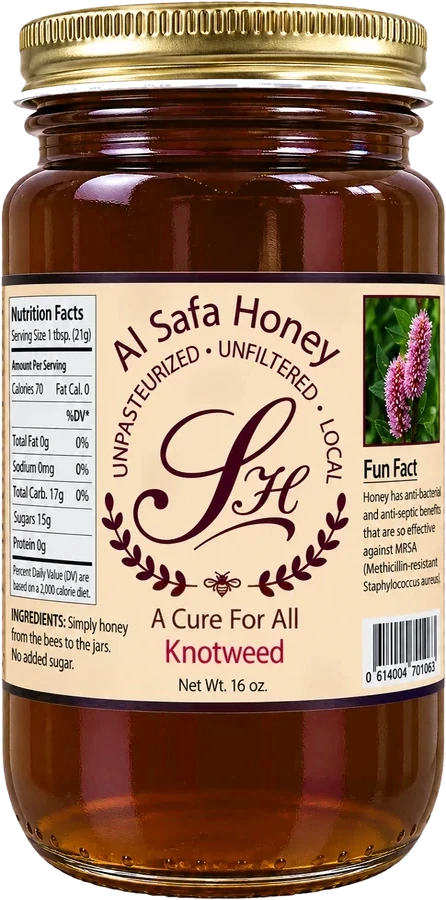
We do not sell sidr honey. Our honeys are pure, single-ingredient honeys from partner beekeepers in the US. For a rich, dark, caramel-toned honey to serve with dates and coffee, try our Buckwheat or Knotweed honey. For more on honey in Islamic tradition, see is honey halal and dates and honey.
Frequently asked questions
- What is sidr honey?
- Honey made from the nectar of the sidr tree, a thorny jujube native to the Arabian Peninsula, especially prized from Yemen's Hadramaut region.
- Why is sidr honey so expensive?
- A short bloom, small traditional harvests, difficulty exporting from Yemen and very high demand in the Gulf all keep prices high.
- What does sidr honey taste like?
- Thick, smooth and rich, with buttery caramel notes and little bitterness.
- How can I tell if sidr honey is real?
- Only lab analysis can confirm it. Buy from trusted sellers who name the region and harvest, and be cautious of prices that seem too low.
- Is sidr honey mentioned in the Quran?
- The Quran mentions the sidr (lote) tree and praises honey, but it does not name sidr honey specifically. The tree's religious significance adds to the honey's prestige.
Al Safa Honey is a food producer, not a medical provider. Nothing here is medical advice. Never give honey of any kind to a baby under 12 months old.