Vitamins in Honey: Which Ones Are There and How Much?
Vitamins in honey are a topic where marketing often runs ahead of the facts. Honey does contain small amounts of several B vitamins and vitamin C, mostly carried in from pollen and nectar. But the quantities are tiny, measured in fractions of a milligram per kilogram. This article lists the vitamins in honey, gives realistic amounts, explains where they come from and shows why honey is best enjoyed for flavor rather than counted toward your daily vitamins. It pairs with our article on minerals in honey.
For general education only, not medical advice. Our honey is a food and is not intended to diagnose, treat, cure or prevent any disease.
Which vitamins in honey are found
Researchers have detected several water-soluble vitamins in honey. The list looks impressive until you see the numbers beside it.
| Vitamin | Reported range (mg per kg of honey) |
|---|---|
| Thiamin (B1) | 0.02 to 0.9 |
| Riboflavin (B2) | 0.01 to 0.9 |
| Niacin (B3) | 0.10 to 2.7 |
| Pantothenic acid (B5) | 0.02 to 1.9 |
| Vitamin B6 | 0.01 to 0.32 |
| Folate (B9) | 0.01 to 0.7 |
| Vitamin C | 0.1 to 2.5 |
Putting the numbers in context
Those ranges come from Stefan Bogdanov's review, Honey as Nutrient and Functional Food. Note the unit: milligrams per kilogram, not per serving. A tablespoon of honey weighs about 21 grams, which is about one fiftieth of a kilogram.
So even a honey at the top of the range for vitamin C would supply about 0.05 mg in a tablespoon. The daily value for vitamin C is 90 mg for adults. A single orange has around 70 mg.
USDA FoodData Central lists generic honey with about 0.5 mg of vitamin C per 100 grams and small amounts of riboflavin and niacin, which tells the same story.
Where vitamins in honey come from
Most of the vitamins in honey come from pollen grains and nectar. Pollen is relatively rich in B vitamins, and raw honey that is strained rather than ultra-filtered keeps more pollen, as our article on pollen in honey explains.
Because pollen content differs between floral sources and processing methods, vitamin levels vary too. Heavy filtration removes pollen, and heat can reduce delicate vitamins such as vitamin C.
Honey compared with vitamin-rich foods
It helps to see honey beside foods that are real sources of the same vitamins:
- Vitamin C: oranges, strawberries, bell peppers, broccoli
- Riboflavin: milk, yogurt, eggs, almonds
- Niacin: chicken, tuna, peanuts, brown rice
- Folate: lentils, spinach, asparagus, beans
- Vitamin B6: chickpeas, potatoes, bananas, salmon
Why vitamins in honey still interest scientists
Even though the amounts are small, vitamins in honey are useful to researchers as part of a honey's overall profile. They help describe how a honey was handled and can contribute to its antioxidant activity in lab tests, together with polyphenols.
The broader contribution of honey in nutrition and human health review places vitamins alongside minerals, enzymes and phenolic compounds as minor components that make honey more than plain sugar.
A smarter way to think about it
Rather than counting vitamins in honey, use honey to make vitamin-rich foods more enjoyable. Drizzle it over berries and yogurt, stir it into a citrus dressing or add it to a bowl of oatmeal topped with fruit.
Our honey and berries article and Greek yogurt with honey guide are full of ideas.
Vitamins in honey across varieties
Studies that compare floral sources find different vitamin patterns. Honeys with plenty of suspended pollen tend to carry more B vitamins. Some fruit-blossom and herb honeys have shown slightly higher vitamin C in surveys, though always in tiny amounts.
Storage also matters. Vitamin C is delicate and declines over time, especially with heat and light. B vitamins are a little more stable, but they also fade slowly in long storage.
None of this changes the main picture. Vitamins in honey make each variety's profile a little different, but they do not make honey a vitamin food.
Common myths about vitamins in honey
A few claims appear often online:
- Myth: honey is a natural multivitamin. The amounts are far too small.
- Myth: raw honey is rich in vitamin C. It contains traces, much less than fruit.
- Myth: darker honey always has more vitamins. Darker honey tends to have more minerals and polyphenols, but vitamin levels vary.
- Myth: honey can replace fruit in a child's diet. It cannot, and honey is never for babies under 12 months.
Raw honey for everyday use
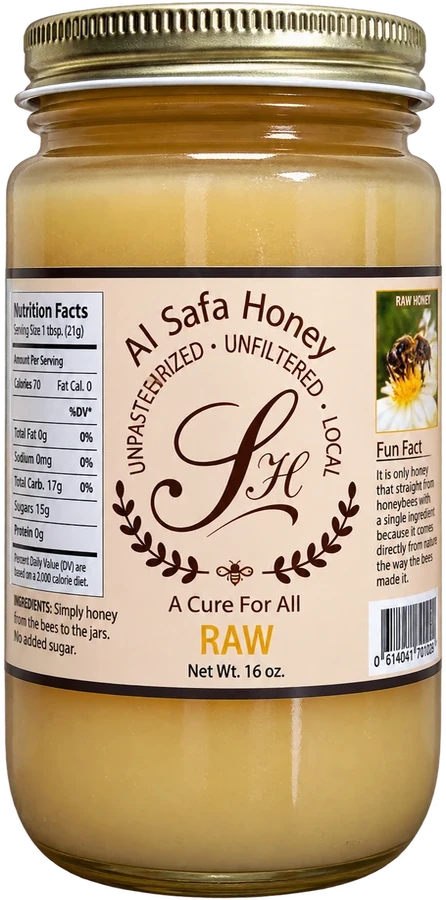
Al Safa honeys are raw and strained only of wax, so they keep their natural pollen and character. They are never heated above hive temperature.
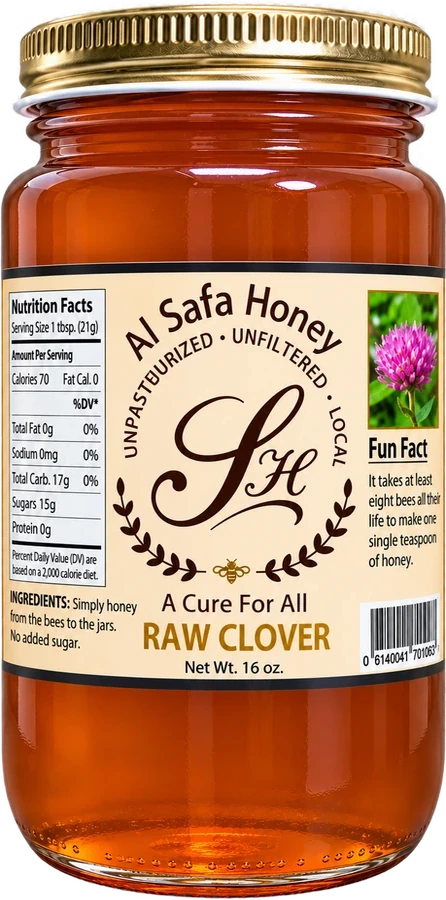
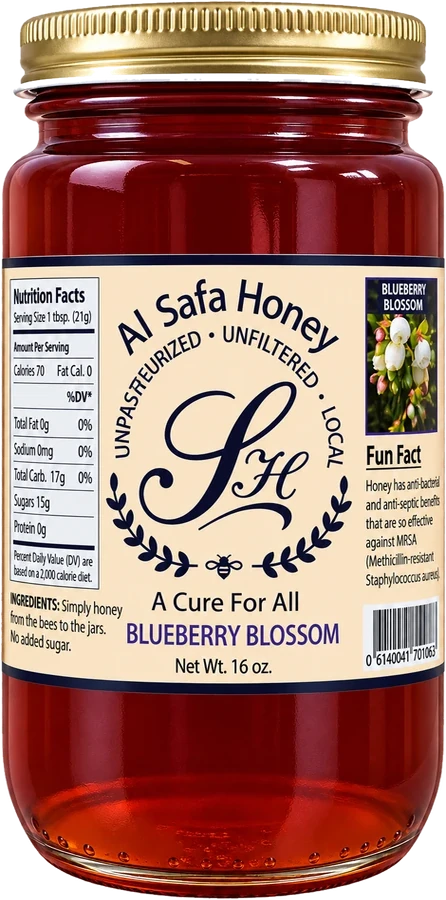
A mild jar like Raw Clover Honey suits fruit and yogurt, while Raw Blueberry Blossom Honey brings a rounded fruit-blossom note to pancakes. Explore every honey in our shop.
Sources
Outside health sources we used for this article. They open in a new tab.
- Honey as Nutrient and Functional Food · Bee Product Science (Stefan Bogdanov)
- Honey: nutrient profile · USDA FoodData Central
- Contribution of honey in nutrition and human health: a review · Universidad San Francisco de Quito (Mediterranean Journal of Nutrition and Metabolism)
Frequently asked questions
- What vitamins are in honey?
- Traces of B vitamins (thiamin, riboflavin, niacin, pantothenic acid, B6 and folate) and vitamin C. The amounts are very small.
- Is honey a good source of vitamin C?
- No. A tablespoon supplies a tiny fraction of a milligram, compared with about 70 mg in an orange.
- Does raw honey have more vitamins?
- Raw honey keeps more pollen, which carries some vitamins, and avoids heat that can reduce vitamin C. The amounts are still small.
- Does heating honey destroy its vitamins?
- Heat can reduce delicate vitamins like vitamin C. Since the amounts are tiny to begin with, flavor and aroma are the bigger reasons to avoid overheating honey.
- Do vitamins in honey differ by variety?
- Yes. Floral source, pollen content and processing all affect the levels.
- What is the best way to get vitamins with honey?
- Pair honey with vitamin-rich foods like fruit, yogurt, oats and leafy salads, and keep honey portions moderate.
- Do vitamins in honey survive in tea?
- Very hot water can reduce delicate vitamins like vitamin C. Since honey only contains traces, letting tea cool for a minute is more about keeping honey's aroma than its vitamins.
Al Safa Honey is a food producer, not a medical provider. Nothing here is medical advice, and these statements have not been evaluated by the Food and Drug Administration. Talk to your doctor about any health concern. Never give honey of any kind to a baby under 12 months old.