Avocado Honey: Dark, Buttery and Made From Avocado Blossoms
Avocado honey surprises people twice. First, it does not taste like avocado. Second, it is dark, rich and buttery, more like molasses or caramel than you might expect from a fruit tree. It comes from the small blossoms of avocado trees, mainly in California and Mexico, and has a loyal following among people who like bold honeys. This guide covers what it is, how it tastes and how to use it.
Where avocado honey comes from
Avocado trees produce thousands of small greenish-yellow flowers in spring. Growers in California, Mexico and other avocado regions often bring in honey bee hives to help pollinate the orchards, and when the bloom is strong, the bees store enough avocado nectar for a separate honey harvest. Because avocado flowers are not especially attractive to bees compared with some wildflowers, a pure avocado honey takes careful timing.
What avocado honey tastes like
Avocado honey is dark amber to almost brown. Its flavor is rich and full, with notes of molasses, caramel and burnt sugar, and a buttery, smooth texture on the tongue. It is less bitter than buckwheat and less tannic than chestnut, which makes it easier to enjoy straight for people who are new to dark honey.
| Avocado honey | Buckwheat honey | |
|---|---|---|
| Color | Dark amber | Near black |
| Flavor | Buttery, caramel, molasses | Malty, earthy, slightly bitter |
| Region | California, Mexico | Northeast, Midwest, Canada |
| Season | Spring | Late summer |
How to use avocado honey
Its caramel depth makes avocado honey excellent in barbecue sauces, glazes for pork and ham, baked beans, gingerbread and dark breads. It is also good on pancakes, as a stand-in for maple syrup, and drizzled over vanilla ice cream or Greek yogurt with walnuts. Try it in coffee for a mocha-like sweetness.
Is avocado honey made from avocados?
No. Like all honey, it is made from flower nectar, not from fruit. Bees visit the blossoms long before the fruit forms. The same goes for blueberry honey, orange blossom honey and other fruit-tree honeys: the name tells you which blossoms the bees visited. Our monofloral honey guide explains how single-flower honeys are made.
Al Safa honeys for avocado honey fans
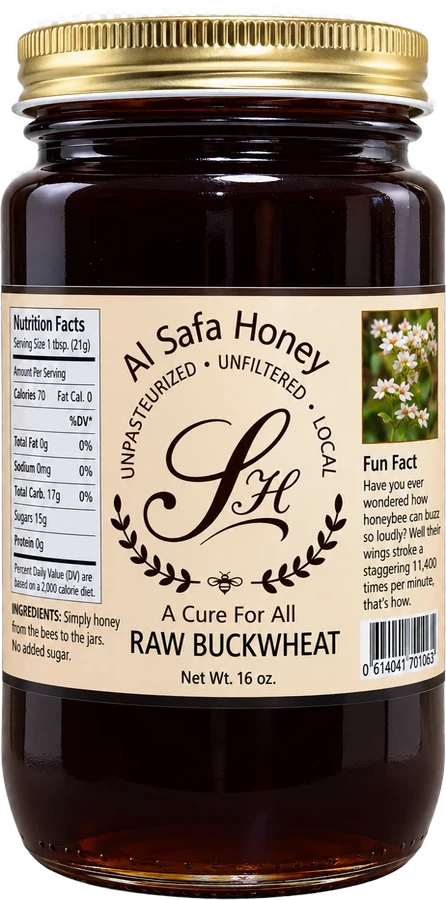
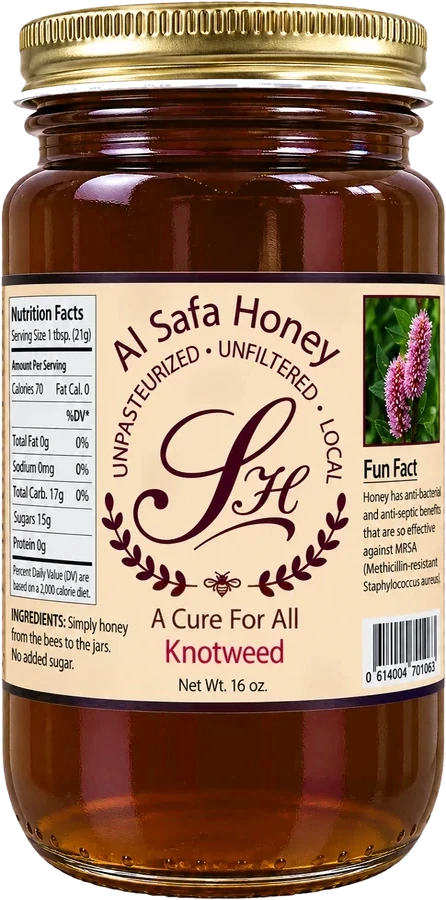
We do not sell avocado honey. For a dark, rich honey with caramel and molasses notes, try our Buckwheat honey, harvested in New York State, which is bolder and maltier, or our Knotweed honey from North Dakota, a full-bodied late-season honey with herbal depth.
Avocado honey and bees in orchards
Avocado growers rely on pollinators to set a good crop, and honey bees are the main managed pollinator in California orchards. Avocado flowers have an unusual habit: each flower opens twice, first as female and then, on a later day, as male, so pollen must move between flowers at the right time. Bees that move through the orchard help that happen, and the nectar they gather becomes avocado honey.
Because bees often prefer nearby wildflowers, citrus or mustard, beekeepers who want a pure avocado honey place hives deep in large orchards during peak bloom. Even then, the honey may contain some other nectar, which is normal for any varietal honey. See how honey is made for the full process.
Storing avocado honey
Like other honeys, avocado honey keeps for a very long time sealed in a cool, dry cupboard. It is slow to crystallize, but if it sets, warm the jar gently in a pan of warm water. Do not refrigerate it, which speeds crystallization. See does honey go bad.
Frequently asked questions
- Does avocado honey taste like avocado?
- No. It tastes rich and buttery, with caramel and molasses notes, not like the fruit.
- Where does avocado honey come from?
- Mainly Southern California and Mexico, from bees working avocado orchards in spring.
- Is avocado honey dark?
- Yes. It is dark amber to brown, one of the darker fruit-tree honeys.
- What is avocado honey good for?
- Barbecue sauce, glazes, baked beans, gingerbread, pancakes and coffee.
Al Safa Honey is a food producer, not a medical provider. Nothing here is medical advice. Never give honey of any kind to a baby under 12 months old.