Honey Labels Explained: Raw, Pure, Grade A, Organic and More
Honey labels explained simply: some terms are regulated and many are not. Pure, raw, natural, unfiltered, Grade A, organic, local: some of these terms have legal definitions, some are guided by FDA advice, and some are just marketing. This guide explains each common term, which ones are regulated, and the few details on a label that tell you the most about what is in the jar.
What the FDA says about honey labels
FDA guidance on the proper labeling of honey, finalized in 2018, says a product labeled simply honey should contain only honey. If a sweetener such as sugar or corn syrup is added, the product should be labeled as a blend, for example blend of honey and sugar. Flavored honeys should name the flavor, such as honey with natural raspberry flavor. Honey labels must also list the country of origin for imported products and follow normal nutrition labeling rules.
Common honey label terms
| Term | What it means | Regulated? |
|---|---|---|
| Honey / pure honey | Only honey, nothing added | Yes, by FDA guidance |
| Blend | Honey mixed with another sweetener | Yes, must be disclosed |
| Raw | Usually not heated or finely filtered | No legal definition |
| Unfiltered | Strained, not micro-filtered | No legal definition |
| Natural | Loose marketing term | No specific definition |
| Grade A | Voluntary USDA quality grade | Voluntary standard |
| Organic | Certified to USDA organic standards | Yes, certification required |
| Local | Made nearby; no set distance | No |
| Monofloral (e.g., clover) | Mainly from one flower | No US legal standard |
Raw and unfiltered
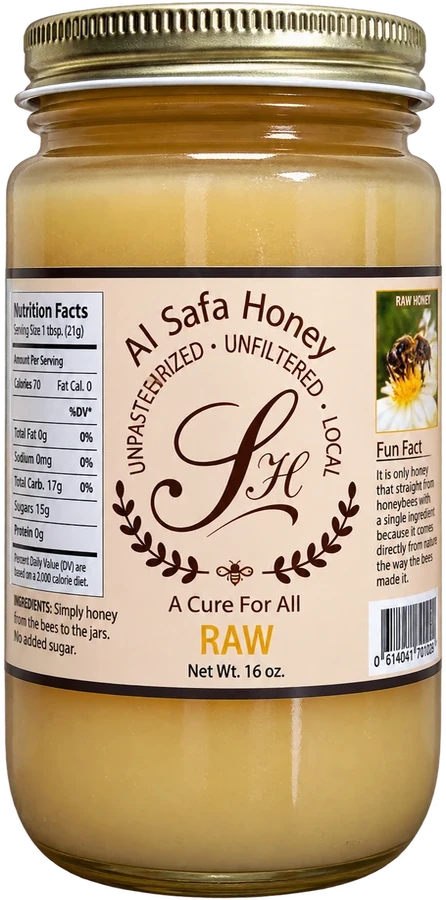
Raw is the term shoppers look for most, but the FDA has not defined it. Most beekeepers use raw for honey that has not been heated beyond hive temperatures and has been strained, not finely filtered, so it keeps pollen and natural character. Unfiltered usually means coarse straining only. Because the terms are not regulated, it helps to buy from producers who explain their process. See raw unfiltered honey and pure honey vs raw honey.
Grade A and organic
USDA grades for extracted honey, from Grade A down, are voluntary and focus on clarity, absence of defects, flavor and water content. Grade A does not mean raw or local; many heavily filtered honeys are Grade A. Organic honey must be certified, which means the producer has documented that bees forage in areas free of prohibited pesticides, which is hard to guarantee since bees fly miles; much certified organic honey is imported. See organic honey vs raw honey.
The details that matter most
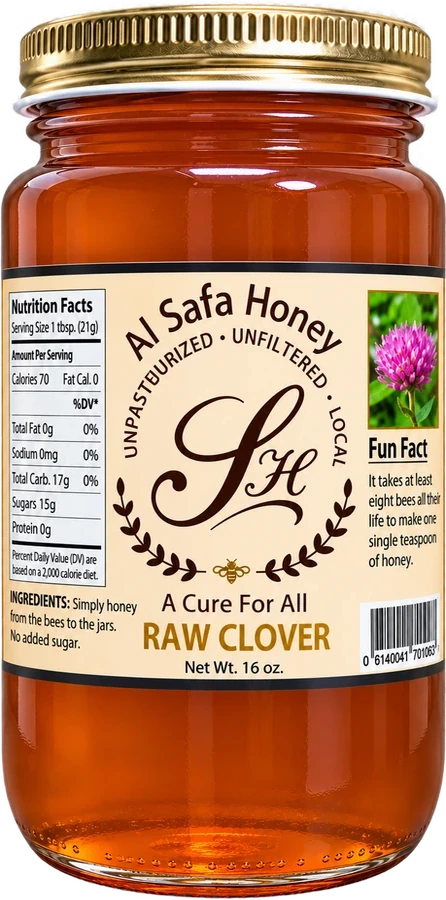
Two details tell you the most. First, the country of origin, and ideally the state or region; see where does honey come from. Second, the flower source, such as clover, buckwheat or orange blossom, which tells you about flavor and color. A producer name and contact details are a good sign too. Labels cannot prove purity on their own; our guide on how to tell if honey is real explains what else to look for.
- Country of origin, and state or region if given
- Flower source
- Ingredients: only honey
- Producer or packer name
- A warning not to feed honey to babies under 1 year
How we label our honey
Every Al Safa jar is a single-ingredient honey with its flower source on the label. Honeys harvested in New York State say so; Knotweed comes from North Dakota and Orange Blossom from Florida. All are strained only of wax and never heated above hive temperature, and Pure Raw Honey is never heated at all. Try Clover for a classic light honey.
Sources
- Guidance for Industry: Proper Labeling of Honey and Honey Products · U.S. Food and Drug Administration
Frequently asked questions
- Is raw honey a regulated term?
- No. The FDA has not defined raw honey. It usually means not heated or finely filtered.
- What does Grade A honey mean?
- It meets a voluntary USDA quality grade for clarity, flavor and defects. It does not mean raw.
- What is a honey blend?
- Honey mixed with another sweetener, which must be disclosed on the label.
- What should I look for on a honey label?
- Country of origin, flower source, honey as the only ingredient, and the producer's name.
Al Safa Honey is a food producer, not a medical provider. Nothing here is medical advice. Never give honey of any kind to a baby under 12 months old.