Organic Honey vs Raw Honey: What Each Label Proves, and What It Doesn't
Organic honey vs raw honey is a confusing choice, because the two labels answer different questions. Organic is about where the bees fed and how the hives were kept. Raw is about what happened to the honey after it left the hive. A jar can be one, both or neither.
The short difference
Think of it as two separate checks. Organic certifies the farming. Raw describes the processing. Neither label promises the other.
| Organic honey | Raw honey | |
|---|---|---|
| What it describes | How and where the bees were kept | What was done to the honey after harvest |
| Who checks it | A USDA-accredited organic certifier | No federal definition; the seller's description |
| Can it be heated? | Yes, unless it is also raw | No, or only to around hive temperature |
| Can it be finely filtered? | Yes | No, only strained |
| Where most US supply comes from | Mostly imported | US and imported |
What "organic" means for honey
To carry the USDA organic seal, a product has to be certified by an accredited certifier. For honey, certifiers look at the hives and the land around them. Bees fly a long way, so the forage area matters more than the beekeeper's own field.
According to Cornell University, current guidelines ask for about a 6.4 km (4 mile) buffer of organic or natural land around the hives. That is very hard to find in most of the continental United States, where bees can reach conventional farms, lawns and roadsides. As a result, Cornell reports that almost all US organic honey is imported, with only a few domestic producers in Hawaii.
A 2026 Cornell study found that bees on large organic farms in the Northeast foraged a median of only about 750 meters from the hive, and their honey had low pesticide residues. The researchers suggested the rules could be eased, but for now the 4 mile buffer stands.
What "raw" means for honey
There is no FDA definition of raw honey. In practice, raw honey is spun out of the comb, strained to remove wax, and jarred without being heated beyond the warmth of a hive or pushed through fine filters. That keeps the natural pollen and the honey's own aroma, and it is why raw honey crystallizes over time.
Because raw is not a regulated word, the details on the label matter: unfiltered, unpasteurized, a named origin and a named flower. Our guide to raw unfiltered honey explains each word, and pure honey vs raw honey covers another label people mix up.
Can honey be organic and raw?
Yes. Some imported honey is both certified organic and sold raw. Just do not assume one from the other. Many organic honeys on supermarket shelves are heated and filtered so they stay clear, which makes them organic but not raw.
The reverse is common too. Many small US beekeepers sell raw honey that is not certified organic, simply because their bees forage within reach of ordinary farmland and the organic buffer is out of reach.
Is organic honey free of pesticides?
Not completely, and neither is any other honey. The FDA sets maximum residue limits that all honey sold in the US must meet. Organic certification lowers the chance of residues by controlling the forage area, but bees do not read fences.
Cornell's study compared honey from organically managed hives with 20 store-bought organic and conventional brands and found residues in the organic-farm honey were low and similar to certified organic imports.
Which should you buy?
If your priority is honey handled as little as possible, with its pollen and full flavor, choose raw. If your priority is a certified farming standard, choose organic, and check the label for raw or unfiltered too. If you want to know where your honey comes from, look for a named country and region in either case.
Price is part of it. Organic honey often costs more, and Cornell reports that shoppers are willing to pay 20 to 30% more for certified organic honey. Our guide to why raw honey costs what it does breaks down the numbers.
Where Al Safa honey fits
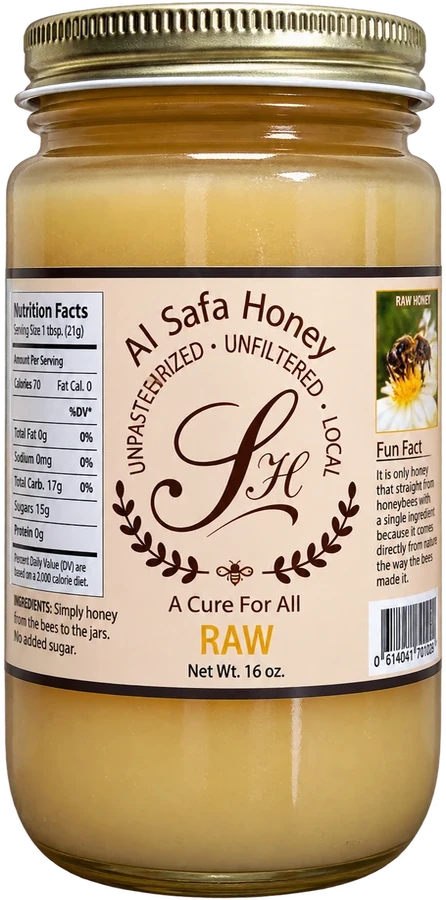
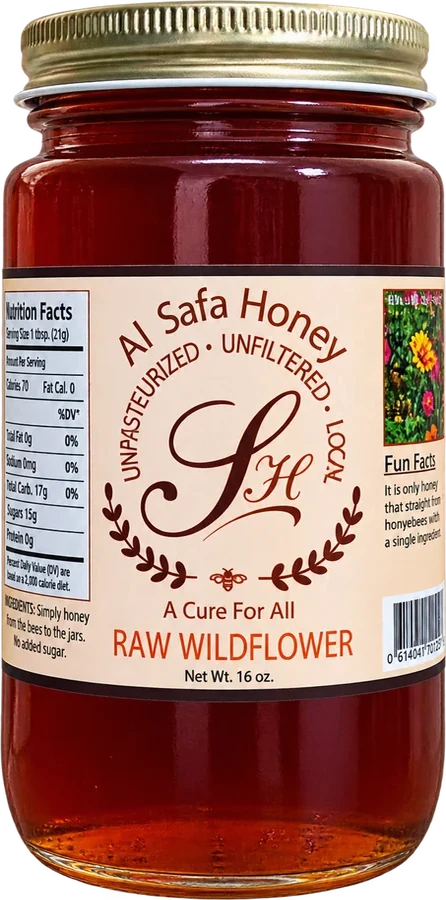
Al Safa honey is raw, not certified organic. Every jar is unfiltered, unpasteurized and never heated above hive temperature, and each is a single bloom from our partner beekeepers. Six of our honeys are harvested in New York State; Knotweed comes from North Dakota and Orange Blossom from Florida.
We would rather say plainly what our honey is than borrow a word it has not earned. If organic certification is what you need, look for the USDA seal. If raw honey is what you are after, start with Pure Raw Honey.
Sources
- Insights into bee biology could ease US rules for organic honey · Cornell Chronicle
- National Organic Standards Board: Apiculture recommendation · USDA Agricultural Marketing Service
- Why Honey Is a Sweet Target for Consumer Litigation · Shook, Hardy & Bacon (Law360)
- FY21-22 Sample Collection and Analysis of Imported Honey for Economically Motivated Adulteration · U.S. Food and Drug Administration
Frequently asked questions
- Is organic honey better than raw honey?
- Not better or worse, just different. Organic certifies how the bees were kept; raw describes honey that was not heated or finely filtered. Organic honey can still be heated, so if processing matters to you, look for raw.
- Is raw honey organic?
- Not automatically. Raw honey is only organic if the hives are certified by a USDA-accredited certifier. Many US raw honeys are not certified because of the large forage buffer organic rules ask for.
- Why is most organic honey imported?
- Cornell University reports that organic guidelines ask for about a 4 mile buffer of organic or natural land around the hives, which is very hard to find in the continental US. Most US organic honey comes from countries such as Brazil.
- Does organic honey crystallize?
- All real honey can crystallize. Raw honey usually does so sooner because it keeps more pollen and has not been heated. Crystallization is natural and reversible.
- Is Al Safa honey organic?
- No. Al Safa honey is raw, unfiltered and unpasteurized, but it is not certified organic.
Al Safa Honey is a food producer, not a medical provider. Nothing here is medical advice. Never give honey of any kind to a baby under 12 months old.